
A 2026 linear module is a single-axis actuator with a profile body, a built-in linear guide, and either a ball screw, roller screw, belt drive or linear motor as its drive element — and the spec gaps between a 50 mm-wide clean-room stage and a 210 mm-wide cantilevered robot module are wide enough that line builders can no longer treat them as drop-in substitutes [S1][S3].
The 2026 buying context is shaped by a small cluster of Chinese OEM families offering DK86, DK120, DK136 and DK210 frames next to DE50 / DE80 clean-room units, plus TICO-style integrated linear-rail bodies with ±0.02 mm straightness and 30,000 km self-lubrication [S1][S3]. Buyers comparing 2026 quotations should anchor every RFQ to a width code, a stroke number, a repeatability figure, and a duty-cycle class rather than to a generic "linear module" line item.
Frame width, stroke and the four standard sizes on the 2026 market
Width is the single most stable spec on a 2026 data sheet: LEIZ TECH publishes a DK86 / DK120 / DK136 / DK210 family plus a DE50 / DE80 clean-room pair, giving buyers a 50 mm → 210 mm ladder with a 136 mm midpoint used by most general-purpose gantry builders [S1].
Stroke is a function of body length and screw / belt length, and the LIMON 2026 catalog lists ball-screw modules and belt-drive modules in the same housing width, with the belt version typically delivering 2×–3× the stroke of the ball-screw version for the same footprint [S2]. Buyers who need stroke above ~1 m should default to belt drive unless positioning accuracy below ±0.05 mm is mandatory; buyers locked to ±0.01 mm should specify a ball screw with a defined C0 or C1 accuracy grade and a target life in revolutions.
For a direct comparison across the 2026 frame ladder, the four reference sizes carry distinctly different load envelopes: a DE50 clean-room unit is specified for light-payload semiconductor and inspection cells, DK120 is the workhorse for pick-and-place and dispensing, DK136 adds rigidity for medium-payload gantries, and DK210 is reserved for heavy-payload transfer lines and palletising, with frame width scaling roughly with rated dynamic load [S1][S3].
Drive type, repeatability and accuracy grades
Ball-screw linear modules are the 2026 default for any application that needs ±0.01 mm–±0.02 mm repeatability, and TICO's integrated linear-rail bodies now publish ±0.02 mm straightness and flatness from the factory, plus a steel-strip dust cover and a self-lubricating slider rated for 30,000 km of light-load maintenance-free travel [S3].
Belt-drive modules trade that accuracy for stroke length and speed — typical belt stages run 1 m/s to 3 m/s and stretches of 2 m and beyond, but repeatability is closer to ±0.05 mm–±0.1 mm, which is fine for transfer and assembly between processes but fails any closed-loop metrology or dispensing duty [S2]. Roller-screw stages sit between the two, with longer L10 life than ball screws at the same load, and should be specified when the duty cycle is high (continuous operation > 16 h/day) or when shock loads are present.
Linear-motor modules are the fourth option and the only one that can hold sub-µm repeatability at high speed; they are typically not stocked as catalog items by the Chinese OEMs above and are quoted as engineered-to-order, with delivery measured in weeks rather than the 2–4 week stock-out of DK-series bodies [S1][S2].
Clean-room, IP and contamination-sensitive options
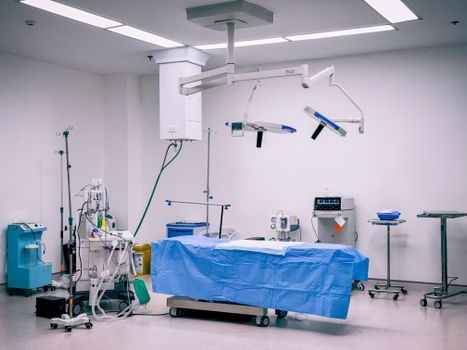
Clean-room-rated linear modules are a real product line in 2026, not a custom request: LEIZ TECH's DE50 and DE80 are listed as a dedicated clean-room family on the same product page as the standard DK series, and the W-Robot long-stroke catalog separates "light load" modules from "clean room" modules in the same way [S1][S5].
For semiconductor front-end and laboratory automation, the selection gates that matter in 2026 are outgassing material (low-outgassing grease, stainless or anodised body), a sealed steel-strip dust cover such as the design used on TICO's integrated bodies, and an IP rating. TICO's steel-strip cover is described on the OEM's English product page as designed to prevent dirt and foreign objects from penetrating the slider — a baseline spec that buyers should require in any RFQ touching ISO Class 5 or better environments [S3].
Stainless hardware, bellows covers, and cleanroom greases add roughly 20–40% to the body price in current 2026 RFQ feedback from Made-in-China listings of the same width class; that uplift is small compared to the cost of a single tool crash from a contaminated stage [S4].
Load, moment and rigidity — the numbers behind the catalogue
A 2026 linear module's load rating is split into vertical payload, horizontal payload, and allowable moment (My, Mz) about the slider, and these are the three numbers a process engineer should require on every datasheet. Light-load catalog items on Made-in-China are explicitly aimed at "warehouse crane, shipboard crane, goods yard crane, building crane, workshop crane" auxiliary axes, where dynamic load is low and duty cycle is the binding constraint [S4].
For modules that sit under a 5 kg–20 kg tool on a pick-and-place gantry, DK120 / DK136-class bodies are the practical minimum, with internal linear-rail blocks that have been integrated into the aluminium body since 2020-era designs — the result is a rigidity gain that lets a single stage replace a separate slide-plus-bearing arrangement [S3]. Buyers should ask for the slider block model (e.g., 15 mm or 20 mm rail width) and the ball-screw diameter and lead, since rigidity scales with the second moment of area of the rail and the root diameter of the screw.
For heavy-payload and cantilevered mounting, DK210 bodies are specified when a single module is asked to carry more than ~50 kg in vertical orientation; the gain over a 136-class body is not just static load capacity but pitch and yaw moment capacity, which directly translates into deflection under acceleration [S1].
Motor mounting, feedback and controller integration

Servo motor mounting in 2026 is dominated by direct-coupled NEMA 17 / NEMA 23 / NEMA 24 frame sizes, with a few OEM families offering a stepper-mount variant for low-cost positioning. Feedback is almost universally incremental 20-bit serial encoders on premium stages, with absolute battery-less encoders on the long-stroke and clean-room models; buyers should treat the encoder resolution as a separate line item from the module price [S1][S2].
Controller integration has consolidated around EtherCAT and Modbus TCP for new 2026 builds, with the older pulse-and-direction interface still supported as a fallback. Buyers standardising on a single fieldbus should ask the OEM which protocol is factory-tested, not just "supported" — a module that is "compatible" with EtherCAT in the catalog may still need a vendor-specific ESI file before the line builder's PLC can commission it.
Sourcing, MOQ and 2026 FOB cost bands
The 2026 sourcing map for linear modules is concentrated in Chinese OEM families: LEIZ TECH (DK / DE series), LIMON (linear module / ball-screw / belt-drive / hollow rotary actuator), TICO (integrated linear-rail body with self-lubrication), W-Robot (long-stroke), and a long tail of Made-in-China listing factories [S1][S2][S3][S4][S5].
For a 2026 RFQ with a stated width, stroke, repeatability and load, the typical FOB cost band runs roughly USD 200–400 for a 50 mm-width light-load stage, USD 500–900 for a 120-class ball-screw stage, USD 900–1,800 for a 136-class body, and USD 1,500–3,500 for a 210-class or long-stroke clean-room unit, with the Made-in-China "1 piece" MOQ and "negotiable" pricing convention that lets a buyer mix sizes in a single container [S4].
Sample lead times observed on the public 2026 catalogs are 7–15 days for stock DK-series items and 20–40 days for clean-room or long-stroke builds, with payment typically 30% T/T deposit plus 70% before shipment; the lever buyers most often miss is that the clean-room grease and the steel-strip dust cover are usually Chinese-stock items and do not extend lead time, while a roller-screw upgrade does [S1][S3][S4].
Selection checklist a 2026 buyer can run on a single page

The first gate is width and stroke: pick the smallest DK-class body (DK86 / DK120 / DK136 / DK210 or DE50 / DE80) that fits the required stroke and dynamic load, since frame width drives the cost of the linear-rail block, the ball-screw diameter, and the body extrusion [S1].
The second gate is drive type: ball screw for ±0.01 mm–±0.02 mm, belt for stroke > 1 m at lower accuracy, roller screw for high duty cycle, linear motor for high speed and high accuracy. The third gate is environment: clean room, dust cover, IP rating, and grease specification, all of which should appear as separate line items on the PO [S3][S5].
The fourth gate is motor and feedback: servo frame size, encoder resolution, holding brake for vertical axes, and a defined cable exit direction, since a wrong exit can force a redesigned cable track on site. The fifth gate is certification: CE marking for EU delivery, and any application-specific standard such as ISO 13849 on the safety stop circuit if the module sits inside a collaborative cell.
For process engineers cross-shopping linear modules with adjacent motion components, the same five-gate logic appears on a gearbox spec cut, a linear guide cost guide, and a roller bearing cost guide — the structure of an RFQ barely changes across these product families. The internal reference page on linear modules covers the broader taxonomy, while the linear guide and linear actuator entries explain how a single-axis module relates to a guide-only or actuator-only build.
Trackable signals for the next buying cycle: the spread between DK120 and DK136 pricing as 2026 production volumes normalise, the rollout of absolute battery-less encoders as a standard feature on DE-class clean-room units, and the publication of factory-tested EtherCAT ESI files by the long-tail of Made-in-China listing factories [S1][S2][S3][S4].