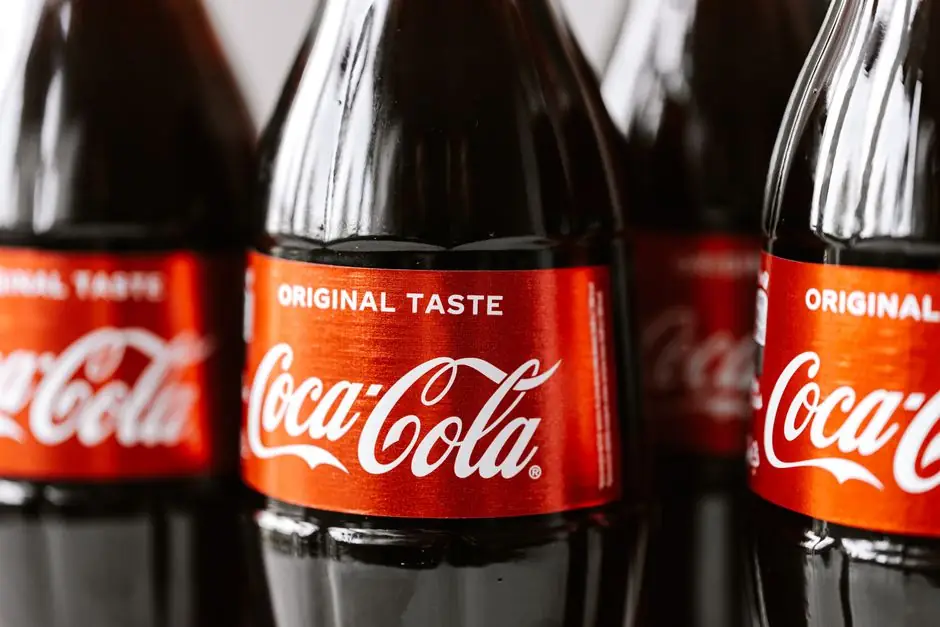
Roll-fed hot-melt OPP wrap labelers use a continuous plastic web (typically oriented polypropylene, OPP) cut in-line and glued to the container with hot-melt adhesive, while pressure-sensitive wrap labelers feed pre-adhered labels on a release liner and bond them to the container with mechanical pressure only [S1][S2]. The technology choice is set by four hard constraints: production volume, SKU count, container shape, and total cost-per-labeled-container over the line's life [S2][S3].
Both technologies are mainstream in beverage, food, household chemical, and personal care lines, and both can deliver wrap-around coverage on cylindrical bottles, but the upstream/downstream equipment, changeover workflow, and waste stream differ significantly [S5][S7]. The decision is rarely about which is "better" and almost always about which is right for a specific line profile [S2][S8].
How the Two Systems Actually Apply a Label
Roll-fed hot-melt OPP labelers unwind a plain film web, die-cut each label at the cutting station, apply a metered bead of hot-melt adhesive (typically EVA-based, applied at 130-160°C), then wrap the cut label around a rotating container as it passes a vacuum or belt drum [S1][S2].
Pressure-sensitive wrap labelers feed a pre-coated label web, route it across a peel plate (also called a knife edge or peeler plate), separate the label from its silicone-coated release liner, and press the adhesive-coated face stock onto the container as a wrap belt or rotating turret pulls the bottle through the nip [S5][S4]. No heat, no glue pot, no cleaning cycle is required at the machine; the adhesive is already cured on the label [S4].
Throughput, Speed, and Volume Economics
Roll-fed systems are built for continuous high-speed operation, with mainstream beverage lines routinely running 30,000-60,000 containers per hour on rotary roll-fed modules [S2][S6]. Pressure-sensitive wrap labelers in rotary configuration are also fast, but the additional web path (liner unwind, peel plate, rewind of spent liner) and the consumable liner itself introduce per-label cost and waste that scale linearly with output [S2][S4].
At sustained volumes of roughly 10,000+ containers per shift, the lower per-label material cost of roll-fed OPP plus the absence of liner disposal typically delivers lower total cost per labeled container over a 12-month horizon [S3][S6]. Below that volume, the changeover cost and fixed overhead of hot-melt systems (glue pot warm-up, recipe tuning, cleaning) can erase the material advantage [S2][S8].
Changeover, SKU Flexibility, and Operator Skill
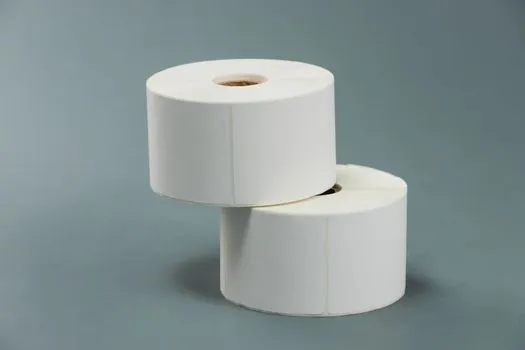
Pressure-sensitive wrap labelers are mechanically simpler to change over: container size changes are handled by adjusting guide rails and wrap-belt timing, and label-stock changes are loaded as a new roll [S5][S4]. No adhesive system needs to be drained, purged, or re-tempered, which is why PS is the default for contract packagers running dozens of SKUs per week on shared assets [S2][S4].
Roll-fed hot-melt systems require coordinated mechanical changes (cutting drum, vacuum drum, glue nozzle position, web guides) and adhesive recipe adjustment, with changeover times commonly 20-45 minutes on a well-set beverage line [S2][S7]. In return, the same line runs the chosen SKU at full mechanical speed for hours or shifts with minimal operator intervention [S1][S6].
Container Shape and Label Coverage
Both technologies are best suited to cylindrical or near-cylindrical containers, since the wrap belt and label drum geometry assume a round cross-section [S1][S5]. Roll-fed OPP wraps cleanly on glass and PET bottles with diameters typically from 50 mm to 110 mm in mainstream beverage applications, with the film cut to cover 360° plus a small overlap tab held by the hot-melt bead [S1][S7].
Pressure-sensitive wrap labelers handle the same cylindrical range and, because the label is pre-cut and pre-adhered, can also apply front-and-back labels to non-round or contoured containers by skipping the full wrap and indexing two short labels per cycle, a configuration not feasible on a single-drum roll-fed module [S5][S4].
Materials, Adhesives, and Waste Stream
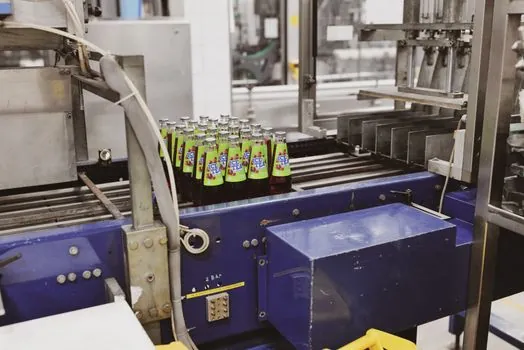
Roll-fed OPP label stock is usually 30-50 µm biaxially oriented polypropylene, supplied as a plain film roll with no liner; the adhesive is applied in-line from a hot-melt reservoir, typically an EVA (ethylene-vinyl acetate) formulation tuned for the container material and line speed [S1][S7]. Waste is trim web from the cutting station, which is compacted and recycled as production scrap [S2][S6].
Pressure-sensitive labels are a multi-layer construction: face stock (paper, PE, PP, or PET film), a pressure-sensitive adhesive layer (acrylic, rubber-based, or hot-melt-coated during labelstock manufacture), and a silicone-coated release liner (glassine or PET) that is discarded as the label is dispensed [S4]. The spent liner represents the dominant waste stream and is a recurring disposal or recycling cost per shift [S2][S4].
Direct Comparison: Roll-Fed Hot-Melt OPP vs Pressure-Sensitive Wrap
Side-by-side against the four criteria that drive the buying decision: [S2]
Throughput at sustained run: roll-fed wins, mainstream rotary modules rated 30,000-60,000 cph vs PS rotary typically 20,000-40,000 cph on the same line class [S2][S6]. Changeover time and SKU count: pressure-sensitive wins, mechanical-only changeover vs hot-melt drum and glue recipe adjustment [S2][S4][S5]. Container shape flexibility: pressure-sensitive wins, supports full wrap and front-back indexing on non-round shapes; roll-fed is limited to round/near-round cylinders [S5][S7].
Where Each System Is the Right Spec
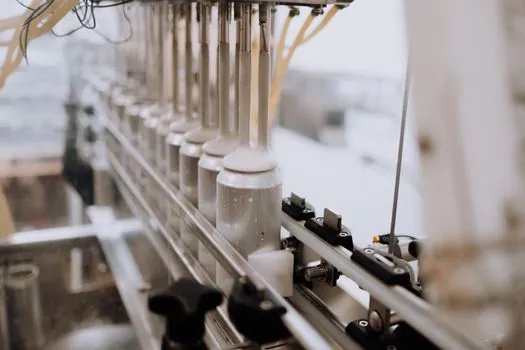
Specify roll-fed hot-melt OPP wrap when the line is dedicated to one or a few cylindrical SKUs running above ~10,000 containers per shift, when per-label material cost dominates the unit economics, and when the operator team can support a hot-melt adhesive system and scheduled cleaning cycles [S1][S2][S6]. This profile covers mainstream bottled water, carbonated soft drinks, juices, and edible oil lines on rotary equipment [S1][S7].
Specify pressure-sensitive wrap when SKU count is high, run lengths are short to moderate, changeover frequency is measured in hours not shifts, or when containers include non-round or premium-decorated formats that benefit from front-back label indexing [S2][S4][S5]. This profile covers personal care, nutraceutical, contract packaging, and short-run specialty beverage operations [S4][S5].
Failure Modes and Selection Pitfalls
Roll-fed hot-melt lines are exposed to adhesive-related downtime: glue stringing at the nozzle, char buildup in the melt tank, and label flagging when the hot-melt bead temperature drifts out of the EVA application window [S2][S7]. Pressure-sensitive lines are exposed to web-tension faults at the peel plate, liner-rewind slippage, and adhesive bleed-through on soft PET face stock during summer storage [S4][S5]. Both systems depend on container diameter and roundness tolerances; out-of-round bottles above ~0.3 mm TIR will cause label skew on either technology [S5][S7].
Trackable Signals to Watch
For buyers running a 2026 spec cycle, the two decision drivers worth monitoring are: (a) the rising recycled-PET (rPET) bottle content in beverage lines, which interacts with roll-fed hot-melt adhesion chemistry and may push adhesive suppliers toward new EVA or metallocene grades, and (b) the steady downward pressure on release-liner recycling capacity, which keeps reweighting the per-label cost calculation in favor of liner-free roll-fed film at high volume [S2][S3][S4]. For related decisions on adjacent process equipment, see this comparison of hot chamber vs cold chamber die casting machine selection for line-side curing logic, and the spec-driven managed vs unmanaged industrial Ethernet switch guide for the controls network that ties the labeler to the rest of the packaging line.
Component reference pages worth checking: hot chamber machine, hot box core machine, and pressure calibrator.