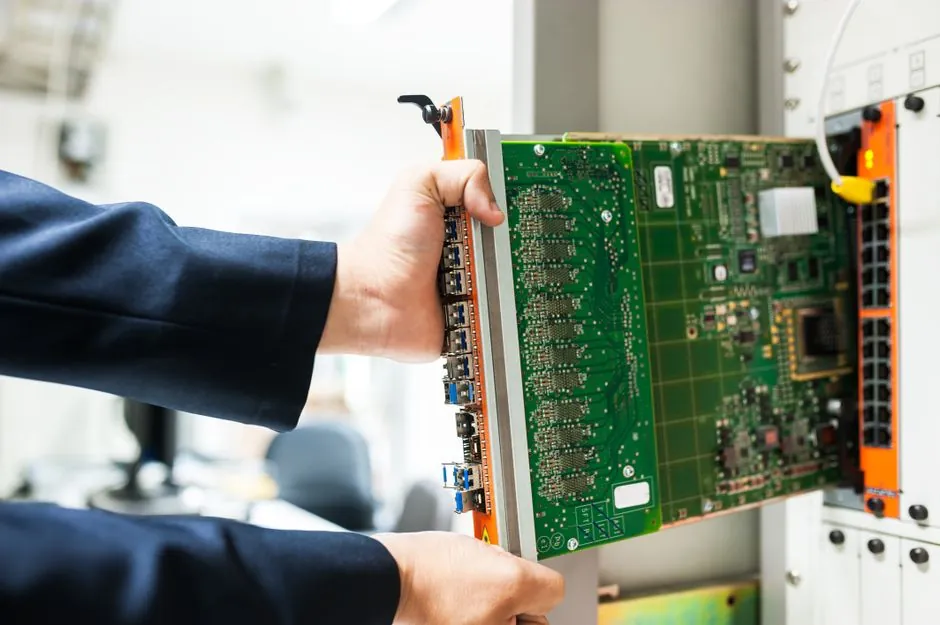
Managed and unmanaged industrial Ethernet switches forward frames identically, but only managed units add a configuration layer exposed via web GUI, CLI, or SNMP v1/v2c/v3 for VLAN, redundancy, monitoring, and security [S1]. On a plant floor, the decision is rarely about features on a datasheet; it is about how the switch behaves in the cabinet where it actually lives, in the third year of service, in the heat that the original integrator never saw [S1].
Industrial-grade hardware is the common baseline: metal housings, dual DC power inputs, IP40 or IP67 ingress protection, EMI shielding for VFD and motor noise, and operating temperature ranges typically quoted as −40°C to +75°C, versus 0–40°C for commercial switches [S5]. The differentiation between managed and unmanaged sits entirely on top of that shared physical layer, in software, protocols, and the engineering effort to keep the network alive [S2][S5].
Capability gap: what unmanaged cannot do, and what managed gives you
Unmanaged switches are fixed-configuration, plug-and-play devices with no user interface, no CLI, and no remote visibility beyond per-port LEDs and, on some models, basic DIP switches [S3]. They learn MAC addresses and forward frames automatically, but they treat every multicast frame the same as broadcast, which is the structural reason most EtherNet/IP retrofits end up replacing them [S3].
The functional delta lives in seven concrete capabilities: 802.1Q VLAN segmentation, ring redundancy (RSTP, MRP, ERPS, typically under 50 ms recovery), IGMP snooping for multicast control, 802.1p/DSCP QoS, port mirroring and diagnostics, SNMP monitoring and alerting, and 802.1X port authentication [S1]. Security settings on managed switches can be configured to segment traffic and identify threats; unmanaged switches offer none of these protections [S4]. Even a managed switch run out of the box behaves as a basic unmanaged device, so the upgrade path does not require a forklift swap later [S3].
Thermal derating is the failure mode that surprises everyone
Most unmanaged switch failures in the field are thermal, and they trace back to a single misunderstanding: a 60°C operating rating means the air at the chassis cannot exceed 60°C, not the room around the cabinet [S1]. A sealed machine cabinet holding a servo drive, 24 V supply, PLC, and VFD routinely runs 15–25°C above room ambient, which in a 40°C summer plant puts the interior at 55–65°C before any switch derating kicks in [S1].
MTBF compounds the problem because vendor figures are typically calculated against MIL-HDBK-217 at 25°C ambient, so a switch showing 500,000 h MTBF on paper can fall below 200,000 h effective MTBF at 65°C chassis air, and the 10°C reliability rule halves electrolytic capacitor life for every 10°C above rated temperature [S1]. For more on how ambient derating hits other field electronics, see the related write-up on Pneumatic Cylinder Seals: Piston vs Rod vs Wiper Function, where heat and contamination are handled the same way at the design stage.
Decision matrix: pick by network shape, not by price

Use unmanaged switches when the network is small and stable, the configuration is unlikely to change, no remote monitoring is required, advanced diagnostics are unnecessary, redundancy is not a requirement, and installation simplicity outweighs the loss of control, for example a machine builder fitting a PLC, HMI, VFD, and remote I/O inside a single panel [S2]. Use managed switches when the network has many connected devices, requires high availability, needs redundancy and traffic prioritization, is expected to grow, requires segmentation, has cybersecurity requirements, or supports critical production equipment [S2].
The clearest single trigger is EtherNet/IP multicast: a machine with a dozen drives and a motion controller will flood an unmanaged switch and choke on its own traffic, while managed IGMP snooping keeps multicast scoped to subscribed ports [S1][S3]. For ring topologies, RSTP, MRP, and ERPS on managed hardware deliver sub-50 ms failover, which unmanaged hardware simply cannot provide [S1].
Cost, lead time, and engineering overhead: the trade most teams forget
Unmanaged hardware typically wins on unit price and on zero-configuration deployment, which is the reason machine builders reach for it inside small panels [S2][S5]. Managed switches carry a higher unit cost, but they also require someone on staff who can configure VLANs, set up RSTP, and read SNMP traps, and that engineering overhead is often the real reason unmanaged still wins on cost [S2][S5].
Web-smart switches, sometimes called smart or web-managed, sit in the middle: they expose port monitoring, link aggregation, and basic VLANs through a web interface, but generally lack SNMP and CLI, and usually have to be configured one device at a time, so they fit mid-sized networks that want a few management features without a full management stack [S3]. For comparison, ring-main feeder selection often follows the same cost-vs-control logic, as detailed in the RMU Load Break Switch: 400 A vs 630 A Selection for Ring Feeders write-up, where the cheaper unit is not always the cheaper system once coordination is added.
Use cases that map directly to the plant floor
Unmanaged fits edge device spurs, small standalone machines, IP-based surveillance drops, and SOHO-style networks where the goal is just to pass frames [S3][S5]. A typical machine-panel deployment is one unmanaged switch connecting a PLC, an HMI, a VFD, and a remote I/O block, with the network unlikely to grow [S2].
Managed fits process cells with multiple drives and motion controllers, substation and rail signaling networks, water and wastewater SCADA backbones, and any line where downtime cost per minute exceeds the engineering cost of a managed deployment [S2][S5]. A reference baseline for the underlying equipment is given in the industrial switch encyclopedia page, which lists the same temperature, IP, and dual-power-input characteristics across both classes.
Limitations and failure modes to design against
Unmanaged switches cannot prioritize traffic, offer no built-in security, and provide no monitoring or diagnostics, so a failure looks like a dead port with no log, no trap, and no remote recovery path [S5]. They also cannot participate in any redundancy protocol, so a single cable break in a ring or daisy chain drops the downstream segment [S1][S2].
Managed switches fail differently: misconfigured VLANs can isolate critical devices, RSTP loops can stall a segment, and firmware vulnerabilities open their own attack surface, which is why managed hardware still needs a documented config baseline and patch process [S1][S4]. The reliability discipline is the same as for Stainless Steel Tapered Roller Bearings for Washdown Equipment, where the harder, more capable component also demands tighter installation and maintenance practice.
Spec checklist before you buy
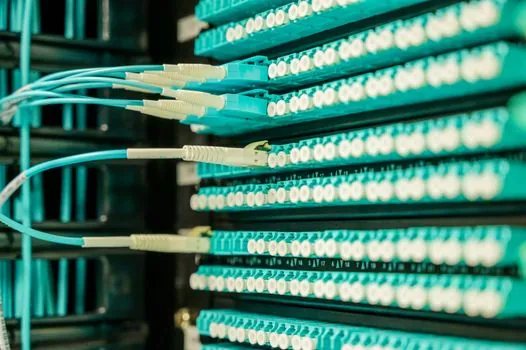
Confirm the operating temperature window against the worst-case cabinet interior, not the room ambient, and apply the 10°C capacitor-life rule to the projected MTBF [S1]. Verify IP rating, EMI shielding, and dual DC inputs for the actual environment, not the brochure [S5]. Decide in writing whether the network needs VLAN, IGMP snooping, RSTP/MRP/ERPS, 802.1X, and SNMP before the purchase order, because retrofitting managed capability into a deployed unmanaged switch is exactly the unplanned work that derails schedules [S1][S2][S3].
One trackable signal: monitor cabinet interior temperature with a cheap data logger for at least one summer week, and compare the peak to the switch's rated ambient before signing off the design. A second signal: if EtherNet/IP multicast traffic is present, or if any segment is expected to exceed about eight devices, default to managed and budget the configuration engineering up front.
For the relevant spec sheets and selection criteria, see floor grinder, and concrete batching plant.