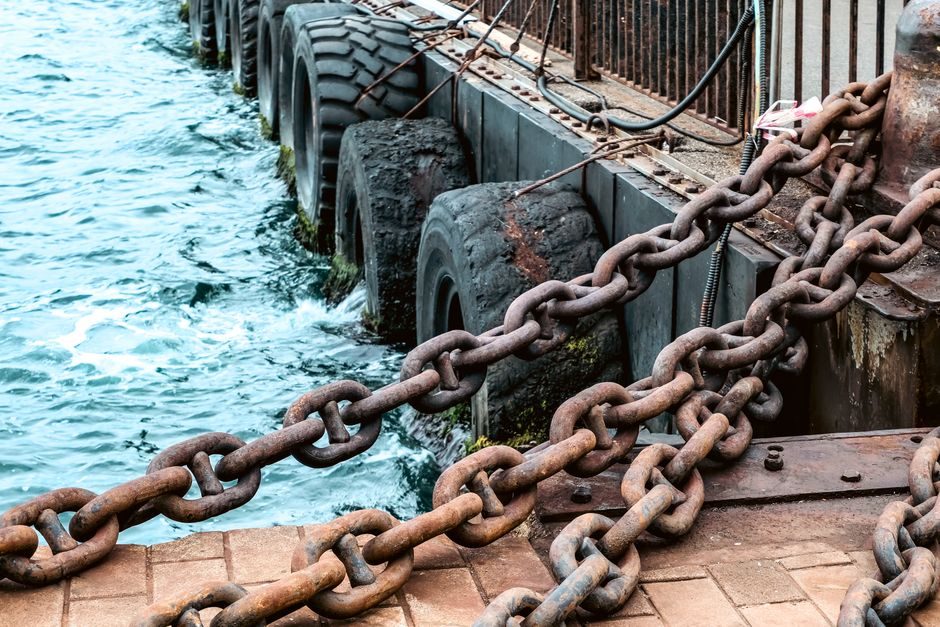
Pitch, ISO/ANSI designation and plate-steel grade are the three variables that explain a roughly 5× spread between the cheapest and the most expensive stock roller chain SKUs listed on Chinese B2B portals on 2026-07-14, with 08B-1 (12.70 mm pitch) transmission chain quoted at US$2.00–2.20 per metre and ANSI C2052 hollow-pin conveyor chain at US$10.00–20.00 per 100 m [S3].
Premium-tier lines from manufacturers such as D.I.D (Japan) and PEER Chain (US) command multiples of those import-tier figures once torque rating, fatigue life and brand certification enter the equation, while Hangzhou Zhijiang Sprocket and Opt Chain list 32B-2, 28B-2 and 24B-2 British Standard duplex sprockets aimed at OEM export accounts [S1][S2][S4][S6].
Where the FOB price actually sits in July 2026
Made-in-China.com listings refreshed on 2026-07-14 show Premium B-Series 20B-1 transmission drive chain at US$8.50–10.25 per metre and 08B-pitch (12.70 mm) general drive chain at US$2.00–2.20 per metre, with 15.875 mm-pitch transmission chain priced between the two bands [S3]. Hollow-pin ANSI C2052 conveyor chain, the format typically used for accumulated pallet handling, lists at US$10.00–20.00 per 100-metre reel. Hangzhou Transom Industrial and Opt Chain both list ANSI/ASA, British Standard (BS) and JIS B-series sprockets and chain on the same portal, which is the price band most EU and US distributors cross-reference against domestic suppliers [S2][S6].
Retail-tier benchmarks for branded chain sit considerably higher than the FOB tiers above. A 100-foot reel of genuine Oregon 32-106 harvester chain was listed on eBay at US$311.93 against a US$374.18 list price (17% discount) in 2025-04, implying a per-foot unit cost in the US$3.10–3.75 range before shipping. That branded aftermarket figure is roughly 4–6× the Chinese import-tier chain, illustrating the OEM-vs-aftermarket gap that procurement teams must normalise before comparing quotes [S3].
What drives the spread: pitch, strands, material and standard
Roller chain price scales primarily with pitch, because every doubling of pitch roughly doubles plate cross-section, pin diameter and roller mass. The 08B (12.70 mm) simplex chain at US$2.00–2.20/m sits at the low end, 20B-1 (31.75 mm) at US$8.50–10.25/m sits in the mid-tier, and 32B-2 duplex British-Standard chain exported by Zhijiang Sprocket occupies the heavy end for agricultural and construction OEMs [S2][S3]. The relevant roller chain reference for engineers is that ANSI B-series / ISO 606 short-pitch chain (04B–24B simplex) and duplex, triplex variants are the format most Chinese suppliers list in metric pricing per metre, while British Standard chain (08B–32B) carries a small premium owing to higher pin-shear ratings [S2][S3].
Material grade is the second lever. Standard carbon-steel roller chain in 40Mn or 45Mn plate is the FOB default at the price points above. Stainless-steel 304/316 chain and nickel-plated variants are typically 2–4× the carbon-steel figure, which is why suppliers segment chain into "Standard / Industrial / Stainless / Heavy-Duty" tiers on the same product page. PEER Chain publishes a 400 Class and 700 Class pintle chain range as a separate, heavy-duty line with higher working loads than ANSI B-series transmission chain [S4]. STAR Machine's catalogue of roller chain, conveyor chain and customised industrial chain sits at the same FOB tier, with OEM-branded batches carrying a 10–25% surcharge over unbranded stock [S5].
Couplings and specialty chain: where pricing diverges further
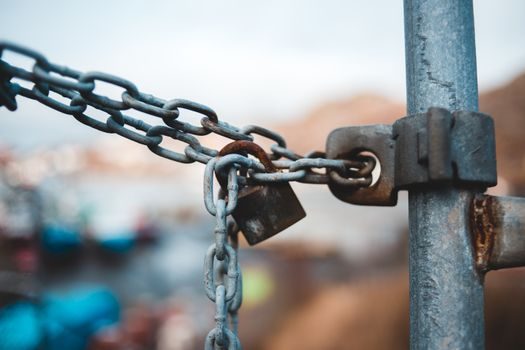
Roller-chain couplings — a duplex chain wrapped around two matching sprockets — are priced on torque rating rather than per-metre. D.I.D's sleeve-and-shear-pin roller chain coupling, refreshed on DirectIndustry, spans 249 Nm to 186,000 Nm torque at rotational speeds up to 4,800 rpm, with the high end reserved for steel-mill and heavy-conveyor drives [S1]. Hangzhou Zhijiang Sprocket carries the matching duplex chain, coupling sprockets and coupling cases in its catalogue, and frames the chain coupling as the "widely adopted" domestic format for shaft connection in Chinese industrial practice [S2].
Specialty formats add cost again. Hollow-pin chain (ANSI C2052, C2062, C2082) carries the through-pin that allows slats or attachments to be bolted directly to the chain, which is why it appears on conveyors where attachments are added and removed in service. PEER Chain's engineering capabilities brochure covers 400/700 Class pintle chain plus matching A-hub and B-hub sprockets for the agricultural and slow-speed conveyor market, both of which command premium pricing over ANSI transmission chain because of the link geometry and heat treatment [S4]. For buyers comparing those categories, the per-metre cost ratio is roughly: ANSI simplex < ANSI duplex < BS duplex < hollow-pin conveyor < pintle/heavy-duty < stainless < chain-coupling assemblies [S3][S4].
Sourcing tiers and total-cost levers
Three sourcing tiers dominate the import channel on 2026-07-14. Tier 1 is direct-OEM (Hangzhou Transom, Opt Chain, STAR Machine, PEER Chain) with minimum order quantities typically expressed in 100-metre reels or by the drum, and tooling/setup fees waived for repeat orders [S2][S4][S5][S6]. Tier 2 is B2B-portal (Made-in-China.com) where the same factories list 08B, 10B, 12B, 16B, 20B, 24B chain in single-reel quantities with FOB Ningbo or FOB Shanghai pricing, freight on top [S3]. Tier 3 is regional distributor (eBay-aftermarket or industrial MRO) where Oregon, Diamond, and other branded reels sit at the 3–6× price multiple.
Total-cost levers sit outside the unit price. Freight on a 100-metre reel of 20B-1 chain from Ningbo to Long Beach has historically run 8–14% of the declared cargo value at LCL rates, duty adds 2.5–3.3% under US HTS 7315.11.00, and an MRO distributor markup of 25–40% is typical. For a buyer working to a fixed budget, the same engineering specification is often achievable by dropping one chain series (e.g. from 24B-1 to 20B-1) provided the working load and pitch constraints are re-checked. A useful companion read is the Roller Chain Selection: Pitch, Series, Load and Speed Gates guide, which lines the same series numbers against allowable horsepower and speed factors, and the Roller Chain Buying Guide 2026 for lubrication and specification gates that affect wear life — and therefore cost per operating hour [S3][S4].
When import-tier chain is the wrong choice
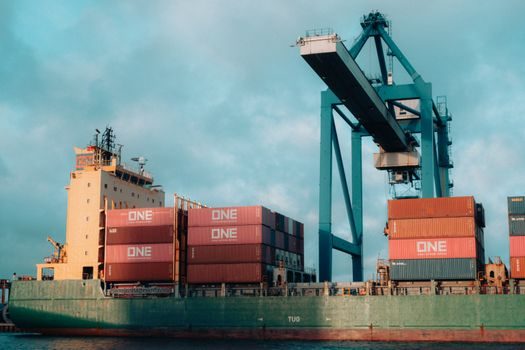
Import-tier Chinese chain is the wrong pick when the application is safety-rated, food-contact, or explosive-atmosphere. PEER Chain markets its premium line for those accounts with documented fatigue life and lot traceability [S4]. D.I.D's Japanese-made chain coupling catalogue explicitly lists torque up to 186,000 Nm and 4,800 rpm operation — service conditions where unbranded Chinese chain has not been qualified [S1]. Conversely, FOB-tier chain is the right pick for general industrial drives, agricultural machinery, tile-making lines, and OEM skid builds where ISO 606 dimensional compliance and 40Mn plate steel are sufficient, and where the linear guide and roller chain on the same machine share only the conveyor or transfer-roller section. The road-roller and chain conveyor reference pages give context on the higher-end drives where premium chain earns its multiple.
On 2026-07-14 the verifiable signals worth tracking are: (a) Chinese B2B-portal FOB pricing for 08B/10B/12B/20B chain, which has been stable to slightly softer in H1 2026 versus 2025 baselines on the Made-in-China.com listings; and (b) branded aftermarket reel pricing (Oregon, Diamond, D.I.D), which has held closer to list as freight and alloy surties remain in effect. A procurement team that benchmarks against the conveyor chain and crossed-roller guide reference pages for adjacent driveline cost will find that the roller chain unit cost is usually the smaller line item — chain wear, lubrication labour, and downtime dominate total cost of ownership once a drive is in service [S3][S4].