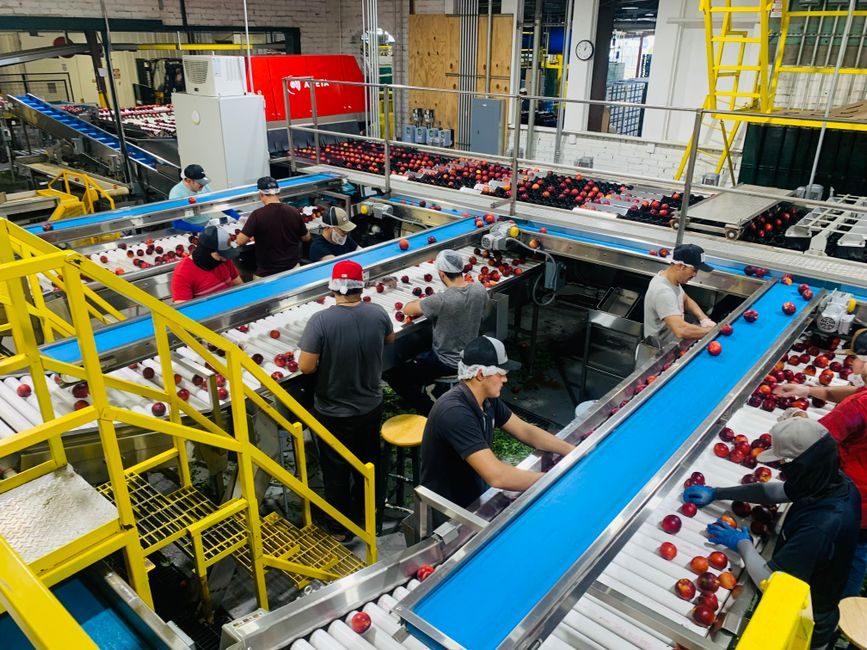
A screw conveyor, also called an auger conveyor, is a helical-flight screw rotating inside a trough or tube to push 10–7,500 cubic feet per hour of bulk solids horizontally, on incline, or vertically [S1].
Sizing hinges on seven interacting variables: material bulk density, particle size and abrasiveness, required capacity (TPH or cu ft/hr), conveying length, incline angle (typically capped near 15–20° for standard flights), flight type, and trough-vs.-tubular enclosure [S1][S3]. Engineers who lock in those seven first, then pick a drive and seal package, avoid the most common field failure: an over-driven, under-troughed unit running past 45–50% trough fill and burning out the hanger bearings.
Match the Flight Geometry to the Material Class
Standard helicoid or sectional flights suit free-flowing, non-abrasive grains, flour, and plastic pellets at trough loadings up to 30–45% of the screw volume [S1].
For sticky, lumpy, or stringy waste — drilling cuttings, dewatered sludge, shredded MSW, bagasse — a shaftless spiral with no center pipe is the working default, because there is no central pipe for material to wrap around [S3]. The DCLS series sold for offshore and onshore drilling rigs, for example, ships as a sealed tubular auger with flights welded directly to a centerless helix specifically to convey mud cuttings without bridging [S3]. Abrasive ash, slag, sand, and boiler-combustion residues call for hard-surfaced flights; failure analysis on a power-plant ash conveyor found drive-shaft fatigue traced to under-thick flight web and unhardened coupling journals, problems fixed only by upgrading to thicker flight plate and induction-hardened bearing surfaces [S2].
Capacity, RPM, and the 45% Trough Fill Rule
Going above roughly 45% trough fill almost always pushes the drive into overload and overheats the hanger or coupling bearings; the practical ceiling is closer to 30% for heavy, abrasive, or flood-fed applications [S1]. A 9-inch-diameter screw running at 60 RPM in a 30% loaded trough typically moves around 100–150 cu ft/hr of 40 lb/cu ft material; the same screw at 100 RPM with a 45% loading pushes past 300 cu ft/hr, but only if the drive is sized for that absorbed power, not the nameplate. Length-to-diameter ratio is the other silent limit: beyond roughly 20–30 L/D the screw begins to overpack material in the trough, so longer runs are often split into two conveyors with an intermediate discharge.
Shaft vs. Shaftless, and Why It Matters for Waste

Through-screw conveyors use a center shaft with flights welded or formed around it, accepting standard CEMA components and shorter lead times [S1].
Shaftless designs drop the center pipe and run a single coiled ribbon inside a U-trough or tube, eliminating the hanger-bearing support points that fail in sticky service and lifting permissible incline to 30–45° [S3]. A drilling-cuttings auger, for example, ships shaftless in a sealed tube so wet, cohesive cuttings cannot accumulate on a center pipe [S3]. Trade-off: shaftless screws have lower maximum TPH per unit diameter because the ribbon cannot be hard-faced the same way, and the spiral must be spring-steel or wear-resistant alloy, not mild steel. For free-flowing grain or pellet service the through-shaft design is cheaper to source, easier to splice, and easier to find replacement CEMA-300 or CEMA-400 components for in North America.
Incline, Length, and Drive Sizing
Beyond 20°, switching to a steeper-pitch flight, a short-pitch or variable-pitch screw, or moving to a bucket elevator alternative becomes the right call; the conveyor keeps the same diameter, but the drive torque scales with lift height and friction. Drive sizing is then set by the longest likely start-up condition, not the steady-state running load, and the gearbox service factor is usually specified at SF 1.5–2.0 for abrasive or heavy service. Cross-check on electrics: a 5 HP motor on a 40 ft, 9 in. inclined ash screw is undersized if the unit must start under a fully loaded trough.
Enclosure, Sealing, and Hazardous-Area Service
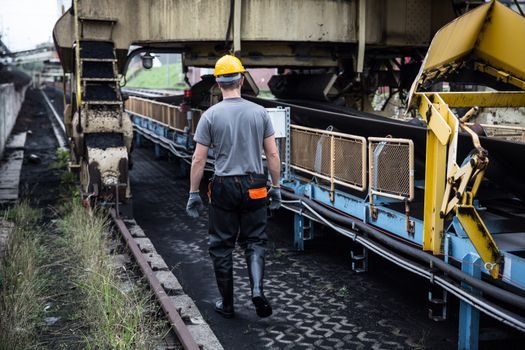
For dust-prone grain, cement, or powder service, a totally enclosed tubular screw with flexible rubber discharge boots keeps emission below visible dust levels and isolates the bearings from the product stream [S1][S3].
In ATEX or IECEx zone 21/22 dust atmospheres the same enclosure plus dust-tight end seals and grounding lugs is the minimum; specifying a non-sparking bronze or stainless flight on flammable powders is common. For sanitary or food-grade duty, 304/316 stainless troughs, polished welds, and quick-clean end caps are the spec — and they push the unit price roughly 2–3× above a painted mild-steel trough of the same size. A drilling-cuttings unit like the DCLS adds a fully sealed tube plus multiple discharge points along the casing, which is what makes the format viable for offshore-skid use where open troughs are unacceptable [S3].
Common Failure Modes and What Specs Pre-empt Them
The four failure modes that show up repeatedly in field forensics are flight wear, hanger-bearing seizure, drive-shaft fatigue at the coupling, and trough hole-through at the inlet [S2].
On a power-plant ash conveyor the root-cause investigation identified coupling-journal wear and undersized flight web as the primary drivers of drive-shaft replacement; the fix path was thicker flight plate plus induction-hardened coupling journals and a higher CEMA component class [S2]. For sticky waste service, hanger-bearing failure from wrapped material is the dominant cause, and the spec move is a shaftless screw, eliminating hanger bearings entirely [S3]. For abrasive ores, hard-facing (e.g., chromium-carbide overlay) on the flight face and the trough bottom adds 3–5× wear life; for corrosive chemical duty, the trough and flight go to 304 or 316 stainless. Always spec a removable cover or quick-access door at each hanger-bearing location; bearing life is set by greasing access, not by bearing brand.
Comparing the Main Screw Conveyor Types
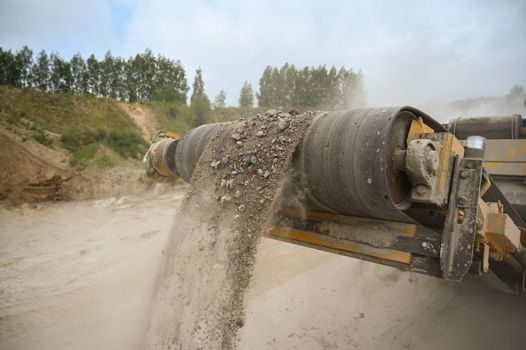
The three widely sourced formats line up against four decision criteria: capacity per diameter, max incline, suitability for wet/sticky material, and relative unit cost [S1][S3].
Standard through-shaft helicoid: highest cu ft/hr per inch of diameter, max incline ~20°, weak on sticky waste, lowest cost. Tubular sealed (DCLS-style) auger: lower capacity than open trough, max incline 30°+, sealed for dust and offshore service, highest cost per foot [S3]. The application, not the catalog, picks the type: a flour mill wants standard helicoid in galvanized mild steel; a wastewater plant wants shaftless stainless; an offshore drilling rig wants tubular sealed. For lighter horizontal transfer duty between processes where dust containment is not the driver, a chain conveyor is often the lower-cost fallback in older grain and cement plants.
Sourcing, Standards, and the CEMA Anchor
North American screw conveyors are usually specified against CEMA Standard 300 / 350 / 400 / 550 component classes, which define flight thickness, coupling hubs, and trough gauge for each diameter range [S1].
European and offshore builds track DIN 15201 and ISO 21469 for hygienic duty, plus the relevant ATEX 2014/34/EU or IECEx certification for explosive-dust service; verify the certificate number on the gearbox and motor nameplate, not just the brochure. When comparing quotes, lock the screw diameter, pitch, RPM, motor HP, service factor, trough gauge, flight material, and seal type into the PO; suppliers will otherwise swap to a thinner flight and a smaller gearbox to win the price. For long-term spare parts, demand a parts list keyed to CEMA component codes and a recommended spares kit of at least one full flight section and two hanger bearings per conveyor. Pairing a screw conveyor with a belt conveyor for the horizontal run and a small bucket-elevator or steep-pitch screw for the lift, as covered in the belt conveyor selection guide, is the standard hybrid layout in grain, cement, and plastic-pellet plants. Next trackable signal: confirm the CEMA class and flight thickness on the supplier drawing before issuing a PO, and verify that the gearbox service factor is at least 1.5 for any abrasive or inclined service above 15°.