
Desalination check valves should prevent reverse flow after a pump trip while limiting water hammer, pressure loss, corrosion, and maintenance exposure [S1][S3].
The selection is driven by the RO, MSF, or MED stage, chloride concentration, pump discharge pressure, flow velocity, closure method, and required pressure class, not by bore size alone [S2][S3][S4].
Define the Check Valve Duty
A pump discharge check valve closes after forward flow stops, protecting the pump from reverse rotation, damaging surge, and uncontrolled reverse flow. That protection is a core function in desalination pumping, where a pump trip can otherwise create water hammer and impeller damage [S1].
Other applications include protecting RO membrane trains, maintaining the pressure gradient in multi-stage distillation, and preventing permeate or treated water from flowing into a higher-pressure feed section [S5]. The valve must therefore be assigned a specific service condition: normal flow, minimum and maximum pressure, fluid density, water temperature, allowable pressure loss, and the required closure rate [S3][S7].
Check valves do not provide flow regulation or pressure regulation. Their duty is to permit forward flow and block reverse flow. A throttling control valve, where the process requires variable flow, must be assessed separately from a non-return device. The broader control valve selection framework applies to regulating elements, not to a check valve selected only for pump protection.
Match Materials to Seawater Exposure
Seawater selection requires a corrosion-resistant body, closure member, seat, stem, spring, and fasteners because chloride exposure can cause pitting and crevice corrosion [S3][S4]. Grade 316 stainless steel appears in water-treatment check-valve construction with a stainless disc and EPDM seat, while duplex stainless steel is identified as suitable for most seawater applications [S2][S4].
Material comparison is straightforward: carbon steel and cast iron need protection and have limited resistance when directly exposed to seawater; 304 and 316 stainless steel are more vulnerable to localized corrosion in high-chloride service; duplex 2205 offers a stronger general corrosion balance; and super duplex 2507 is suited to highly corrosive or critical duties at a higher material cost [S4]. Titanium is also identified as a corrosion-resistant option for demanding seawater service [S3].
Elastomers require a separate compatibility review. EPDM is used for treated-water service because it resists chlorine and ozone, while PTFE is listed for ozonated service [S2]. Chloride concentration, residual oxidant, temperature, and seal geometry must be checked together, because a corrosion-resistant body does not make a conventional rubber seat suitable for seawater.
Compare Swing, Dual-Plate, and Non-Slam Types

A swing check valve is mechanically simple and appropriate where low velocity permits a controlled swing action, while a dual-plate check offers a compact body and lower pressure drop. Silent check valves use springs and short-stroke movement to open and close rapidly with reduced noise [S9][S10].
For a conventional pumping service, the swing check valve remains a credible baseline, but seawater exposure, pump inertia, line length, and closure dynamics decide whether its simplicity is an advantage. A dual-plate design can be attractive where installation space and pressure loss dominate. A non-slam design becomes more defensible where rapid pump shutdown, long discharge piping, and surge control dominate.
Set Pressure, Flow, and Closure Criteria
High-pressure seawater applications require the valve's pressure rating, allowable working pressure, body strength, seat sealing, and actuator or spring load to be checked against the maximum pump-discharge condition [S3][S6]. A 100 bar design envelope is used in seawater check-valve selection guidance, but that figure is a design condition rather than a universal default [S6].
Water-treatment swing check valves are listed at PN 10 and PN 16, with construction identified to EN 12334 and AWWA and a ductile-iron body with an SS 316 disc and EPDM seat [S2]. These ratings apply to the cited product class, not to every seawater installation. High-pressure reverse-osmosis pump discharges can require a materially different class from a low-pressure transfer or treated-water main.
Flow rate affects the pressure drop and closure energy, while fluid density affects the load on the closure member. The selection should also record maximum and minimum forward pressure, backpressure, allowable non-return leakage, and whether the valve must close on pump stop, power loss, or control-system trip. A specific check valve data sheet should carry these values rather than relying on a generic “seawater service” label.
Address Water Hammer and Maintenance
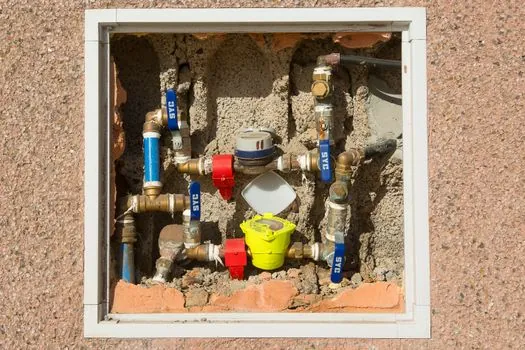
Uncontrolled check-valve closure can produce a pressure rise greater than the normal system pressure, so closure characteristics belong in the hydraulic transient study, not in a late procurement detail [S1][S7]. Relevant inputs include discharge-pipe length and diameter, pump speed, valve travel, system volume, and the pressure-relief capability of the high-pressure circuit.
Three closure approaches are available: a weighted swing lever, an adjustable or governed swing mechanism, and a spring-assisted non-slam design. The weight and lever swing check valve closing-speed guide provides a focused reference for adjusting slower closure, while non-slam valves are specified where rapid, controlled opening and closing are required [S9].
Maintenance access matters because seawater solids, scale, and corrosion products can affect hinges, springs, seats, and guide surfaces. The design should permit cleaning or inspection without removing adjacent pipework. A simple swing mechanism reduces the number of operating parts, but that benefit does not offset unsuitable materials or unacceptable closure behavior.
Apply Standards and Procurement Evidence
For a cited water-treatment swing check design, pressure classes are PN 10 and PN 16, and the listed standards are EN 12334, AWWA, and IS 5312 [S2]. Potable-water-contact materials require the applicable approval route, including WRAS, NSF 61, or IS certification as specified by the project jurisdiction [S2]. These approvals address contact safety, not seawater corrosion resistance or water-hammer performance.
Procurement documentation should identify the body, disc, seat, spring, hinge, coating, elastomer, and fastener materials separately. It should also state the pressure class, design temperature, nominal size, allowable working pressure, flow direction, seat leakage class, closure method, and test requirements. Vendor claims about stainless steel or titanium alone are insufficient because a complete assembly can fail through one incompatible trim component [S3][S4].
For comparison, general isolation sizing uses different rules: ball valves are preferred below DN 50, while butterfly and gate valves are suitable from DN 65 to DN 300 in the cited seawater guidance [S4]. A check valve is a separate hydraulic category, and its selection must be based on pump-discharge behavior rather than a generic valve-size hierarchy.
Know Where Check Valves Do Not Fit
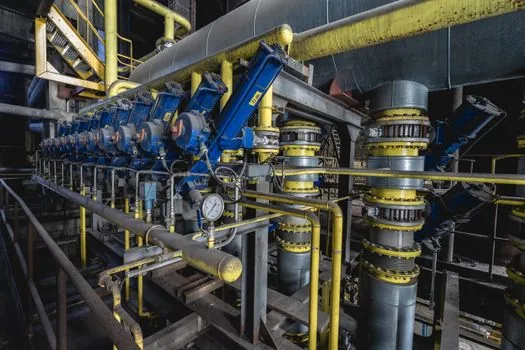
A check valve is not suitable as a substitute for an isolation valve, pressure-control device, or throttling element. It is also a poor choice where reverse flow is intentionally required, where bidirectional flow is needed, or where the available pressure margin cannot absorb closure-induced surges. The butterfly valve may be appropriate for isolation elsewhere in the desalination train, but it does not provide the pump-protection function of a check valve. [S2]
Water supply check valves sold for potable or general water service should not be assumed suitable for desalination without verification of pressure rating, chloride exposure, seal material, and closure behavior [S5]. A valve described only as “water check valve” is not an adequate seawater procurement specification. The same warning applies to “316 stainless steel” as a standalone description, because grade 316 is susceptible to localized corrosion in high-chloride service [S4].
The defensible selection is a documented service match: corrosion-compatible wetted materials, verified pressure and temperature capability, calculated or tested pressure loss, controlled closure appropriate to the pump system, and clear access for inspection. Trackable procurement signals are the confirmed maximum differential pressure and the specified corrosion-resistant grade, especially where 100 bar reverse-osmosis service is involved [S6].