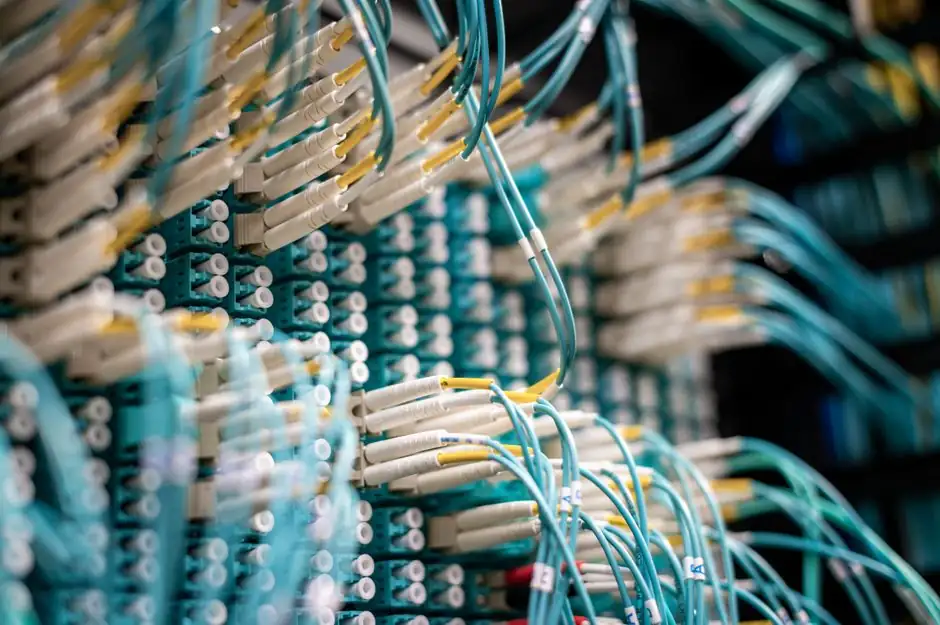
Dell Technologies, Hewlett Packard Enterprise (HPE), and Lenovo together account for the majority of x86 rack-server unit shipments in 2026, with IBM, Cisco, and Inspur filling the tier-one and tier-two tiers above and below them, per OEM product-line evidence circulating through August 2026 [S2].
IBM's z13 mainframe platform remains a parallel track for cryptographic and high-consolidation workloads, documented in z/OS V2R2 ICSF guidance covering server hardware support [S1]. The rack-server category itself, defined as scalable 1U-4U chassis with hot-swap PSUs and iDRAC/iLO-class management, is the volume driver behind most vendor revenue, as earlier industry sizing reports have tracked [S4].
Major OEM Lineup and 2026-08 Product SKUs
HPE's Gen12 ProLiant family anchors the 2P 2U segment with the DL380 Gen12 (SKU P73286-B21), an EDSFF NC configure-to-order chassis that exposes the current 2U thermal envelope and PCIe Gen5 riser budget for mixed accelerator loads [S2]. HPE's memory catalog now ships DDR5-5600 registered smart-memory modules such as the 16GB dual-rank x8 kit P64705-B21 at CAS 46-45-45 timing, and enterprise SATA SSDs like the P40504-B21 1.92 TB drive rated at 3.05 DWPD with 72K/62K IOPS read/write and 550/520 MB/s sequential throughput, both listed on the HPE Server Parts catalog in August 2026 [S2].
Lenovo ThinkSystem and Dell PowerEdge are routinely co-specified alongside HPE in tender documents; Inspur, Huawei, and Supermicro are the dominant non-Western names inside the same data-center rack envelope, and Cisco UCS plus the IBM z family cover the dedicated non-x86 niches [S1][S2]. Tier-3 ODMs (Wiwynn, Quanta, Foxconn) supply hyperscale buyers directly, but their share does not flow through named-OEM revenue reports.
CPU Platform and Power Envelope as Decision Gates
AMD EPYC 9555 (64 cores, 3.2 GHz base, 360 W TDP, 128 PCIe 5.0 lanes, DDR5) is one of the reference 2P sockets HPE catalogs for the DL380 Gen12 platform, and its 360 W socket power pushes the 2U chassis into a 2+2 redundant 1600-2400 W PSU bracket on standard builds [S2]. Intel Xeon Scalable (Granite Rapids / Sierra Forest) fills the alternative 2P slot, while Arm-based AmpereOne and NVIDIA Grace are gaining hyperscale traction outside the mainstream rack segment [S2].
Three concrete selection gates drive OEM choice in 2026: PCIe 5.0 lane count versus GPU/nic count, DDR5 channel count versus memory-bandwidth per core, and per-rack power density versus facility cooling. The 128 PCIe 5.0 lanes of EPYC 9555 let a 2U box host two dual-slot accelerators plus 4 NICs without riser contention; the 360 W TDP, however, forces a chassis designed for 700+ W per socket, which excludes legacy 1U SKUs [S2]. Buyers should map CPU TDP to chassis SKU before shortlisting OEM, not after.
Memory, Storage, and Network Throughput Caps
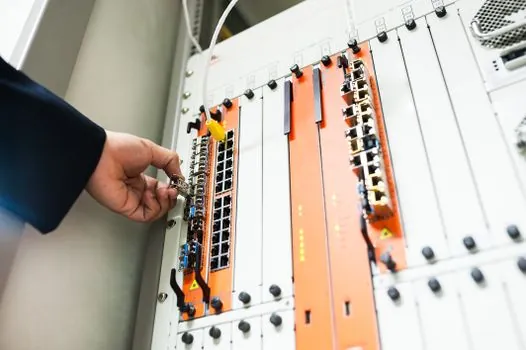
HPE's P64705-B21 DDR5-5600 module at 16 GB dual-rank x8 is the current JEDEC-defined baseline for Gen12 platforms, with capacity scaling 32 GB / 64 GB / 128 GB / 256 GB in the same R-DIMM form factor at the same 5600 MT/s ceiling [S2]. Throughput caps at 1DPC one DIMM per channel at 5600 MT/s; 2DPC drops to 4400 MT/s on most 2P boards, which is the spec wall every OEM publishes but few tenders capture explicitly.
On storage, the HPE 1.92 TB SATA SSD P40504-B21 (3.05 DWPD, mixed-use) is the typical tier-1 boot-and-cache drive, while the MSA 10.8 TB 10K SAS 12 Gbps bundle (R0Q66A) covers tier-2 capacity at 10,000 RPM and 2.5" SFF [S2]. Network caps are set by the riser card; the Aruba Instant On 1960 12XT 4XF (JL805A) tops out at 320 Gbps switching capacity with 12x 10GBase-T plus 4x SFP+ ports, a common 1G-to-10G aggregation tier seen in OEM data-center BOMs [S2].
Cross-OEM Comparison on Four Buyer Criteria
Lining up the four mainstream OEMs on cost, platform breadth, supply chain reach, and after-sales service, the picture in 2026 is: Dell PowerEdge wins on cost per rack-unit at the mid-range and on global service coverage; HPE ProLiant leads on platform breadth (storage + networking + compute under one warranty) and on supply-chain reach into Eastern Europe and Latin America; Lenovo ThinkSystem undercuts both on price-per-core on AMD EPYC SKUs while trailing on iLO-class management tooling; Cisco UCS and IBM z fill high-margin, low-volume niches (UCS for unified fabric, z for cryptographic consolidation) at 2-4x the price-per-rack-unit of mainstream x86 [S1][S2]. The trade-off is not brand prestige, it is which line item in the BOM carries the highest hidden cost: a Dell box can be cheaper at purchase but lose 8-12% TCO to support uplift, while HPE reverses that ratio at the high end.
Legacy Sizing Tables Still Cited in 2026
Oracle Enterprise Management's server-hardware sizing table, originally published for up to 1000-site deployments, still appears in 2026 procurement templates: Small (1-100 sites) and Medium (100-250) both require a 3.2 GHz Pentium-class processor with 2 GB RAM and 2x 80 GB SATA; Medium-to-Large (250-1000) scales to 4 GB RAM and 3x 80 GB RAID 5 with a 10/100/1000 NIC, on Windows Server 2008 R2 with IIS 7.0 and .NET 3.5/4.0 [S3]. These figures are operationally obsolete, but the tiering convention (1-100 / 100-250 / 250-1000 sites) is reused as a sizing shorthand in newer RFQs.
The Oracle RAC installation checklist, updated 2025-07, ties server sizing to minimum hardware and software pairs, including certified NIC, HBA, and shared-storage paths required for cluster qualification [S5]. Specs for these legacy support tables still anchor tender compliance, even when the actual deployed hardware is a Gen12 ProLiant or PowerEdge 2P box [S3][S5].
What Buyers Should and Should Not Do
Buyers should anchor OEM selection on three documents: the CPU SKU TDP and PCIe-lane count, the chassis thermal envelope and PSU redundancy rating, and the iDRAC/iLO/XClarity management API list [S2]. Buyers should not assume that tier-1 OEM branding implies comparable firmware update cadence, RAID controller passthrough behaviour, or BMC security posture, because those vary platform-by-platform and have caused repeated CVE filings in 2024-2025 firmware cycles.
For purchasers integrating with industrial control or building-automation layers, the same rack-server hardware routinely hosts OPC UA gateways, historians, and protocol-conversion software on top of the OS, which puts the architectural hardware and industrial valve data planes on the same physical network. Field experience shows the rack-server selection therefore also drives downstream sensor-side decisions on flow meter interfaces and pressure transmitter protocol support, and serial-port-heavy serial server gateways are still deployed at the rack edge to bridge RS-485 field devices. Building-pipe and plumbing network gear follows the same BOM convention, captured under building pipe hardware in spec libraries.
The next data points to watch are the 2026-Q3 IDC and Gartner server tracker releases (typical publication window September-October), the Gen13 ProLiant and PowerEdge 2P refresh announcements expected at HPE Discover and Dell Technologies World 2026, and the EPYC 9006-series and Xeon 6+ follow-on CPU SKUs whose TDP and lane-count deltas will reset the chassis-selection math above. Watch also the Inspur and Supermicro ODM-to-OEM shipment figures, which IDC has been folding into tier-2 OEM totals since 2024.
See also our earlier report, Titanium Alloy Selection for Construction: Grade Map and Spec Gates.