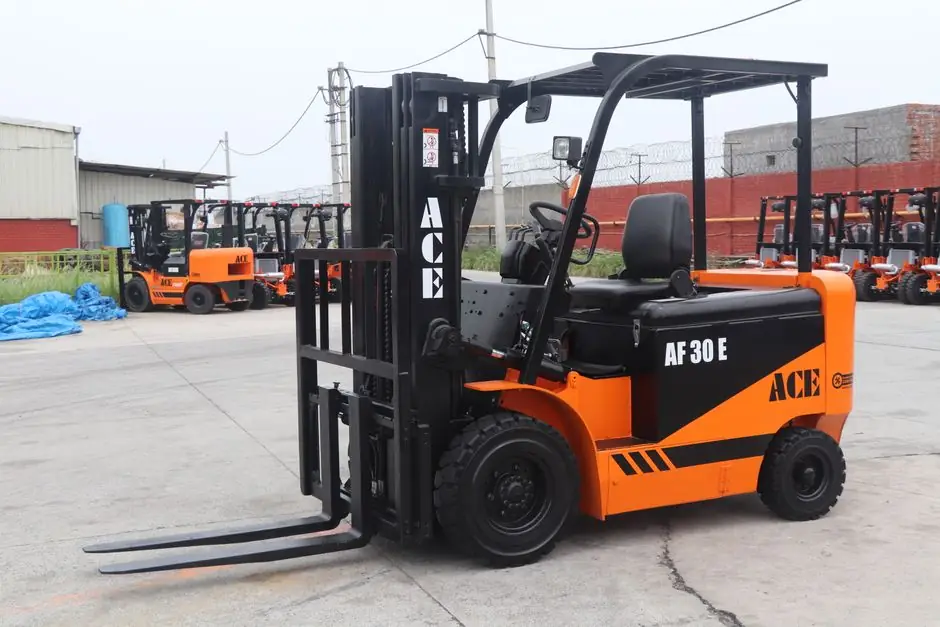
Industrial servo drives from 6 listed manufacturers span 0.1 kW to 240 kW output power, covering AC and DC topologies with EtherCAT, EtherNet/IP, and CANopen fieldbus options [S1].
The 2026 servo drive market segments by power class, feedback resolution, and bus protocol; buyers should match continuous torque, peak current, and STO (Safe Torque Off) functional safety to axis mechanics before shortlisting suppliers [S1][S5].
Power class breakdown across listed servo drive suppliers
Servo drive power ranges on the 2026 supplier index split into three practical tiers. Low-power DC and AC modules (0.1 kW to 15 kW) include the cyber simco drive 2 at 0 to 750 W, the iPOS4815 MZ-CAT at 1 kW, the iPOS8015 BZ-CAT-STO at 1.7 kW, and the MHA-0D series at 0.01 to 15 kW with 2.8 to 9.8 A current [S1]. Mid-range AC servo drives cluster at 0.37 to 240 kW output power, led by the MELSERVO series at 0.1 to 22 kW power and 0 to 110 kW output, and the 9400 HighLine at 0.37 to 240 kW output power [S1]. The Xenus XP2 series targets 10 to 20 A continuous current with high-resolution A/D converters for current-loop performance in safety-critical applications [S1].
Peak overload capacity is a critical differentiator. One Chinese manufacturer rates its servo motor and drive package at three times overload capacity with 2% efficiency improvement, using an embedded electromagnetic structure optimized through Industry 4.0 annealing processes [S4]. Same-power output packages are specified to save 20% panel space, simplifying cabinet integration in multi-axis machines [S4].
Bus protocols and feedback interfaces in current product lines
EtherCAT-compatible servo amplifiers are standard in the 2026 MELSERVO lineup, paired with high encoder resolution and energy-saving multi-axis drive units that separate the servo amplifier from the power stage [S1]. The cyber simco drive 2 supports EtherNet/IP with CIP Sync for real-time motion control, targeted at machine manufacturers needing deterministic multi-axis synchronization [S1]. The iPOS family uses CANopen (CAT suffix) with an embedded motion controller, allowing the drive module to be soldered onto a carrier board for compact integrated designs [S1].
For functional safety, the iPOS8015 BZ-CAT-STO explicitly integrates STO (Safe Torque Off) as a hardwired safety function, a baseline requirement for European CE-marked machinery under ISO 13849-1 [S1]. The Xenus XP2 series adds both isolated and high-speed non-isolated I/O to support a wide range of absolute encoders, including BiSS, EnDat, and SSI protocols, with high-resolution A/D converters for current-loop bandwidth [S1].
Reference designs and silicon platforms for servo drive development
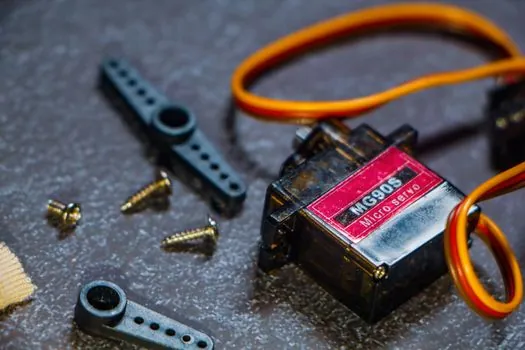
Texas Instruments' TIDM-SERVODRIVE reference design targets industrial servo drive and AC inverter drive development around the C2000 real-time MCU family. The design files list the TMS320F28379D at 800 MIPS with 2x CPU, 2x CLA, FPU, TMU, 1024 KB flash, EMIF, 16b ADC, and CLB, alongside the TMS320F28375S and TMS320F28377S variants [S5]. Isolated current sensing uses the AMC1204 ±250 mV precision isolated modulator, paired with the TLV3502 4.5 ns rail-to-rail comparator for overcurrent protection [S5].
Communication interfaces on the TI reference design include the ISO1050 isolated 5 V CAN transceiver, the SN65HVD3088E low-power half-duplex RS-485 transceiver, and the DCH010512D miniature 1 W, 3 kVDC isolated DC/DC converter for galvanic isolation between power and signal domains [S5]. For motion control applications, the design is a useful BOM template even for teams building on non-TI MCUs, since the analog front-end, gate driver, and isolator choices are silicon-agnostic [S5].
Manufacturer landscape: Western, Japanese, and Chinese suppliers
The 2026 supplier map divides into three regional clusters. Japanese and Western brands (Mitsubishi MELSERVO, Copley Xenus XP2, and the 9400 HighLine series) dominate the 0.37 to 240 kW mid-power AC range with multi-axis integration and established EtherCAT certification [S1]. Specialist small-form-factor and embedded drive suppliers (Copley, with the iPOS family at 1 to 1.7 kW) target OEM machine builders who solder the drive module directly onto a carrier PCB, eliminating the separate amplifier chassis [S1].
Chinese suppliers, exemplified by YUNWU, cover the full stack: ZE series and ZF-SV series AC servo motors (100 W to 750 W and high-power permanent magnet synchronous variants), plus MZ800, MZ860, MZ870, MZ630P, MZ630N, and MZ590 servo drivers for PMSM (permanent magnet synchronous motor) control [S4]. YUNWU holds ISO 9001 quality management certification, ISO 14001 environmental management certification, and CE marking on the servo drive product line [S4]. For a spec-first approach to vendor selection, the broader engineering criteria for sizing axis drives are laid out in a servo drive sizing field guide for 2026 that matches continuous/peak torque, bus protocol, and STO to axis mechanics.
Selection criteria: matching drive specs to axis requirements
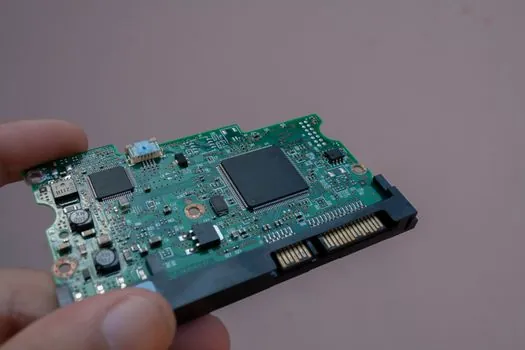
Buyers should shortlist servo drives on four hard criteria. First, continuous and peak current: the Xenus XP2 at 10 to 20 A suits mid-frames, while iPOS modules at 11 to 40 A current handle high-dynamic small-frame axes [S1]. Second, bus protocol alignment with the controller: EtherCAT for high-speed multi-axis, EtherNet/IP CIP Sync for Rockwell-based plants, CANopen for embedded or cost-optimized designs [S1]. Third, feedback resolution: sin/cos analog encoders with 16/64/256 interpolation factors yield effective resolutions up to 1,024,000 counts per revolution on a 1000-line encoder, as demonstrated in the Argon servo drive firmware [S3]. Fourth, functional safety: STO integration (as on the iPOS8015 BZ-CAT-STO) is now baseline for CE-marked industrial machinery [S1].
Cabinet integration and thermal design are practical constraints. A same-output servo drive that saves 20% space per the YUNWU specification directly reduces enclosure cost, while three-times overload capacity with 2% efficiency improvement lowers cooling demand [S4]. For multi-axis machines, multi-axis drive units that separate the amplifier from the shared DC bus reduce cabling and improve energy recovery during regenerative braking [S1]. The related engineering decision, matching drive power to motor frame and load inertia, is covered in the VFD sizing and selection guide for industrial motor control, which applies to AC induction drives rather than permanent magnet servo axes but shares the thermal and duty-cycle methodology.
Who servo drive suppliers serve, and where they fall short
Servo drive suppliers target three buyer profiles. High-volume OEM machine builders (packaging, textiles, semiconductor handling) source from Chinese manufacturers for cost-optimized 100 W to 15 kW AC servo systems with CE marking [S4]. Precision machine tool and robotics integrators specify Japanese or Western brands (Mitsubishi, Copley, Yaskawa-class) for proven EtherCAT certification, multi-axis synchronization, and global service networks [S1]. Embedded motion control developers buy board-level drives (iPOS series) and reference designs (TIDM-SERVODRIVE) to integrate motion into custom carrier PCBs [S1][S5].
Where suppliers fall short is application-specific. Low-power DC servo drives (0 to 750 W) like the cyber simco drive 2 are not suited for high-inertia machine tool spindles, where AC drives at 22 to 240 kW output power are required [S1]. CANopen-only drives cannot drop into an EtherCAT line without a gateway, and vice versa. For applications requiring high-bandwidth current control, drives without high-resolution A/D converters (16-bit or higher, as on the Xenus XP2) will underperform on torque ripple and dynamic response [S1]. Buyers should also confirm that the supplier's servo motor mechanical interface (flange, shaft, encoder mounting) matches the drive's feedback specification, since mismatched encoders are a common commissioning failure point.
Two trackable signals for sourcing teams: watch for the next revision of the TIDM-SERVODRIVE design files listing new isolated gate drivers and SiC MOSFET support, and watch for Chinese servo drive suppliers to expand EtherCAT certification beyond CE marking into Ethernet/IP conformance for North American OEMs. For a broader view of how servo drives integrate into machine tool and Industry 4.0 architectures, the reference article on machine tool Industry 4.0 digital-twin NC and OPC UA integration covers the controller and network layer above the drive.
For component-level specifications, see servo drive, and lighting equipment and electric lamps.