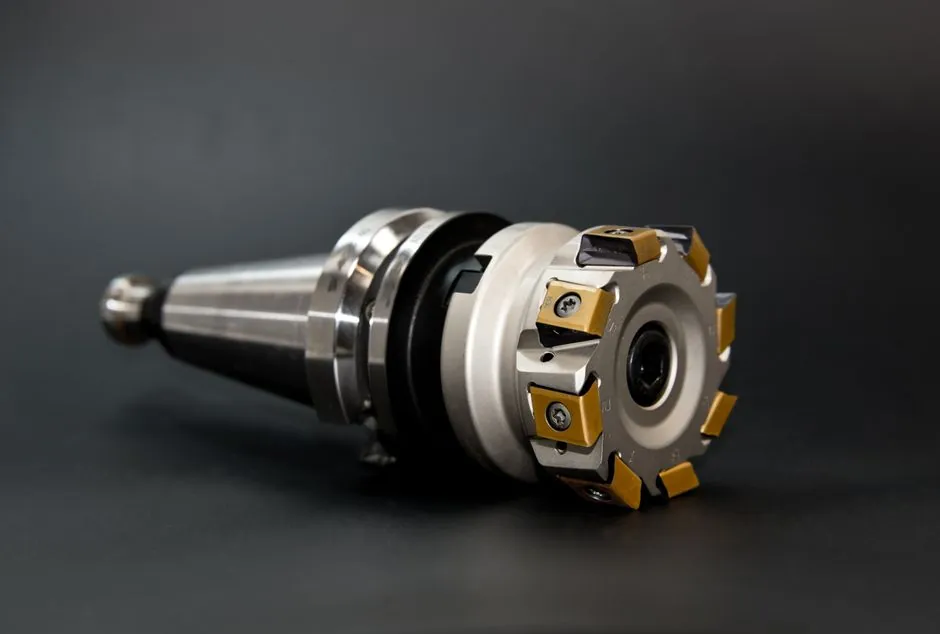
The global servo motors and drives market is projected to grow from USD 23.3 billion in 2026 to USD 40.3 billion by 2035, a 6.3% compound annual growth rate [S1].
Demand spans industrial automation, robotics, packaging, machining, material handling, medical devices, and heavy-industry equipment, with Asia Pacific identified as the largest regional market [S1][S2].
Market sizing requires a defined product boundary
Published 2026 estimates vary sharply because some studies cover motors and drives together, while others isolate the drive segment. Combined market estimates range from USD 17.34 billion to USD 24.60 billion for 2026, with respective forecasts of USD 23.14 billion by 2031 and USD 44.55 billion by 2035 [S2][S5].
The broader GMI series places the combined market at USD 21.7 billion in 2025, USD 23.3 billion in 2026, and USD 40.3 billion in 2035, using a 6.3% CAGR [S1]. A separate drive-only estimate is much smaller at USD 2.5 billion in 2026, rising to USD 3.5 billion by 2035 at 3.5% CAGR [S4]. These are not interchangeable figures. Procurement comparisons should state whether the estimate includes motors, drives, encoders, cables, cabinets, and integrated motor-drive units.
Other 2026 studies estimate USD 18.43 billion for the combined market and USD 19.8 billion under another methodology [S7][S8]. The numerical spread is a methodology warning: market sizing can inform category planning, but it cannot replace an axis-level engineering calculation.
Regional and product mix shape the demand profile
Asia Pacific led the global servo motors and drives market with a 41% revenue share in 2025. South America is projected as the fastest-growing region through 2031.
These figures indicate a two-tier market. Compact low-voltage systems dominate installed volume and discrete automation, while medium-voltage and high-power systems provide growth in presses, extruders, and heavy production assets. Buyers comparing an AC servo motor with a servo drive should therefore compare the complete motion axis, including required torque, speed, feedback, network protocol, and duty cycle.
Robotics creates hardware pull, retrofit creates service demand
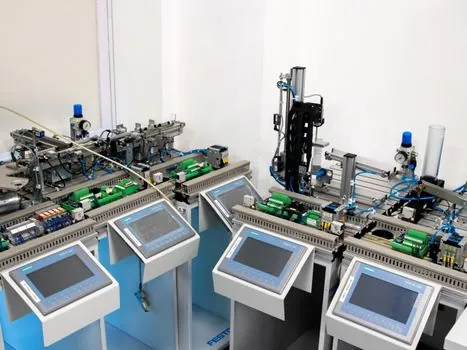
Demand is spreading beyond robotic cells into packaging, machining, material handling, and process equipment, where precise positioning, connected diagnostics, and tighter production control can improve asset utilization [S1]. A servo press can provide quantified force and position control, but it requires a defined load profile rather than a motor selected from peak power alone.
Market concentration remains material. Siemens held more than 10.5% of the combined market in 2025, while Siemens, Mitsubishi Electric, ABB, Yaskawa Electric, and Rockwell Automation jointly held 42% [S1]. In the drive-only segment, Siemens held more than 15%, and the five leading suppliers held 46% in 2025 [S4]. Consolidation matters because firmware, libraries, encoder ecosystems, and service support can remain supplier-specific even when electrical performance appears comparable.
Integrated systems and factory networks change the selection criteria
Integrated motor-drive units combine the motor, drive, and encoder in a compact package, reducing cabinet footprint and simplifying wiring [S2][S4].
A servo drive using EtherCAT is not automatically interchangeable with a PROFINET system, so the network architecture must be fixed before model selection. For independent axes, the servo motor and drive may be sized separately, but integrated units reduce assembly and wiring work when their torque-speed envelope matches the load.
The widespread rollout of silicon-carbide power electronics is cited as a driver of the servo motors and drives market. The related 2026 power semiconductor market matters because power-device efficiency, thermal design, and component availability influence drive performance and lifecycle cost.
Application demand is strongest in automotive and medical equipment

Automotive and electric-vehicle manufacturing represented 27.91% of combined-market revenue in 2025, while healthcare and medical devices carry a projected 7.51% CAGR for 2026 through 2031 [S2]. The automotive share reflects repeatable positioning, weld-gun control, assembly-line synchronization, and high equipment utilization, whereas medical systems require accurate motion in compact assemblies and production environments with validated process control.
Older forecasts from 2021 identified factory automation and robotics as core applications, with packaging and medical equipment supporting linear-servo demand and integrated power plus high-resolution feedback supporting rotary systems [S3]. The directional logic remains useful, but the older figures should be treated as historical context rather than 2026 market evidence.
Healthcare growth also illustrates where servo is appropriate. It is well suited to repeatable positioning, speed control, acceleration control, and synchronized axes. It is not the automatic answer for a simple fixed-speed conveyor, a pump with no controlled movement, or a hazardous-area duty where the selected motor and drive lack the required protection certification.
Forecast growth does not remove engineering constraints
High upfront cost remains a stated obstacle to servo-drive adoption [S4]. Capital comparison must include the motor, drive, encoder, cables, filters, cabinet engineering, commissioning labour, and downtime required to replace an existing system. A lower purchase price can be outweighed by poor tuning, incompatible communications, or limited local service support.
Forecast drivers also carry measurable risk. Industrial automation and smart-factory rollout contribute 1.2 percentage points to projected CAGR, collaborative and mobile robotics add 0.9 points, energy-efficiency mandates add 0.8 points, silicon-carbide transitions add 0.7 points, and digital-twin sizing adds 0.5 points [S2]. Capital spending constraints, limited implementation capacity, and retrofit complexity can delay these effects even when the long-term demand direction remains intact [S1].
The market is suitable for engineers who need closed-loop control, measurable positioning, high repeatability, coordinated axes, or connected diagnostics. It is a weaker fit where fixed-speed operation is sufficient or where the required duty exceeds the thermal, torque, feedback, environmental, or certification limits of the selected package.
Specification discipline turns market growth into equipment value

A defensible procurement comparison should normalise at least four variables: 2026 market scope, axis power and voltage, application segment, and forecast period. On the published figures, combined-market estimates span USD 17.34–24.60 billion for 2026, drive-only value is USD 2.5 billion, and forecast CAGRs range from 3.5% for drives alone to 6.83% for the combined market [S1][S2][S4][S5].
For technical selection, load torque, required speed, duty cycle, inertia, feedback resolution, network protocol, braking, and safety functions must be evaluated before commercial availability. The servo drive and motor must then be checked as one axis against the machine's peak and continuous duty, not sized independently.
Two trackable signals support procurement planning through 2035: the combined market's published forecast range of USD 40.3 billion to USD 44.55 billion [S1][S5], and the deployment evidence from 542,000 industrial robot installations in 2024 against 23.771 million servo motor and drive shipments in 2025 [S1].