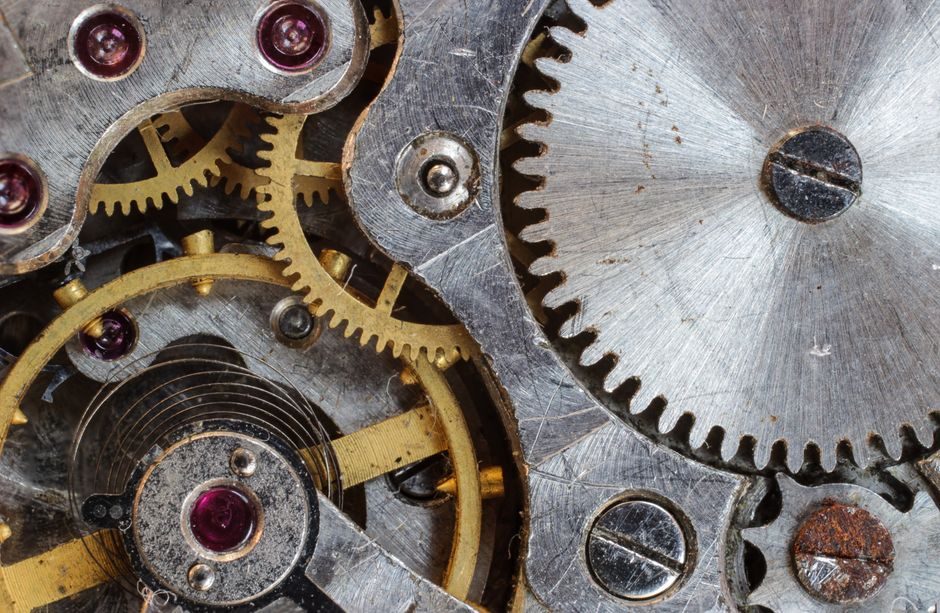
Selection of a modern brushless AC servo motor reduces to a handful of mechanical inputs — load inertia J, peak torque Tp, continuous torque Tc, speed at maximum torque, and the feedback device (incremental, absolute single/multi-turn, resolver) — and a vendor sizing tool will return a candidate in under ten minutes when those numbers are honest [S9].
Catalogs published in the past twelve months by Kollmorgen (AKM2G and AKM family), Nidec (S-FLAG II), Sanyo Denki (SANMOTION R), and Panasonic (MINAS A7/A6) all expose the same five-axis decision: frame size, winding, brake option, shaft/seal, and feedback resolution [S4][S5][S6][S8][S9].
Load Inertia Ratio and Torque Headroom
Engineers should keep the load-to-motor inertia ratio below 10:1 for point-to-point duty and below 5:1 when the cycle demands aggressive acceleration with low resonance tolerance, per the 2025 AKM2G selection guide and the 2024 reducer selection handbook [S4][S3]. Peak torque is read off the candidate motor's intermittent curve and must exceed Tp,accel = J_total × α + T_friction + T_load; continuous torque must exceed the RMS of the cycle's torque-time profile [S4].
The reducer selection literature computes allowable output torque as T = T_out × f_B, where f_B combines load, ambient temperature, reliability and starting-frequency factors — a discipline that translates directly to a geared servo system [S3]. A 5–10% service factor on continuous torque is the cheap insurance that separates a reliable machine from one that thermally trips in summer.
Speed, Winding Voltage, and Bus Compatibility
Bushless servo windings are offered in 100 VAC, 200 VAC, and 400/480 VAC classes; the 200 VAC class covers 30 W–30 kW in the Sanyo SANMOTION R 2026 catalog, and 100 VAC sub-frames cover 30–200 W for compact tabletop and laboratory equipment [S6]. Nidec's 2026 S-FLAG II standard amplifier page lists EtherCAT and general-purpose I/O variants sharing the same motor encoder, so the bus choice (EtherCAT vs. pulse-train vs. analog) should be made before the motor, not after [S5].
Speed at maximum torque is the spec most often misread: a 3000 rpm motor derated to 50% torque at 4500 rpm is not the same device as a 4500 rpm motor with constant-power to 6000 rpm, and the winding choice locks the constant-power knee [S4]. A 400 VAC winding on a 200 VAC drive will not reach rated speed; a 100 VAC winding on a 400 VAC drive will overheat at half speed.
Feedback Device and Functional Safety
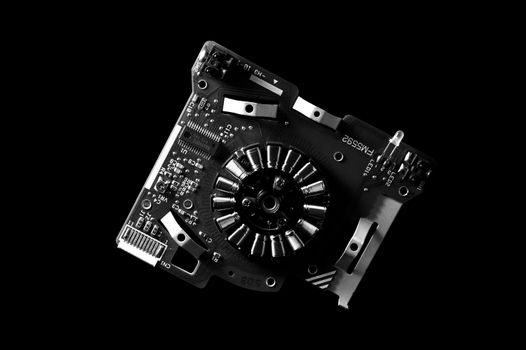
Incremental 20-bit encoders suffice for most packaging and converting lines; absolute single-turn or multi-turn encoders are mandatory for any machine that must recover position after an E-stop or power loss, which is the default on AGV/AMR and machine-tool axes per the 2025 Kollmorgen functional-safety whitepaper [S4]. Resolvers remain the right call above 120 °C ambient or where IP67+ and oil-mist exposure are routine, since they have no electronics in the rotor [S7].
The 2025 AKM2G page lists feedback options that "support functional safety" alongside shaft, mounting and connector variants, so safety-rated feedback is now a catalogue SKU rather than a custom build [S8]. When the application requires STO/SS1/SBC over EtherCAT, the FSoE protocol mapping must be checked on the drive, not the motor — the motor only needs the right encoder, not a specific safety chip [S4].
Environment, Washdown, and Hazardous-Duty Variants
Stainless AKMH and the AKM Washdown/Food Grade lines are purpose-built for hygienic zones; explosion-proof EP, hazardous-duty MX, and AKME variants address ATEX/IECEx-classified areas and should be specified by zone, gas group, and temperature class rather than by horsepower [S2]. A 2026 vendor directory lists 131 manufacturers and 726 distinct servo products across industrial categories, so for non-standard environments (cleanroom Class 5, oil-mist, marine) the specifier should filter the candidate set by environmental certification before comparing torque curves [S1].
Direct-drive linear and housed DDR rotary motors from the same supplier are the correct swap-in when the application needs zero backlash and the mechanical envelope absorbs a larger OD — Kollmorgen's TBM2G and Cartridge DDR lines are the current frameless/DDR options in this catalog [S2]. This is also where direct-drive linear motors become a cleaner spec than a ballscrew-driven rotary servo for high-dynamic axes.
Drive Pairing, Software Sizing, and Commissioning Tools
Panasonic's MINAS A7/A6 online sizing tool runs in a browser, accepts load inertia, torque/speed points, and cycle data, and returns a matched motor+drive part number plus CAD data — a workflow that has now been the OEM default since 2024 [S9]. Kollmorgen's AKD2G and AKD drive families are the matched amplifiers for the AKM2G and AKM motor lines, and are sized by continuous/peak current rather than by frame, with regen resistor selection handled by the same selection tool [S2][S4].
For a servo motor and servo drive pair, the current loop bandwidth of the drive is what determines whether a 3 kHz encoder is being used or wasted; budget 1–2 ms for the velocity loop and another 1 ms for the position loop, and verify the matched drive's published loop update against the encoder's resolution before paying for higher bit count [S4].
Quick Comparison: Which Servo Family Fits Which Duty
Point-to-point packaging/converting axes: low-inertia 200 VAC brushless with incremental encoder and 5:1 inertia ratio, 1.5–2× service factor on continuous torque, e.g. Nidec S-FLAG II standard or Panasonic MINAS A6/A7 in the 100 W–2 kW range [S5][S9]. Continuous-process and machine-tool spindles/feed axes: medium-inertia 400 VAC class with absolute multi-turn encoder, EtherCAT bus, and matched high-bandwidth drive — Kollmorgen AKM2G plus AKD2G is the canonical pairing in 2025–2026 catalogs [S4][S8]. High-precision semiconductor and metrology: direct-drive linear or housed DDR with resolver or absolute multi-turn, no gearbox — Kollmorgen TBM2G or Cartridge DDR [S2]. Hazardous or washdown zones: ATEX/IECEx EP/MX/AKME or stainless AKMH — these sacrifice continuous-torque density for certification, so oversize by 30–50% versus a standard-frame equivalent [S2].
Who should NOT pick the mainstream low-inertia 200 VAC brushless: cyclic-duty presses, machine-tool spindle indexing, and any axis with a 50:1+ inertia mismatch from a worm or cycloidal reducer — for these, a medium-inertia or direct-drive motor returns more usable torque per amp and avoids the gearbox back-driving nuisance [S3][S4].
Watch-Points, Failure Modes, and Sourcing Standards
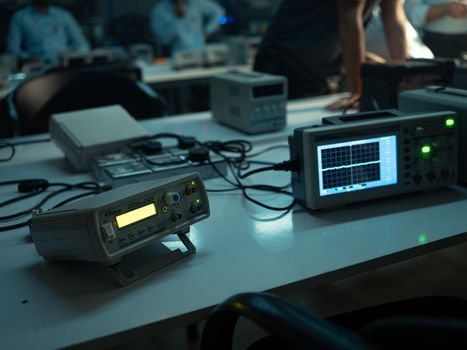
Common failure modes on mis-selected servos are encoder contamination (wrong IP class for washdown), bearing failure from radial overload (a linear guide or crossed-roller guide downstream of the ballscrew that is undersized pushes the radial load back into the motor shaft), and thermal trip from undersized continuous torque margin in 40 °C+ cabinets [S3][S4]. The 2024 reducer handbook flags oil temperature above 80 °C or sump temperature above 100 °C as the stop-and-investigate threshold, a rule that translates directly to a reducer-equipped servo axis [S3].
For hazardous areas, the specifier must hold the motor certification (ATEX 2014/34/EU or IECEx), the gas group, and the temperature class on the datasheet; a standard servo motor must never be substituted into a Zone 1 or Zone 21 location [S2]. When the same axis is driven through a gearbox, the AC motor or hydraulic motor being replaced will have a different torque-speed shape, and the cycle RMS must be recomputed rather than scaled by ratio [S3].
Track these two signals before committing to a frame: (1) the matched drive's continuous-current rating versus the motor's continuous current at 130 °C winding temperature (margin should be 20–30% for cyclic duty); (2) the encoder cable spec and length limit from the OEM, because the 20-bit+ encoders now standard on 2025–2026 servo families are unforgiving of generic cables beyond 10–20 m [S4][S5][S8]. For sizing reference on a parallel industrial flow, see this spec-based breakdown of compact PLC selection and the rack-mounted PLC price & cost guide 2026, both of which use the same duty-cycle and I/O discipline.