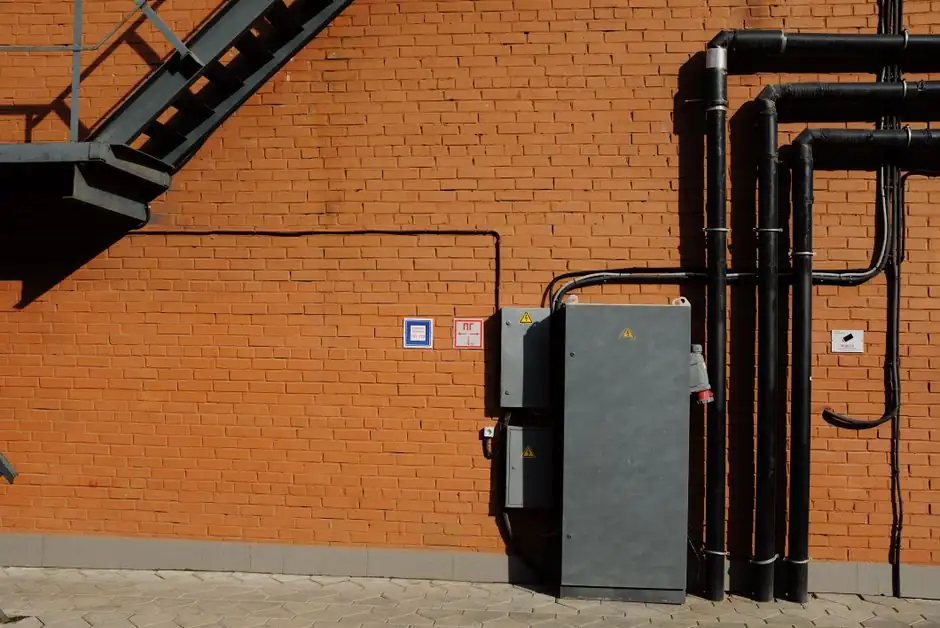
Wet-pit submersible sewage pumps now ship in four standard mounting configurations (P, S, T, Z), and the P-installation has become the industry default for traditional wastewater duty because the twin guide-rail auto-coupling lets a crane extract the pump for service without anyone entering the wet well [S1].
Residential sewage ejector installations run on a different logic: a sealed basin, a solids-handling submersible pump, a check valve, and a vent tied back to the home's stack. Total installed cost in 2026 ranges $630-$1,480 for a careful DIY and $1,650-$3,500 for a licensed pro, with the gap driven by permit handling, basin class, and labor hours, not the pump itself [S4].
Pump class match: ejector vs. effluent vs. grinder vs. sump
Effluent pumps and sewage pumps are not interchangeable: an effluent pump typically passes only 3/4 in. solids, so installing one on a raw sewage line from a toilet is both a code violation and a chronic clog source, since 2 in. sewage solids are the design minimum for a true sewage pump [S6].
Match the class to the fixture load. A sump pump handles only groundwater; a sewage ejector pump is required whenever a basement bathroom, laundry drain, or floor drain sits below the gravity sewer elevation, because it must pass toilet solids plus paper at a rated head [S2][S4]. Cast iron pumps cost more than plastic but run cooler and last longer in continuous-duty cycles [S4].
A grinder pump is the third option, specified where the discharge line is long, small-diameter, or high-pressure, because the cutter stage reduces solids to slurry. For most residential basins serving a single bathroom group, a standard sewage ejector rated to pass 2 in. solids is the right pick, and oversizing to a grinder adds cost without payback [S6].
Mounting method: P, S, T, Z configurations and when each one wins
The P-installation is a semi-permanent wet-pit setup with twin guide rails anchored from the access hatch down to a base elbow, and the pump locks into the discharge by its own weight, so service crews hoist the unit out without entering the confined space [S1].
The S-installation drops the guide rails and rests the pump on a stand or ring base inside the sump, with a flexible hose coupling to the discharge; it is the right pick for temporary dewatering, construction sites, and emergency flood response where the pump has to move between cells [S1].
The T-installation moves the pump out of the wet well into a dry vertical chamber beside it, so the volute stays floodable while the motor stays dry, which is the standard for flood-prone municipal lift stations. The Z-installation is a dry horizontal arrangement where suction is fed by a separate wet well; both T and Z trade civil cost for motor accessibility [S1].
For a basement residential basin, the analog of the P-method is the basin-plus-guide-rail kit: the pump sits on a coupling at the bottom of the sealed basin, and a check valve on the discharge line stops backflow during off-cycles. This matches the P-method's service logic on a smaller scale [S2][S5].
Basin sizing, venting, and discharge geometry
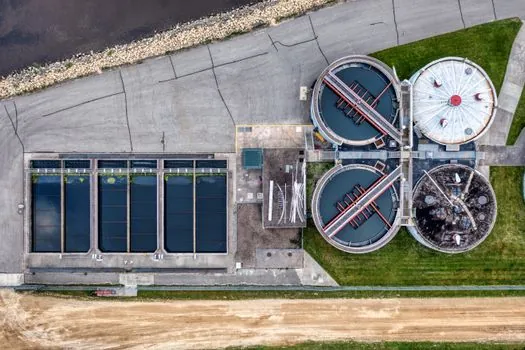
A typical residential ejector basin is drilled out to roughly 18 in. diameter and 30 in. deep, sized so the float switch has a usable draw-down window and the pump does not short-cycle [S2]. The basin must be sealed, with a gasket under the lid to keep sewer gas out of the living space, and a vent line tied back to the home's stack per local code [S2][S4].
Discharge geometry matters as much as pump capacity. The discharge line should rise from the pump to a check valve, then continue to the main sewer at a continuous slope without low spots that trap solids. A 2 in. discharge is the common residential size for 2 in. solids handling; 1-1/2 in. lines are ejector-rated only when the pump is rated for that pass-through [S6].
Backfill around an in-ground basin goes in as clean gravel, not soil, so groundwater can drain and the basin does not float when empty. Level the basin before setting the pump, because a tilted basin shifts the float-arc and shortens pump life [S5].
Electrical, controls, and the float-switch placement rule
Lower the pump into the basin positioned away from the inlet pipe so the float switch has a free arc and cannot be held up by incoming flow; this single rule prevents the most common residential ejector failure mode [S2]. Zip-tie the power cord to the discharge pipe so it cannot spin into the impeller or float mechanism [S2].
For 120 V residential units, the pump circuit should be a dedicated GFCI branch sized per the motor nameplate, and a licensed electrician should make the final connection because the basin is a wet location. For three-phase industrial units, follow the wiring diagram in the IOM and verify rotation before the first run.
Confirm pump capacity in GPH against the peak simultaneous fixture load, including the toilet flush, washing machine drain, and a basement shower, because an undersized pump is the most expensive DIY mistake in this category, and the cost shows up as backups long before the pump actually fails [S4].
Cost, code, and when to stop and call a pro
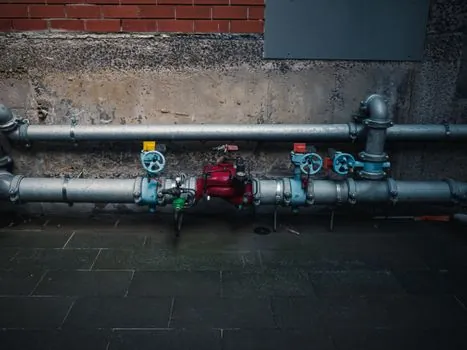
Residential 2026 cost bands: DIY $630-$1,480, professional $1,650-$3,500, with the difference mainly in labor ($800-$1,500) and a higher-grade basin plus permit handling on the pro side [S4]. Permit fees run $150-$400 and are often the homeowner's responsibility either way [S4].
Three trigger conditions mean you should stop and call a licensed plumber or electrician: concrete cutting beyond a simple slab penetration, new electrical circuit work in a wet location, and any tie-in to a shared sanitary stack that other units depend on [S2].
Annual inspection is the cheapest insurance, and a pump that is exercised quarterly by dumping water into the basin until it cycles will outlast one that sits idle. Replacement, not repair, is the right call once the basin shows cracking, the check valve fails to hold, or the pump motor draws more than 15% over its nameplate FLA [S5].
For a deeper dive on centrifugal pump selection logic behind these classes, the encyclopedia entry on centrifugal pumps lays out the head-versus-flow tradeoffs that set sewage pump sizing in the first place. The same selection discipline shows up in the sewage pump reference page, which catalogs the solids-handling and impeller variants that feed this guide's class-match rules.
Trackable signals over the next 6-12 months: any code update to the 2 in. minimum solids pass-through rule for residential ejectors, and any revision to the venting requirement that would force a dedicated vent rather than a stack-tie. Also watch for a shift in the DIY-versus-pro cost band, which would change the payback math on the pro route.
Spec-level background on the components involved: linear guide.
Related analysis: Sourcing Chinese Magnesium Ingot: MOQ, Purity, and Price Map for 2026.