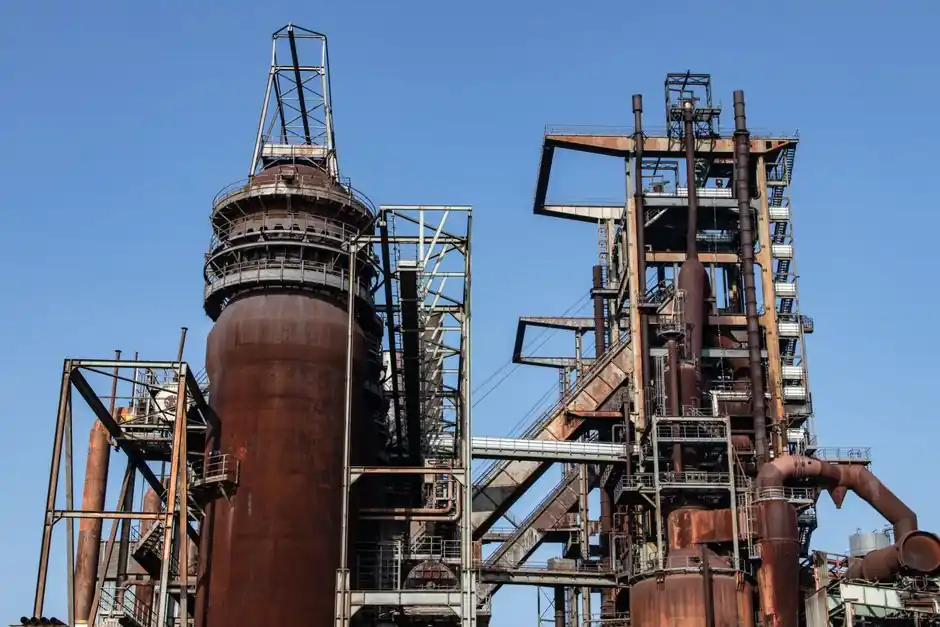
Submersible sewage pumps handling corrosive chemical-laden streams are typically specified to a solids-passage of 50-80 mm, specific gravity up to 1.3, pH 2-12 and a 316L / duplex stainless or CD4MCuN wetted end, covering chlor-alkali, electroplating, pickling and bleaching-liquor duty documented in chemical-pump supplier catalogues [S1].
The decision is not a single number; it is five coupled limits (seal, material, pH/SG, solids, motor thermal) that must clear simultaneously before nameplate flow and head matter, and getting any one wrong drops mean-time-between-overhaul from a documented 18,000+ h range to weeks [S1]. Wrong material choice alone has been quantified at over $10,000 per unplanned downtime incident in corrosive-wastewater service [S2].
Five Coupled Limits Drive Wetted-Material Spec
Submersible cast iron to ASTM A48 fails in weeks below pH 4 or above pH 12 in chemical effluent service [S1]. 316L stainless extends the operating window but is still attacked above roughly 10,000 ppm chloride, which is the band routinely crossed in pickling, bleach and electroplating liquors; CD4MCuN, Alloy 20 and duplex 2205 cover the higher-chloride half of that envelope [S1]. Material selection is bound to pH, chloride content and specific gravity together, not to pH alone, because a 316L casing rated for pH 6 brine at 1.15 SG will still pit if chloride slips past 10,000 ppm [S1][S3].
The chemical-pump application list for industrial chemical pumps explicitly names chlor-alkali, electroplating, pickling, paper bleaching liquor and sewage as the target fluids, and that list sets the upper pH/Cl⁻ boundary the wetted end must clear on a chemical-plant bid sheet [S1]. Cast iron remains a practical base for non-corrosive general sewage and treated-effluent transfer, but the same article is clear that it cannot be the universal answer for chemical wastewater [S3]. Coatings help in selected cases, but coating alone is not a fix for an aggressively corrosive effluent [S3].
Mechanical Seal and Elastomer Selection Tied to Chemistry
Mechanical-seal reliability governs submersible sewage-pump service life, and seal failure is the dominant cause of submersible pump removal in chemical-plant service [S1]. For chlor-alkali and bleaching-liquor service, silicon-carbide-on-silicon-carbide (SiC-vs-SiC) faces with EPDM elastomers are the common match; for strong oxidising acid duty the step to FFKM (perfluoroelastomer) elastomers is the one that controls service interval, not the face material [S1].
A pump correctly matched on pH but shipped with the wrong elastomer fails on the same schedule as a bare cast-iron pump, because the elastomer is the chemical barrier between the face fluid and the motor [S1][S6]. A sewage pump wetted-end specification that names only the alloy and not the seal elastomer is incomplete; buyers should request both the face material and the elastomer compound on the same data sheet. Corrosion from chemical wastewater is the primary failure mechanism in chemical-plant drainage and industrial process wastewater, and that failure mode attacks seals and casings through the same chemistry [S6].
Comparison of Wetted-Material Routes on Decision Criteria
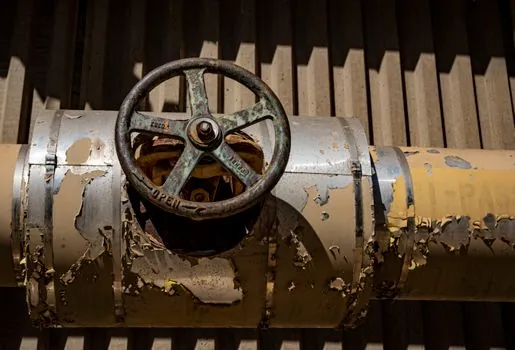
Four material routes dominate chemical-plant effluent bids, and they line up against cost, pH/Cl⁻ envelope, solids abrasion and lead time as follows: (1) ASTM A48 cast iron is the lowest cost and shortest lead time, but is limited to roughly pH 4-12 with low chloride and is unsuitable for oxidising acids; (2) 316L stainless roughly doubles unit cost and extends the pH envelope, but the chloride ceiling near 10,000 ppm is the hard limit; (3) duplex 2205 or CD4MCuN raises chloride tolerance into the high-Cl⁻ pickling and bleach band at a further cost premium and longer foundry lead time; (4) non-metallic linings (PP, PVDF, PTFE, UHMW-PE) are the default for hot, aggressive acid streams where metallics pit, with the trade-off of lower mechanical impact tolerance and temperature ceilings [S1][S3][S5].
The non-metallic default for chemically aggressive effluents is consistent with broader industrial-wastewater guidance that pumps for acid streams from metal finishing eliminate carbon steel and standard cast iron as options, while chloride-rich streams still attack stainless through pitting [S5]. A chemical material selection decision on a pump should be made on the same data sheet as the elastomer and the seal face, not as a separate procurement step.
Flow, Head and Solids Passage Are Coupled to the Material Choice
Submersible sewage pumps are derated for chemical service: a pump rated 50 m³/h at 10 m head on clean water typically drops 15-25% on corrosive slurries once SG is corrected to 1.2-1.3 and solids-passage losses are added [S1]. The published chemical-pump model range in flow (m³/h) versus head (m) versus speed (r/min) versus power (kW) is the form a real selection sheet follows, not a single-point duty number, and a flow meter on the actual chemical stream is how the table gets field-verified [S1].
Solids passage is the second coupling. Pumps below 50 mm free-pass bore clog within hours on rag-laden industrial sewage, while 65-80 mm passages are the common specification in chemical-plant lift stations [S1]. Below 50 mm the pump is being asked to act as a grinder pump, which is a different machine class with a different seal and cutter design. A self-cleaning suction filter upstream of a 50-80 mm passage pump is the typical protection pairing on chemical-plant lift stations, sized to the same 50 mm minimum as the pump bore. Solids-passage data and material data must be specified on the same line; a high-alloy wetted end with a 40 mm bore will still rag up on day one.
Motor Thermal Class and IP Rating for Chemical Floors
Submersible pumps in chemical plants run hot because corrosive fluids carry less heat away than clean water, and Class F insulation with a 1.15 service factor and a wet-end thermal cutoff at 130-140 °C is the conservative baseline [S1]. Continuous duty in a corrosive sump at ambient above 35 °C pushes the winding temperature into the Class H envelope, and motor selection must be matched to that ceiling rather than to nameplate horsepower.
IP68 with a sealed cable entry and chemical-resistant jacketing is the floor on chemical-plant floors; anything below IP68 in a flooded sump is a documented failure path. The motor thermal class, the IP rating and the wet-end cutoff temperature belong on the same data sheet as the wetted material, because a 316L wetted end with a Class B motor still burns out on a 1.2 SG, 60 °C corrosive slurry. Specifying on nameplate horsepower alone has been documented to cost plants 2-3x in seal replacement over the pump's life, which is the same ratio that drives the wetted-end upgrade path [S1].
ETP Stage Mapping: Material Changes With Every Step
An effluent treatment plant is not a single pumping duty, and the wetted material that survives raw effluent intake is typically the wrong material for chemical dosing, sludge recirculation or treated-water discharge [S4]. A typical industrial ETP runs raw effluent collection, screening, equalisation, pH correction, coagulant dosing, biological treatment, clarification, filtration, treated water storage and sludge handling, with pump selection logic changing at every stage [S4].
For raw effluent intake with solids, the route is a submersible waste water pump; for sewage and sludge, a submersible sewage sludge pump; for treated or semi-treated effluent transfer, an effluent pump; and for chemical dosing at pH correction, a chemical-compatible dosing pump [S4]. Wetted-material selection that ignores the stage-by-stage chemistry shift is the documented cause of premature failure, frequent maintenance and treatment underperformance across the ETP [S4]. A concrete batching plant ETP and a chlor-alkali plant ETP will not share a wetted-end specification, because the chloride band and the pH band are different at every stage. Material risk must be re-evaluated at each stage using the same pH, chloride, SG, temperature and solids checklist [S3][S4].
Failure Modes and Limits the Datasheet Must Capture

Three failure modes dominate chemical-plant submersible sewage-pump service: (1) pitting and crevice corrosion on 316L above ~10,000 ppm chloride; (2) generalised corrosion of ASTM A48 cast iron below pH 4 or above pH 12; (3) elastomer attack on EPDM by strong oxidising acids, where the seal fails long before the metal does [S1][S3]. Abrasive failure from grit and suspended solids is the fourth mode and is mitigated by impeller geometry (vortex, channel, single-vane, semi-open, grinder, cutter) rather than by alloy alone [S5].
The datasheet must capture: wetted-end alloy and ASTM/UNS designation, seal face material, elastomer compound, pH operating range, chloride upper limit (ppm), specific gravity, solids passage (mm), motor insulation class, IP rating and wet-end thermal cutoff (°C) [S1][S3][S4]. Without all nine on one sheet the bid is non-comparable, and the cheapest line wins on a spec that the wetted end cannot actually clear. A higher-alloy wetted end that is misapplied on a non-corrosive stream is also wasted capital, so the chemistry check is as much about avoiding over-spec as it is about catching under-spec [S3].
The next trackable signal is the late-2026 update cycle on duplex 2205 and CD4MCuN foundry lead times, which currently run longer than 316L and gate several chemical-plant retrofit schedules. Watch the Q4 2026 foundry allocation notes from the major duplex stainless mills and the ETP contractor bid tabs for any shift in the duplex-versus-316L cost ratio; that ratio is what flips the wetted-end spec on borderline streams.