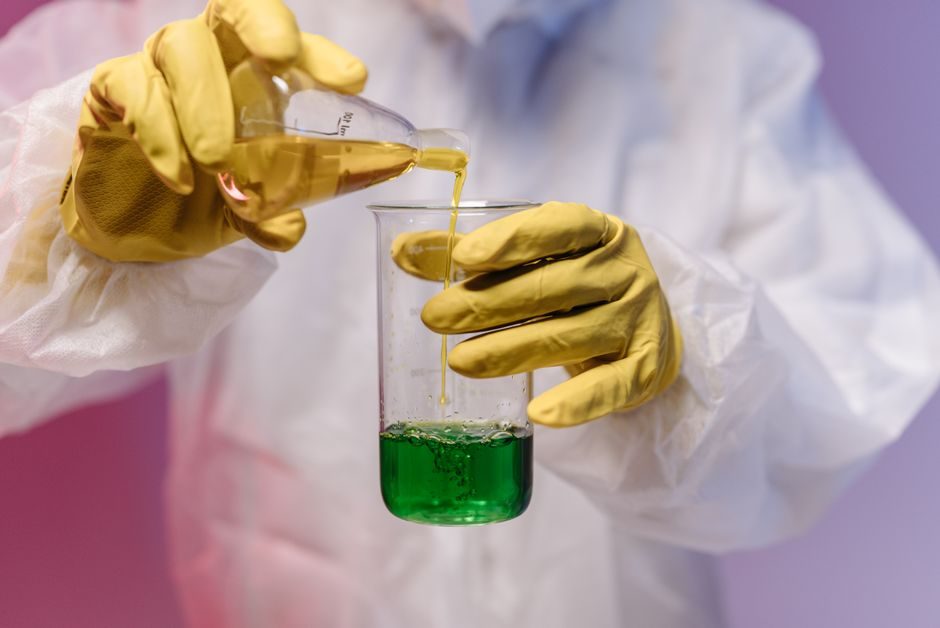
Submersible sewage pumps handling corrosive chemical-laden streams are typically specified to a solids-passage of 50-80 mm, SG up to 1.3, pH 2-12 and a 316L / duplex stainless or CD4MCuN wetted end — covering chlor-alkali, electroplating, pickling and bleaching liquor duty identified in chemical-pump supplier specifications [S1].
The selection problem is not a single number; it is five coupled limits (seal, material, pH/SG, solids, motor thermal) that must be cleared simultaneously before nameplate flow and head matter. Get any one wrong and mean-time-between-overhaul drops from a documented 18,000+ h range to weeks.
Mechanical seal: the single highest-failure component
Mechanical seal reliability governs submersible sewage-pump service life, with seal failure listed as the dominant cause of submersible pump removal in the available engineering literature [S3].
For chlor-alkali and bleaching-liquor service, SiC-vs-SiC faces with EPDM elastomers are the common match; for strong oxidising acid duty the elastomer step to FFKM is the one that controls interval, not the face. Chemical-pump catalogues for chlor-alkali and electroplating duty explicitly call out lye, electrolyte, refined brine, electroplating liquor and pickling acid as the operating envelope [S1]. A pump correctly matched on pH but shipped with the wrong elastomer fails on the same schedule as a bare cast-iron pump.
Wetted-end material vs the pH/SG envelope
Material selection is bound to pH, chloride content and specific gravity together — not to pH alone. Common submersible cast iron (ASTM A48) fails in weeks below pH 4 or above pH 12; 316L stainless extends the envelope but is still attacked above roughly 10,000 ppm Cl⁻; CD4MCuN, Alloy 20 and duplex 2205 cover the higher-chloride band used in pickling and bleach plants. The chemical-pump application list supplied for industrial chemical pumps names chlor-alkali, electroplating, pickling, paper bleaching liquor and sewage as the actual target fluids, which sets the upper pH/Cl⁻ boundary the wetted end must clear [S1].
For a 1 HP (0.75 kW) 316L stainless submersible sewage pump listed in the current trade channel at USD 914.61, the published specification includes submersible sewage / wastewater duty with a stainless wetted end, which makes the model usable inside the lower-chloride half of that envelope [S4]. Higher-Cl⁻ streams need a documented upgrade path, not a re-tag of the same SKU.
Flow, head, solids passage — coupled, not independent
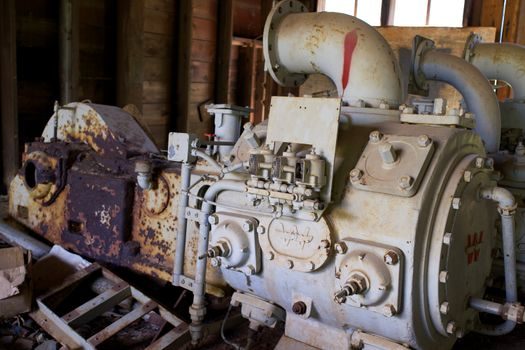
Submersible sewage pumps are derated for chemical service. A pump rated 50 m³/h at 10 m head on clean water typically drops 15-25% on corrosive slurries once SG is corrected to 1.2-1.3 and solids-passage losses are added. The published chemical-pump model range CAL traffic (m³/h) vs head (m) vs speed (r/min) vs power (kW) is the form a real selection sheet has to follow, not a single-point duty number [S1] — a flow meter on the actual chemical stream is how that table gets field-verified.
Solids passage is the second coupling. Pumps below 50 mm free-pass bore clog within hours on rag-laden industrial sewage; 65-80 mm passages are the common specification in chemical-plant lift stations. Below 50 mm, the pump is being asked to act as a grinder pump, which is a different machine class with a different seal and cutter design.
Motor thermal class and IP rating for chemical-plant floors
Submersible pumps in chemical plants run hot because corrosive fluids carry less heat away than clean water. Class F insulation with a 1.15 service factor and a wet-end thermal cutoff at 130-140 °C is the conservative baseline; for continuous chemical duty Class H is the common upgrade. Submersible enclosures to IP68 with a continuous-submerged rating to 10 m are the entry condition in any lift station; less than that and condensate ingress ends motor life before the seal does, independent of the PLC alarm logic in the starter. [S1]
The 1 HP class submersible sewage-pump SKU sold on the chemical-equipment channel is a representative industrial entry point, listed at USD 914.61 with submersible construction, which sets the lower price band a buyer should use as a sanity check against under-specified imports [S4]. Anything dramatically cheaper in the same HP class is usually signalling a thinner mechanical seal or a lower IP rating.
Standards that govern the spec, and where to cite them
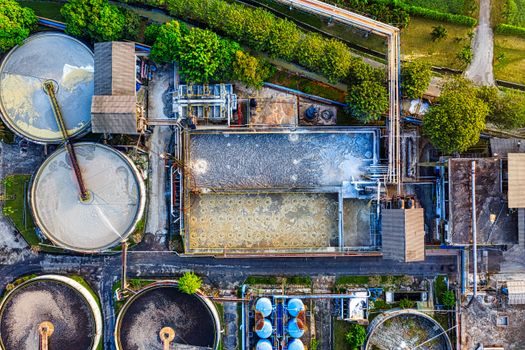
Submersible pump design draws on ISO 5199 (process centrifugal pumps), ISO 9905 (submersible pumps) and ISO 2858 (dimensional interchangeability); API 610 covers the heavier refinery class but is often cited in chemical-plant specifications for sour or high-temperature service. ATEX / IECEx classifications (Group II, Category 2) become mandatory for pumps in flammable vapour zones, regardless of the fluid being pumped. For wetted materials, NACE MR0175 / ISO 15156 covers sour-service limits; for chemical compatibility of seals, ASTM D543 and vendor elastomer charts are the practical references. [S2]
The DIN-standard chemical-pump reference available on the current supplier channel documents the chlor-alkali, electroplating, pickling, paper-bleaching and sewage applications that the spec must cover [S1]. A spec sheet that does not name the application list it is covering is not a spec sheet — it is a quote request.
Decision matrix: which pump class for which chemical service
Selection for a corrosive chemical transfer station can be condensed to four axes — wetted material, seal elastomer, free passage and motor thermal class. Matched to the application families documented in chemical-pump catalogues [S1], the typical mapping is: chlor-alkali / lye duty → cast iron or 316L with EPDM seals, 65-80 mm passage, Class F; electroplating / pickling acid duty → CD4MCuN or Alloy 20 with FKM/FFKM seals, 50-65 mm passage, Class H; paper bleaching / oxidant duty → duplex 2205 with FFKM seals, 50-80 mm passage, Class H; industrial sewage with chemical contamination → 316L with EPDM/FKM, 50-80 mm passage, Class F [S1][S4].
Outside that envelope — strong organic solvents, high-temperature acids above 120 °C, or flammable Class I atmospheres — the spec moves to a different machine class (magnetic-drive, canned-motor, or ATEX/IECEx Group II Cat 2 certified submersible) and price moves with it. A 1 HP 316L SKU at the USD 914.61 level is a lift-station pump, not an explosion-protected process pump [S4].
Common failure modes to plan against
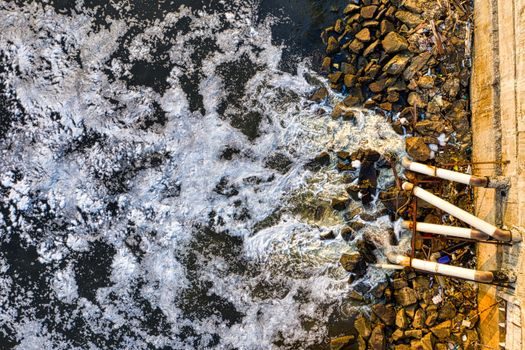
The five dominant field failures on corrosive submersible duty are: seal face wear from running dry, elastomer attack from off-spec pH excursion, bearing failure from moisture ingress, cable-joint corrosion from vapour, and impeller cavitation from NPSH loss on high-SG fluids. The first three are addressed in the spec; the last two are addressed in the installation — flooded suction, cable gland orientation, and a barrier-fluid or seal-flush loop on continuous-duty units, with a pressure transmitter on the discharge line giving an early read on cavitation onset. [S3]
Track two signals on every chemical-transfer lift station: (1) seal-chamber moisture probe or conductivity reading, which gives a 2-4 week warning of seal face wear before failure; (2) stator winding temperature trend, which catches the start of moisture ingress and bearing drag before a thermal trip. The submersible 1 HP class SKU sold in the industrial channel with 0.75 kW output is a representative minimum for an individual station, not a plant-wide flow solution [S4].
Closing note: the verifiable next check on any corrosive-service submersible selection is whether the published chemical-pump model table (flow / head / speed / power) covers the specific pH, Cl⁻ and SG band the lift station actually runs at — not the clean-water curve. If that mapping is missing, the pump will be the one that defines the new spec the next time it is replaced.