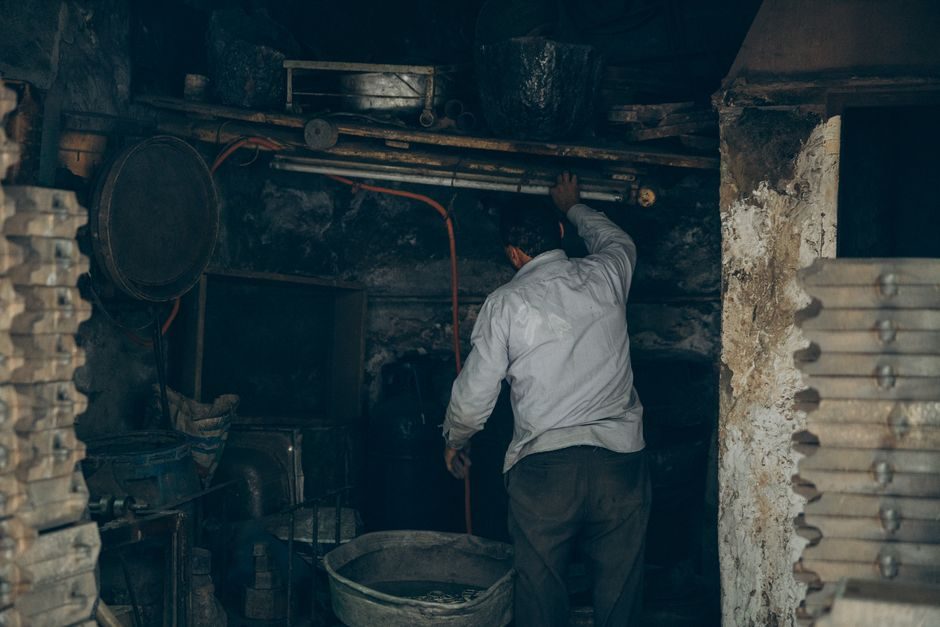
A shell core shooter is a foundry machine that fills a heated core box with resin-coated sand by sudden compressed-air expansion, then bakes the sand against the box wall to form a hollow shell core typically 5-30 mm thick, with cycle times in the 5-30 second band depending on core weight and box temperature [S3].
Specifying a unit is a tooling-and-throughput problem before it is a price problem: shot pressure (commonly 0.4-0.7 MPa working range), platen size, heating load per kW, and whether the machine is single-station, dual-station or rotary. Buyers who treat the machine as a generic "core box" miss the most expensive failure mode — cores that crack on ejection because cure time and box temperature are mismatched. For a primer on the broader machine category see the shell core machine encyclopedia entry, and for the casting-side reference see the shell molding machine page.
Operating Principle and Core-Weight Class Bands
Shell-core shooting works on the dump-blow principle: a sand magazine is sealed against the core box, then a quick-release valve dumps 0.4-0.7 MPa of compressed air, propelling resin-coated sand into the cavity in roughly 0.1-0.5 seconds, after which the box is held at 200-260 °C while residual resin cures the sand against the heated wall [S3]. The thin shell that forms is then ejected, hollowed out by tipping, and used in iron, steel or non-ferrous casting lines.
By core weight, three practical bands exist on 2026 shop floors: small cores under 5 kg ride on bench-top or single-station units with 10-25 kW heating; mid-range 5-25 kg cores sit on dual-station horizontal machines with 30-60 kW and sand magazines of 80-200 kg; large cores above 25 kg — block-style or water-jacketed — need rotary tables, sand hoppers above 300 kg, and 70-150 kW of installed heating. Sand consumption scales with core volume, not just weight, because a typical shell thickness of 5-30 mm is what actually cures — the loose interior is dumped back to the magazine.
Four Spec Levers That Drive Machine Choice
Shot pressure and air reservoir size: real shot events need a buffer tank of 200-1,000 L sized to keep pressure drop under 10 % during the blow; undersized receivers show up as soft spots and density variation on the core face. Platen / box size: standard daylight runs 400×400 mm to 800×800 mm for single-station units, and up to 1,200×1,200 mm on rotary or sliding-platen designs, dictating the maximum core envelope you can produce without re-tooling. [S1]
Heating power and zoning: electric platens at 200-260 °C set the cure window, and zoning matters on long boxes — a single-zone 40 kW platen will under-cure the far end of a 1,200 mm box. Control platform: modern units ship with PLC + HMI, recipe storage for 50-200 part numbers, and optional shot-pressure profiling; the legacy alternative is relay logic and analog pyrometers, which still run in older North American job shops but complicate spare-parts sourcing in 2026 [S1].
Process Levers Buyers Frequently Miss
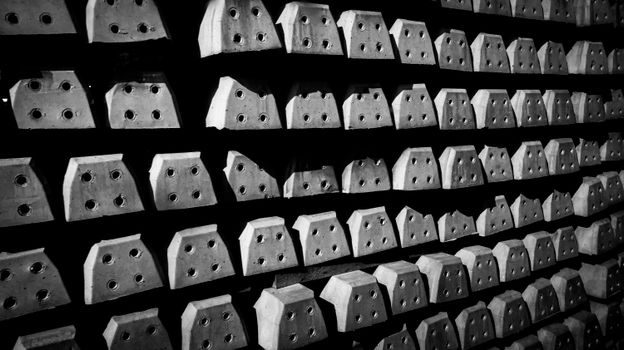
Sand grain and resin system: silica 50-140 AFS (Foundry Sand fineness, AFS = American Foundry Society grain-fineness number) is the mainstream band; finer grains give smoother core faces but raise resin demand and gas evolution in the mold. Resin-coated sand is typically 1.0-2.5 % phenolic-urethane or furan binder by weight, and a poorly matched binder is the single most common reason cores blister on ejection. [S2]
Compressed-air quality: a 0.4-0.7 MPa plant air supply must be dry to roughly -20 °C pressure dew point to avoid moisture-driven cure defects and steam vents through the sand; many European and Chinese plants add a desiccant dryer on the shooter feed line for this reason. Ejection and handling: undersized ejector pins, wrong draft angles, or a missing blow-off ring will scrap shells that are otherwise perfectly cured, so design the tool around the machine's ejector pattern, not around the casting drawing.
Options Comparison: Single-Station vs Dual-Station vs Rotary
On a fixed 2026 budget the choice is between single-station, dual-station and rotary configurations, and the right answer depends on cycle time, floor space, and core mix. [S3]
Single-station horizontal shooters are the cheapest entry point and the easiest to tool, but the operator is locked to one cycle at a time. Dual-station machines split heating from shooting, so a second core cures while the first is being shot — a 30-40 % throughput win on cores above 5 kg. Rotary tables (3-6 stations) push that further with 50-100 % throughput over single-station, but they need uniform core size, generous floor space, and a stable sand-feed system. A practical comparison:
- Cost band (2026 indicative, China-domestic ex-works): single-station roughly USD 18,000-45,000; dual-station USD 45,000-120,000; rotary USD 150,000-400,000 depending on platen size and heating power.<br />- Footprint: single-station 4-8 m², dual-station 8-15 m², rotary 20-50 m².<br />- Tooling cost share: 30-60 % of project spend, often higher than the machine itself on small batches.<br />- Best fit: single-station for job shops under 200 t/yr; dual-station for mid-volume 200-2,000 t/yr; rotary for dedicated lines above 2,000 t/yr producing a small family of core types.
Who This Machine Is For — and Who It Is Not
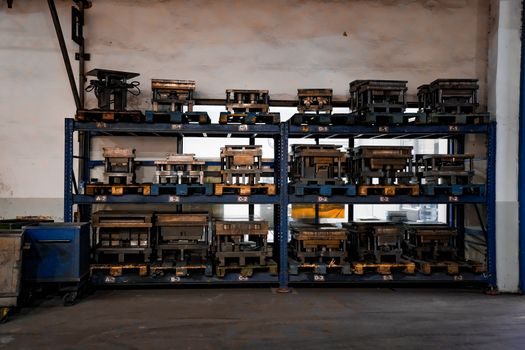
Shell-core shooting is the right answer when the casting needs thin-walled, dimensionally accurate cores with good surface finish — for example water jackets, oil galleries, intake manifolds, gear-housing bores and pump bodies in iron or aluminum. It is the wrong answer for very large monolithic cores (cold box or no-bake scale better above 50 kg), for short runs where hand-rammed oil-sand cores are still cheaper, and for alloys with extreme pouring temperatures that demand ceramic cores instead of resin-bonded silica shells. [S1]
For buyers straddling shell-core and conventional sand-casting tooling, the sand casting mold buying guide 2026 covers the broader mold-side spec conversation, and the sand casting mold vs mold base comparison helps when the question is whether to standardize on shell cores or on a separate mold-base line. Foundries already running shell molding for the outer mold will find that pairing a shell core shooter with a shell molding machine is the most efficient configuration in 2026, because resin systems, sand reclamation, and oven schedules can be shared.
Standards, Safety and Acceptance Tests
Acceptance on a 2026 shell core shooter should be a documented test, not a handshake. The vendor should demonstrate: (a) shot-pressure repeatability within ±5 % at the working setpoint across 50 cycles; (b) platen temperature uniformity within ±10 °C of setpoint at all measurement points after a 20-minute soak; (c) cycle-time repeatability within ±3 % of the rated value; and (d) noise level under roughly 85 dB(A) at the operator station with the machine idling, given that the dump-blow event is intrinsically loud. [S2]
For buyers in regulated jurisdictions, electrical panels should be CE-marked (Europe) or UL-listed (North America), and pneumatic components should comply with ISO 4414 (pneumatic fluid power — general rules and safety requirements for systems and components) and the relevant regional pressure-equipment rules. CE machinery directive conformity, lockout-tagout provisions on the platen and sand magazine, and interlocked guarding around the shot zone are baseline, not extras. In foundries with combustible dust, the local electrical classification (e.g. ATEX zone 22 inside the sand magazine) must be matched to the installed sensors and motors — a 2026 retrofit is the worst time to discover the limit switches are not rated for the dust cloud.
Sourcing Paths and Cost Bands 2026

Three practical sourcing channels exist for 2026: (1) Chinese OEM ex-works, where a 30-60 kW dual-station unit ships in the USD 45,000-120,000 band with 8-14 week lead time; (2) European or Japanese OEM (e.g. the established names in hot-box and shell equipment) at typically 2-3× the Chinese price, with shorter spares logistics and longer mechanical service life; and (3) refurbished older machines, where 10-25 year-old units from European or North American plants are refurbished and resold at 30-50 % of new price. Refurbished is a legitimate option when the platen size and control architecture match the buyer's tooling, but PLC and HMI obsolescence is the main long-term risk. [S3]
Total cost of ownership over a 10-year horizon is dominated by electricity, resin-coated sand, and tooling. Heating is the largest electrical load — a 60 kW platen running two shifts at roughly 50 % duty consumes on the order of 200-250 MWh/yr, so kWh cost in the buyer's region is a real spec lever. Resin-coated sand is the largest consumable line item and is the variable that has moved most on 2025-2026 phenol and isocyanate markets. Tooling cost — core boxes, ejectors, sand magazine wear parts — is often 30-60 % of project spend and is the most common reason a "cheap" machine ends up expensive. For a deeper look at how shell-core tooling compares to adjacent sand-casting tooling, the shell molding machine cost guide walks through the same lever logic on the outer-mold side.