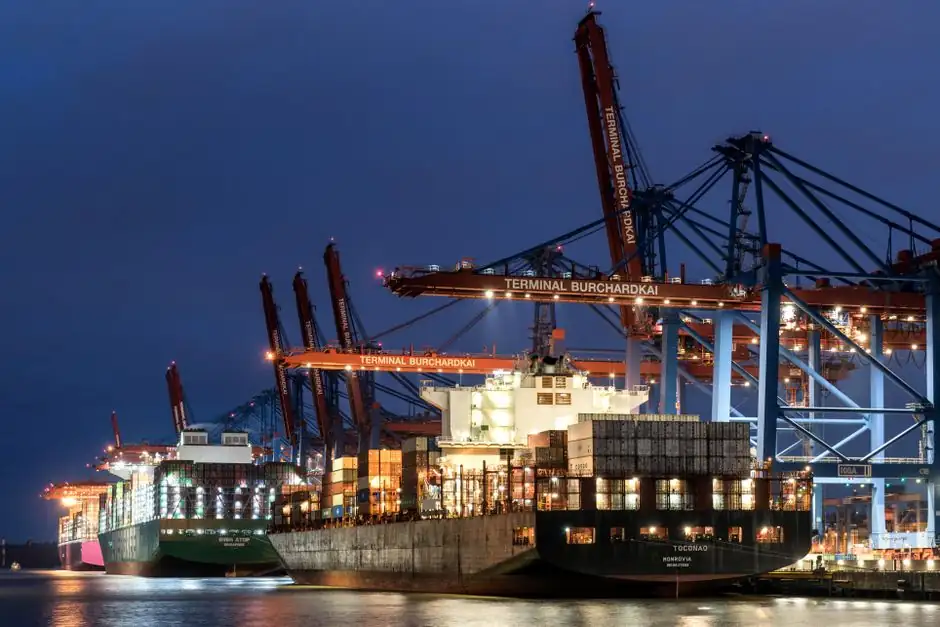
Shield machines specified for port work are predominantly small- to mid-diameter (1.2–6.0 m) units deployed for utility tunnels, stormwater outfalls, and cable ducts beneath quay aprons, RoRo ramps, and rail-mounted gantry lanes, where settlement tolerance is typically under 10 mm [S4].
Unlike metro or rail mainline drives, port crossings run short (30–300 m), shallow (cover often 4–10 m), and through heterogeneous fill over marine clay, which pushes selection toward EPB or variable-density slurry shields with active face-pressure control rather than open-face machines [S1].
Four decision variables: diameter, ground support, pressure control, and HSE integration
Diameter is the first gate. Drives below 1.2 m are conventionally microtunnelling slurry shields with jacking pipe behind, used for cable and small-diameter drainage crossings; 1.2–3.0 m covers most port utility packages; 3.0–6.0 m covers pedestrian/service tunnels and combined stormwater/utilities corridors that pass under container yards served by RTG or RMG cranes [S1].
Ground support choice is the second gate. EPB (earth pressure balance) shields dominate in soft, plastic, mixed-face fill typical of reclaimed quay land, with chamber pressure held within a tight band of the in-situ pore pressure; slurry shields dominate in granular, high-permeability soils and below the water table, where a fluid-supported face and slurry separation plant on surface keep the working chamber stable. Open-face shields are restricted to stable, dewaterable ground and are rarely specified for live port operations.
Face-pressure control accuracy is the third gate. Modern EPB and slurry shields for port work target ±0.2 bar around the setpoint pressure, with the screw conveyor or slurry feed rate modulated by PLC against real-time pressure cells in the chamber; this matters because every 0.1 bar of overpressure at a 5 m cover equates to roughly 1 tonne/m² of excess face load and measurable heave at surface [S4].
HSE and control-system integration is the fourth gate. Port terminals increasingly run PLC and SCADA platforms tied into a terminal operating system (TOS), and new procurement guidance treats the shield as an OT asset that must be engineered to IEC 62443 zones and conduits rather than as a standalone piece of plant [S4]. For context on matching a cutting tool to a project class, the comparison in Shield Machine vs Demolition Hammer: Matching Tool to Project Type sets the boundary between trenchless excavation and percussive surface demolition.
Comparison of the three main shield types for port crossings
For a port operator choosing between the three principal options, the criteria below line up the typical differences a selection engineer has to defend in a specification review: [S1]
EPB shield, soft plastic clay and mixed fill: 1.2–6.0 m diameter; face support by extracted spoil under pressure in the chamber; pressure control typically ±0.2 bar; best fit for reclaimed-port soils above the water table or with low head; conditioning foam additive system standard; settlement in well-controlled drives is in the 5–10 mm band.
Slurry shield, granular soils and high water table: 1.2–4.5 m typical for port work; face support by bentonite or polymer slurry under pressure; requires surface slurry separation plant (typically 200–500 m² footprint); ideal for sand, gravel, silt below water; pressure control accuracy comparable to EPB when properly tuned.
Open-face (hard-rock) shield, stable ground only: 1.5–4.0 m; no active face pressure; limited to self-standing ground above water table or with dewatering; not generally specified for live quay crossings because dewatering near a berth is rarely permitted by the harbour master.
Power, hydraulics, and the move to lower-emission drivelines
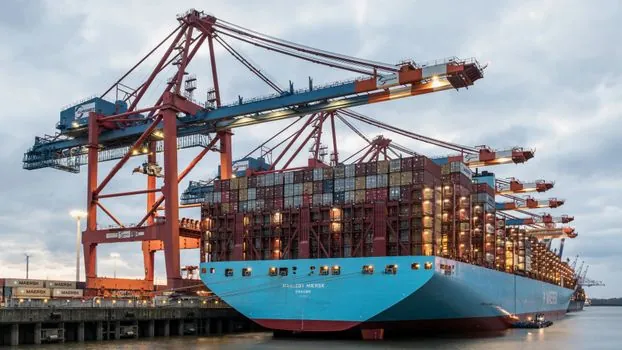
Shield machine power packages have followed the same decarbonisation path as port yard equipment. At the Gothenburg RoRo terminal, the site's terminal machines including heavy material-handling units logged 1 million cumulative operating hours on hydrotreated vegetable oil (HVO) by mid-2026, validating HVO as a drop-in fuel for Stage V / IMO Tier III-equivalent diesel drivelines without modification [S2].
For shield machines, the practical implication is that the onboard genset or hydraulic pack engines (typically 200–600 kW for a 3 m class EPB) can be specified HVO-compatible from new, future-proofing a unit that is expected to log 8,000–12,000 engine hours over a typical port-utility contract. The same Gothenburg fleet is also used as a real-world testbed for engine data logging tied to electric driveline development and hydrogen injector trials, which is a credible signal that procurement language should now require telemetry ports on the genset for future hybrid retrofit [S2].
Safety, automation, and the new HSE layer for live terminals
Port terminals are flagged in current HSE guidance as among the most complex and hazardous industrial environments in operation anywhere, because heavy machinery, dense vehicle-pedestrian interfaces, high throughput pressure, and chemical exposure all converge in a small footprint [S3]. The Qavach platform, launched in 2026 and billed as the maritime industry's first purpose-built AI-driven closed-loop HSE platform, spans 52 integrated modules and is designed to replace the spreadsheet-and-manual-checklist model that still dominates terminal safety management [S3].
For a shield drive, this translates into two procurement asks: first, the shield PLC must expose data tags (cutterhead torque, chamber pressure, advance rate, thrust, slurry flow, settlement monitor readings) over an industrial protocol that a terminal HSE platform can ingest, not a vendor-proprietary bus; second, the shield's existing safety functions (door interlocks, gas detection, chamber-entry permit-to-work) should be auditable in the same HSE system that audits yard equipment, so that a permit issued to enter the cutterhead chamber carries the same rigour as a permit to enter an RTG power pack enclosure [S3].
The regulatory backdrop is hardening in parallel. India's CEA (Cyber Security in Power Sector) Regulations, 2026 were notified in the Gazette of India on 31 July 2026 and apply to every generator above 50 MW, every transmission and distribution licensee, and downstream to the OT estate that supports them; port operators running on-site power that falls under that threshold will need an OT cyber programme mapped to IEC 62443 zones and conduits from the date of notification [S4]. For shielding projects commissioned from April 2027 onward, expect client specs to require a documented IEC 62443 zone mapping of the shield as a delivered asset.
What this looks like in a real port drive
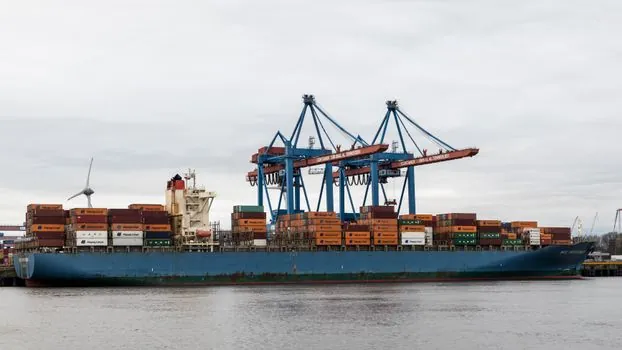
A representative procurement scenario: a 2.4 m EPB shield driving a 180 m stormwater outfall under a working RoRo ramp, cover 6 m, ground profile of 2 m made ground over 8 m soft marine clay over silty sand, water table 1.5 m below surface. Spec would call for EPB mode primary, with the option to switch to slurry in the silty sand band; face-pressure control ±0.2 bar; thrust 4×800 kN rams at 350 bar; cutterhead drive 400 kW electric with HVO-compatible backup genset; 1,200 mm backup pipe segments; settlement monitoring at 5 m centres with a 10 mm trigger threshold; PLC exposed via OPC UA to the terminal SCADA and HSE platform; IEC 62443 zone mapping delivered with the as-built documentation [S1][S4].
Where this scenario fails if the spec is loose: a 6.0 m EPB shield for a service tunnel under a container yard served by RMG cranes at 35–40 moves/hr cannot tolerate 20 mm of settlement, because the rail-mounted gantry rails sit on a precision concrete subbase and differential settlement of more than 5 mm across a 6 m bay is enough to stop the lane; in that case the procurement line that protects the project is the face-pressure control accuracy, not the diameter or the brand.
What to watch next on shield procurement for ports
Two signals are trackable through the second half of 2026: first, the first audit cycle under the NIS2 Directive is now live, and EU port operators designated as essential or important entities will be expected to show IEC 62443 evidence for OT assets including any new TBM or shield delivery, so ask vendors for an IEC 62443 zone map and a software bill of materials as a deliverable [S4]. Second, the next wave of port HVO and hydrogen trials is using terminal machinery as the test bed rather than a dedicated engine dyno, so any genset procurement for a new shield should be evaluated for telematics and fuel-flex capability now, not retrofitted later [S2].
The underlying component specifications are covered under shield machine, terminal block, and face shield.