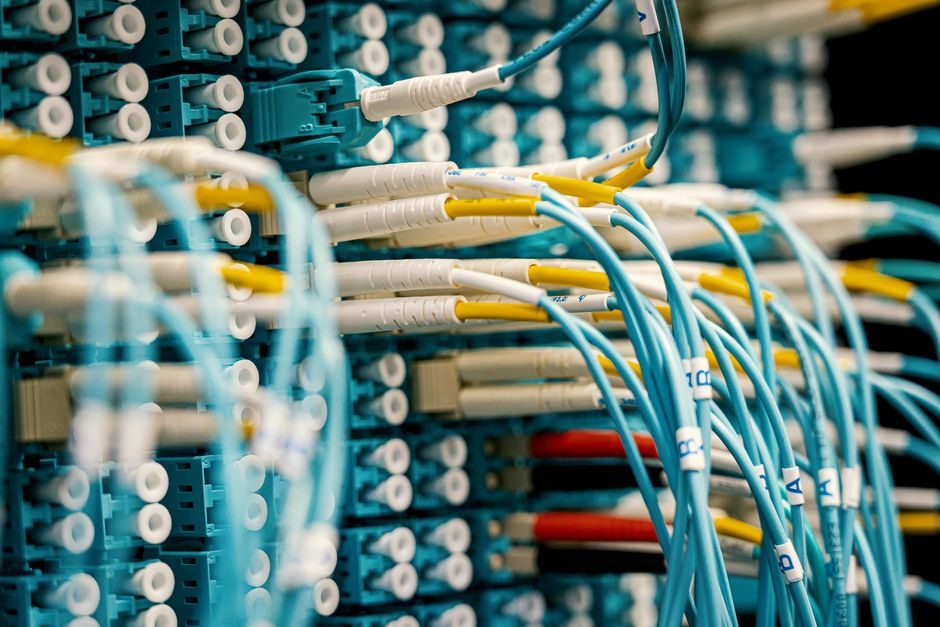
Shielded cable and control cable overlap on roughly 80% of industrial multi-core constructions; the practical question is which shield topology, conductor count and jacket compound matches a given EMC environment and current load.
As of 2026-07-09, Made-in-China listings for round-wire shielded PVC control cable (RVV-style) sit at 0.17-1.76 USD/m at 500 m MOQ [S2], while GoldSupplier offers 0.75-2.5 mm² 2/3/6 core shielded control cable at 0.10-5.00 USD/m at 200 m MOQ [S4].
Definitions: Where the Two Categories Overlap and Where They Diverge
Control cable is defined by function: it carries low-voltage command and feedback signals between PLCs, relays, contactors, valves and field instruments, typically rated 300/500 V with conductor cross-sections from 0.5 mm² up to 2.5 mm² for signal circuits and 4-6 mm² for power-to-device runs. Belden 8723, an industry benchmark with 22 AWG / 2-pair individually shielded + overall-braid construction, is sold as a 50 ft reel at 49.99 USD and exemplifies the control-cable category carrying both signal and low-power control [S1].
Shielded cable is defined by construction: any cable incorporating a metallic barrier — braid, foil (Al/PET), spiral serve, or combinations — designed to couple common-mode noise to ground and to limit radiated emission. The category includes instrumentation (single- or multi-triple, individually screened), thermocouple compensating, fire-alarm (FRLS sheathed), co-axial, PCM telecom, signal, and a large slice of control cable itself. Indian supplier Shielded Cables lists 9 distinct shielded sub-families in a single product menu, underscoring that "shielded" is a construction attribute, not a market segment [S3].
The two are not substitutes: a shielded fire-alarm cable is not designed for repeated flexing in a drag chain, and a control cable run without a shield is acceptable inside a grounded steel conduit where the conduit itself provides the EMC envelope. A useful working rule is: if the cable exits the cabinet and runs parallel to VFD power cable for more than 2-3 m, it should carry its own shield regardless of category label.
Shield Topologies: Braid, Foil, Spiral and Double-Layer Options
Braid shield coverage typically lands at 60-95% optical coverage depending on pick angle and wire count; spiral (serve) shield gives 80-95% coverage but adds inductance and is restricted to fixed installation. Al/PET foil with drain wire approaches 100% coverage and handles low-frequency DC-trash rejection well, but fails mechanically on flexing duty above 10⁷ cycles. [S1]
Double-shielded constructions pair a foil inner layer with an overall braid, as in sab DC 300 DS TP, marketed specifically for EMC-sensitive process control, scales and low-voltage switchgear with "very good EMV characteristic" and small bending radius [S6]. GoldSupplier's braiding-shielded instrument + power control cable combines XLPE insulation, PVC jacket and bare-copper braid — the typical Chinese export configuration for 4-6 mm² power-control hybrid runs [S5].
For paired signal cable the convention is individual pair screen (Al/PET per pair, often with a tinned drain) plus an overall Al/PET or braid — Belden 8723 follows this pattern, as does the Indian TECHNO FLEX range of flexible screen cables from supplier Shielded Cables [S3]. The "individual + overall" topology is the default for 4-20 mA loops where each pair must reject cross-talk from its neighbours.
Conductor Counts, Cross-Sections and Voltage Class
Control cable core counts cluster at 2, 3, 4, 5, 7, 12, 19 and 25 for the Chinese export market, with cross-sections at 0.5, 0.75, 1.0, 1.5, 2.5 mm² for signal and 4, 6, 10 mm² for power-to-device runs [S2][S4]. Above 10 mm² the product leaves the "control" envelope and starts crossing into the power cable price reference range.
Voltage classes follow IEC 60228 / GB/T 5023 conventions: 300/300 V for light-duty harmonised, 300/500 V for the RVV/RVVP-style PVC control family, 450/750 V for XLPE-insulated instrumentation. Misalignment between cable voltage class and circuit max working voltage is a common sourcing error: a 300/500 V RVVP run on a 690 V drive DC-bus is a spec violation independent of shield quality.
Insulation and jacket compounds split into PVC (lower cost, 70 °C rated conductor), XLPE (90 °C, lower dielectric loss), LSZH (low smoke zero halogen, mandatory in rail, marine and many EU public-access builds) and FRLS-PVC (fire-retardant low-smoke, dominant in Indian fire-alarm cable per the Shielded Cables product menu) [S3].
Comparison: Picking Shielded vs Unshielded Control Cable by Application
Decision matrix for a 4-20 mA + 24 V discrete-signal run of 30-80 m inside a plant: [S2]
1. Environment: VFD-rich cable tray with parallel 480 V power runs — specify overall foil + braid, individually screened pairs if multi-pair. Belden 8723-class or sab DC 300 DS TP [S1][S6]. Unshielded control cable inside a continuously welded steel conduit is acceptable as the conduit performs the EMC function.
2. Flexing duty: drag chain, robot dress-pack, or any application above 1 million cycles/year — specify chainflex / continuous-flex shielded chain cable with stranded class 6 conductors and PUR jacket. Standard RVVP braid fails on flexing; for drag chain cable spec reasoning consult the cycling/duty reference.
3. Fire/smoke: occupied buildings, rail tunnels, offshore modules — LSZH or FRLS sheath with the shield, not as an afterthought. Indian FRLS sheathed cable in the Shielded Cables catalogue illustrates the dedicated fire-alarm shielded construction [S3].
4. Cost floor: 0.10 USD/m at 200 m MOQ on a 0.75 mm² 2-core PVC shielded control cable from Hebei [S4]; this is the typical China-OEM FOB floor for non-certified, domestic-grade supply.
Standards, Certifications and Sourcing Floors in 2026
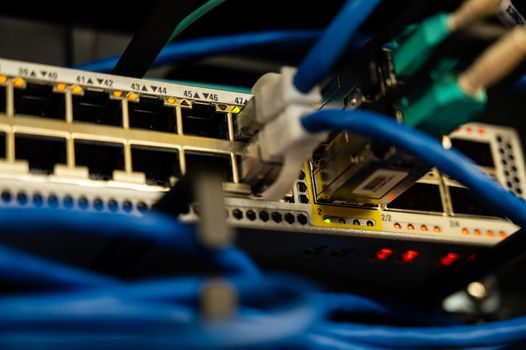
Reference standards that govern the spec rather than the brand: IEC 60228 (conductor class), IEC 60227 / IEC 60245 (PVC / XLPE insulated cable rated voltages), IEC 60332-1 / -3 (flame propagation, single cable and bunched), IEC 61034 (smoke density), IEC 60754 (halogen content), UL 2464, UL 2576, NEC Article 725 (Class 1/2/3 remote-control and signal circuits), and CCC for the China-domestic market. ATEX / IEC 60079-x governs shield continuity and braid coverage when the cable enters hazardous areas as part of an Ex e or Ex d installation — braid coverage ≥60% is the common minimum, but a higher figure is often called out in the project specification. [S3]
China-side export documentation typically includes CCC, CE-EMC and RoHS; the Made-in-China listing for round-wire shielded RVV notes 8*2*0.5 mm² construction (8 cores × 2 pairs × 0.5 mm²) as a representative bulk MOQ configuration at 500 m [S2]. GoldSupplier-side listings advertise MOQ at 200 m for the 2/3/6 core 0.75-2.5 mm² PVC control cable family [S4].
For a practical buy: at 0.10-5.00 USD/m with 200-500 m MOQ on the Chinese wholesale platforms, the entry-level shielded control cable is a commodity. Premium 60-95% braid-coverage + LSZH + certified-to-IEC chain cable from European suppliers is typically 3-10× that figure. Test the bid at the right shielded cable reference tier rather than over-spec'ing commodity.
Limitations, Failure Modes and Selection Watch-outs
Braid-only shield does not block low-frequency magnetic interference below ~100 kHz; for that, a steel armour or a high-permeability wrap is required. Foil-only shield fails on flexing life, and the drain wire can fatigue at the termination after several years of thermal cycling. [S4]
Shield earthing is the most common installation defect: a foil shield that is not bonded at both ends (or only at one end in a low-frequency instrumentation circuit, depending on the standard cited) loses 20-40 dB of common-mode rejection. For control cable installation practice the termination torque on the gland's shield ring and the pig-tail length of the drain wire both directly affect shield effectiveness.
Cross-section to current-carrying capacity must follow the installation method (per NEC Chapter 9 Table 8 / IEC 60364-5-52). A 0.75 mm² conductor bundled with 30 others in a 60 °C ambient derates to roughly 6-8 A; oversizing to 1.5 mm² for a 3 A control run trades copper cost for voltage-drop margin on long runs.
What to Verify Before Releasing the PO
Confirm conductor class (IEC 60228 class 2 stranded vs class 5/6 fine-stranded), insulation compound (PVC vs XLPE vs LSZH), shield coverage percentage (60% braid is a commodity floor, 85%+ is premium), overall voltage class, and the specific IEC 60332 / IEC 61034 / IEC 60754 test reports for the actual lot, not a generic catalogue page. [S5]
For 2026 procurement, track the LME copper trajectory and the PVC vs XLPE resin spread — both move the FOB floor week-to-week and explain 5-12% quote-to-quote variance on what looks like the same part number.