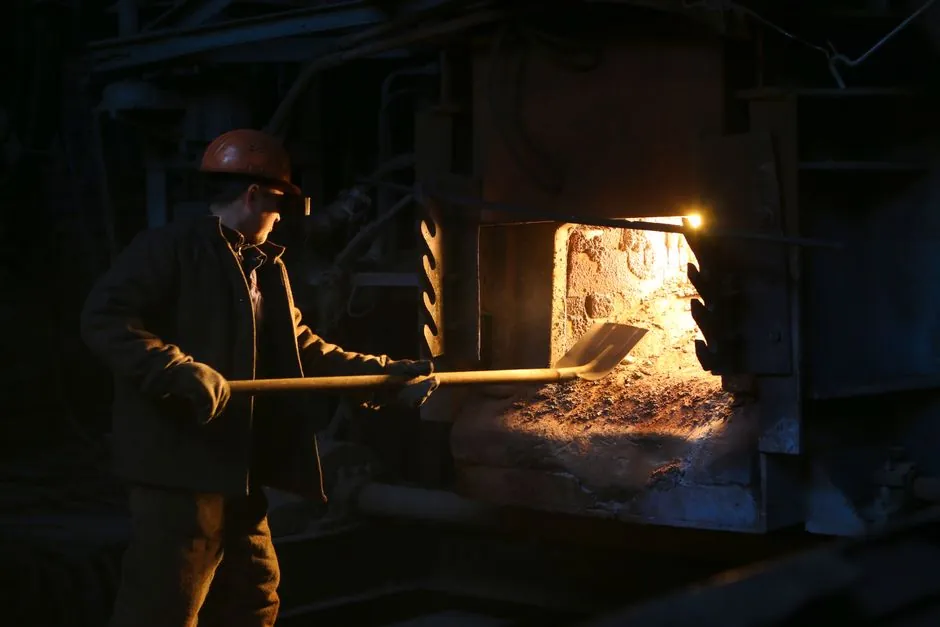
Silicon carbide briquettes are specified in cupola iron-melting shops to add silicon and carbon, to deoxidize the bath, and to lift melt rate, with commercial brick grades ranging from 36% SiC up to 80% SiC and balance carbon [S2][S3].
Charging geometry is part of the product specification: a rectangular SiC cube is dosed so that one briquette equals 1 kg of silicon, and cement binder is the industry default, contributing free calcium that trims limestone demand in the same charge [S4].
Three Functional Roles in One Brick
SiC bricks serve simultaneously as a graphitizer, a silicon source, and a deoxidizer in a cupola iron bath, which is why they are dosed against silicon recovery rather than simply as a fuel credit [S1][S2].
Because the carbon bound to silicon is recovered as part of the metallic charge rather than as coke, SiC additions show lower free-carbon pickup per unit silicon added, and the melt rate rises as coke rate is trimmed [S3][S8].
Grade Selection: 36% vs 65% vs 70% vs 80% SiC
Grade choice is driven by silicon target versus carbon allowance. The 65% SiC slab at 4.5-30 lb carries 30% total carbon; the 36% SiC slab at 3.5-40 lb carries 38% total carbon; the 70% SiC bulk unit runs 27% carbon; and the 80% SiC grade drops total carbon to 16% [S3].
Where a cupola runs cold or cycles intermittently, a 45% Si/SiC hybrid brick is supplied in place of straight SiC, and where the coke bed already covers the carbon budget, a pure silicon brick (40% or 50% Si) is charged at start-up instead [S2].
Briquette Geometry, Weight, and Slag-Zone Survival

Briquette shape is engineered so the unit passes through the slag zone and fully immerses in the melt before dissolving, with the rectangular 1 kg Si cube as the canonical charge unit in European practice [S4].
During descent from the charging door to the hearth, however, briquettes shed fines: these fines are lost to flue gas or to slag, so the realized Si recovery is set as much by mechanical integrity as by chemical assay [S1].
Friability: the Hidden Yield Limit
Friability rises as SiC content falls, so lower-grade bricks (36% SiC, 38% carbon) are the most likely to disintegrate in the stack and lose silicon to the dust load [S1].
Three industrial grades fired and jaw-crushed at Missouri S&T confirmed this trend, and the practical consequence is that foundries chasing tighter silicon recovery often trade up from 36% to 65% or 70% SiC bricks even at higher unit cost, because the per-cent silicon delivered to the bath improves once stack losses drop [S1].
Binder Chemistry and the Limestone Credit

Portland-cement binder is the most common choice and is not just a mechanical hold: it delivers free CaO to the melt, which lets the cupola charge carry less limestone for a given basicity target [S4].
Where a different binder is needed, the same SiC brick chemistry can be re-bonded for electric-melt service, with the binder change handled as a separate SKU rather than a chemistry change [S2].
Comparison: Brick Grade vs Decision Criteria
Across the main commercial grades, four decision criteria line up as follows: 36% SiC maximizes carbon pickup and minimizes SiC cost per pound but suffers the highest friability; 65% SiC balances Si recovery, melt rate, and cube strength and is the default general-iron grade; 70-80% SiC maximizes silicon recovery and minimizes slag-zone Si loss but raises cost per ton of iron; and the 45% Si/SiC hybrid is the only grade suited to cold or intermittent cupola campaigns [S2][S3].
Foundries running ductile iron with strict sulfur ceilings typically pair a high-SiC brick with a low-aluminum SiC grain (88-92% SiC, 30% total C) such as IM-SIL/DE-OXO-SIL, sized 3/8 inch x D, to suppress FeO in the slag and protect silica refractory life [S3].
Use Cases and Limits
SiC briquettes are a fit for acid or neutral cupolas targeting gray or ductile iron with controlled Si and C endpoints, and they are a partial coke replacement rather than a full one: 60% or 80% carbon bricks can offset some coke, but no briquette can fully replace the coke bed [S2].
Granular silicon carbide grain (88-92% SiC) is the form specified for electric-melt iron rather than the cupola, where the charge geometry and slag zone behaviour of a cupola furnace reward a dense, sized brick over fines [S3].
Foundries that want to track stack loss as a yield metric should pull a friability number from the briquette supplier and weight it against the published SiC assay, because a 70% brick with poor cube strength can under-deliver silicon to the bath versus a 65% brick that survives the stack [S1].
For shops also weighing binder-bound nitride bricks in induction or EAF iron, the silicon nitride reference page covers the chemistry that the SiC brick is competing with on a silicon-yield basis.
Track two signals over the next melt cycle: the per-ton SiC brick dose versus measured bath silicon gain, and the dust-loading trend on the cupola stack; both flag a friability shift before the silicon endpoint drifts out of spec.
Related analysis: Pendulum vs Prism Compensator in an Automatic Level: How the Mechanism Actually Works.