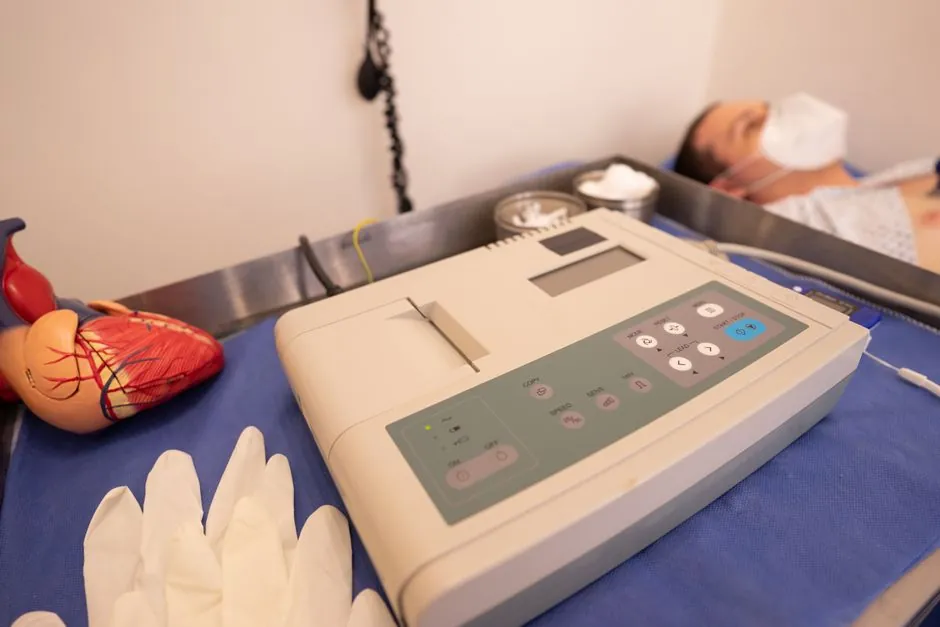
Engineers specifying silicon steel for MRI gradient coils, linear accelerator (linac) magnet yokes, X-ray high-voltage transformer cores and surgical robot servo motors should match core loss, gauge and lamination grade to IEC 60404-8-4 and ASTM A726/A683 limits, while the host device carries the EU MDR 2017/745 conformity burden [S3].
Medical electrical equipment falls under IEC 60601-1 collateral standards, but the silicon steel lamination itself is not a medical device, it is a component whose material traceability, lot identity and insulation coating support the manufacturer's technical file under Annex II of EU MDR 2017/745 [S3]. This article maps the four dominant medical use cases to grade families, lamination thickness, core loss targets and the biocompatibility boundary most procurement teams miss.
Medical Use Cases and Which Silicon Steel Family Fits Each
MRI scanners and linac magnet yokes are flux-carrying structures running at DC or low frequency, making 30Q120 or 23QG110 CRGO laminations the correct pick because the Goss texture drives permeability above 1,800 along the rolling direction at 1.7 T [S1]. X-ray high-voltage transformer stacks and CT rotating anode stators run at 50-400 Hz and stay in the 0.20-0.35 mm CRNGO band, typically M19 (0.35 mm) or M27 (0.27 mm) per AISI/ASTM nomenclature, where non-oriented grains avoid the directional loss of CRGO [S1]. Surgical robot servo motors, infusion pump drives and ventilator blowers use sub-kW stators, so thinner 0.20-0.27 mm NGO keeps eddy current loss inside the 7-9 W/kg at 1.0 T/50 Hz window most IEC 60601-1 thermal budgets tolerate. For procurement, CRGO silicon steel selection for construction uses the same grain-oriented physics discussed in Silicon Steel Selection for Construction: GO vs NGO Spec Gates, but the medical spec gates pivot on loss density per kilogram, not cost per kVA.
Core Loss, Gauge and Permeability Thresholds that Drive the Pick
For MRI gradient amplifier filter chokes (working at 400-1,000 Hz), 23QG110 at 0.23 mm thickness caps core loss at roughly 1.10 W/kg at 1.7 T/50 Hz, but real loss density at 1 kHz climbs above 15 W/kg, which is why 0.10-0.20 mm thin-gauge CRGO or amorphous ribbon is the right call for gradient coil correction. For linac gantry yokes, the DC-biased flux path needs DC bias permeability above 10,000, which the C5 or C6 insulation coating on 30Q120 supplies as a magnesium oxide or chrome-free semi-organic overcoat rated for annealing at 780-820 deg C. The 0.35 mm M19 NGO ceiling of 2.30 W/kg at 1.5 T/50 Hz is the de-facto cap for X-ray high-voltage tank cores, while 0.27 mm M27 drops that to 1.85 W/kg for the same flux density [S1]. Below 0.20 mm the rolling-mill yield drops and per-kg cost roughly doubles, so a 0.27 mm CRNGO build is the lowest-cost route that still beats 3.0 W/kg at 1.0 T/400 Hz for CT stator laminations.
Biocompatibility Boundary: Where the Lamination Stops Being a Component
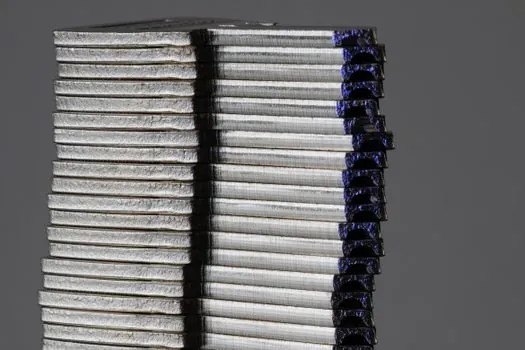
Silicon steel itself is not biocompatible in the ISO 10993 sense, but the only patient-contact scenario is fragments released by mechanical failure inside an implanted or body-contact device, and that risk is controlled by housing design, not the lamination grade. The binding layer on the lamination, the C5 or C6 coating per IEC 60404-1-1, is the surface that touches any potting compound, epoxy or medical-grade encapsulant, and the supplier's REACH, RoHS 3 (EU 2015/863) and USP Class VI or ISO 10993-5 certificates for the coating are the documents a notified body expects to see in the technical file [S3]. For externally applied devices such as MRI patient tables, the lamination is sealed inside shielded enclosures, so the relevant medical-grade requirement is the overall enclosure IP rating (typically IPX4 per IEC 60529 for trolley-mounted ME equipment) rather than the steel chemistry.
Selection Criteria: Lamination Grade vs Medical Application
MRI yoke/gradient core: 30Q120 or 23QG110 CRGO, 0.23-0.30 mm, 1.10-1.30 W/kg at 1.7 T/50 Hz, C5/C6 coating, B8 above 1.85 T along RD. Linac magnet yoke: 30Q120 CRGO, 0.30 mm, DC bias permeability above 10,000, annealed at 800 deg C in dry N2. X-ray HV transformer tank: M19 or M27 CRNGO, 0.27-0.35 mm, 1.85-2.30 W/kg at 1.5 T/50 Hz, lamination coating compatible with mineral oil. Surgical robot servo/ventilator blower: M27 or M36 CRNGO, 0.20-0.27 mm, 7-9 W/kg at 1.0 T/50 Hz, high-stamping-grade burr below 30 micrometer. For X-ray CT stators running at 100-400 Hz, the M27 0.27 mm build still wins on cost-loss balance and matches the dimensional tolerance bands (ASTM A726 width tolerance +/-0.10 mm for strip under 300 mm wide) that robotic stacking lines need. [S2]
Manufacturing, Stacking and EU MDR Documentation Chain

Step-lap mitered cores are cut on CNC swing-shear lines to a cutting accuracy of 0.02 mm and a feed rate up to 120 cuts/min, with step-lap stacks typically capped at 7 steps and one 8-hour shift yielding roughly 1 ton of finished lamination strips at 20-60 pieces/min on mid-range machines [S2]. Anneal and stress-relief below 820 deg C in a decarburizing-free atmosphere is mandatory for CRGO to keep the Goss texture, and the carbide blade life of 1.2 million cuts per sharpening is the throughput ceiling most Asian finishing houses quote [S2]. EU MDR 2017/745 Annex II requires the medical device manufacturer to maintain a technical file with full material traceability, so the certificate chain (mill test certificate 3.1 per EN 10204, RoHS/REACH statements, coating composition) travels with every coil lot; notified bodies and competent authorities will request these during a clinical investigation or post-market surveillance audit [S3]. The European Commission published delegated acts on well-established technologies on 29 June 2026 and an MDCG position paper on UDI assignment between manufacturers and distributors on 22 July 2026, both of which tighten the documentation trail the steel supplier must support [S3].
Limits, Failure Modes and Common Spec Mistakes
Specifying CRGO where the flux rotates (servo motors, CT stators) burns 30-50 percent extra loss compared with CRNGO at the same thickness, because the cross-grain permeability of CRGO collapses outside the rolling direction. Pushing lamination thickness above 0.35 mm in any 50-60 Hz device surrenders eddy current loss control and pushes transformer temperature above the IEC 60601-1 patient-contact surface limit of 41 deg C ambient touch temperature, a hard compliance gate for patient-applied parts. For airborne MRI, the audible noise floor of 5-8 dB(A) reduction per 0.05 mm gauge step down from 0.30 to 0.20 mm is often the deciding factor, and 0.20 mm CRGO is the de-facto pick despite the higher per-kg cost. Trackable signals for the next spec window: the 14 July 2026 EU availability dashboard v3.5, the 18 June 2026 MDCG position paper on SS(C)P management in EUDAMED after mandatory use, and any new IEC 60601-1 amendment aligning ME equipment thermal limits to MDR Annex I general safety and performance requirements [S3].
The underlying component specifications are covered under silicon steel, silicon carbide, and silicon nitride.