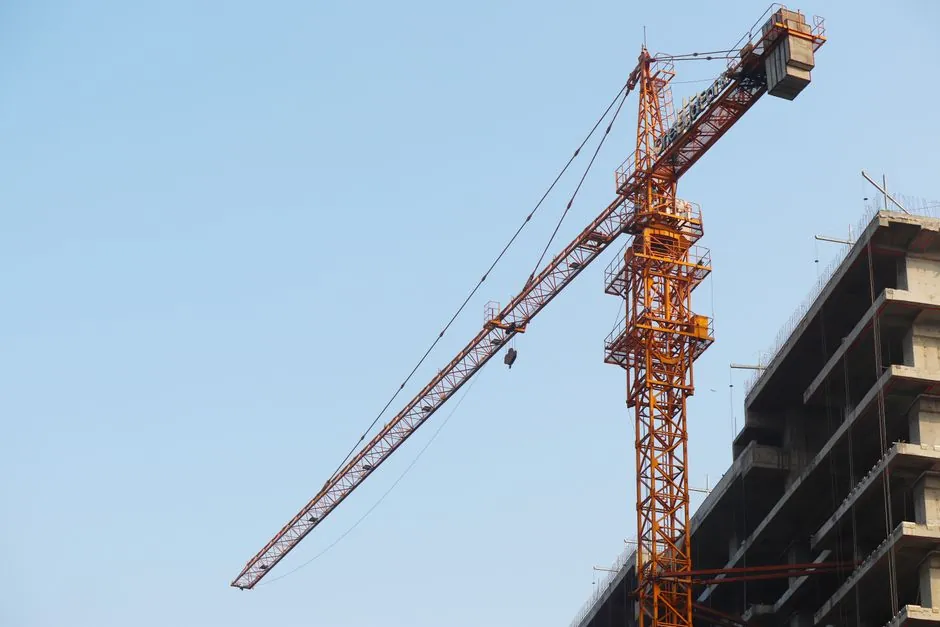
Single girder overhead cranes on pipeline construction and spool-yard duty typically lift 5–15 ton at CMAA Class C or D, with 20 m spans common in modular spool-assembly halls [S1][S2].
Capacity ranges from standard up to 15 ton for underhung and top-running single girders, with structural monobox girders reaching 65 ft (about 19.8 m) span before engineers switch to plate-girder or double-girder designs [S2]. For pipeline spool staging, this envelope covers the bulk of pipe-handling, flange-fitting, and hydrostatic-test loading lifts, which is exactly why the format dominates greenfield spread yards, not just warehouses [S3].
Duty Class and Capacity Mapping for Pipeline Yards
CMAA classifies bridge cranes by duty cycle: Class B covers 2–5 lifts/hr, Class C runs 5–10 lifts/hr at roughly 50% of rated capacity, and Class D handles 10–20 lifts/hr at the same 50% load factor [S1]. Pipeline spool-yard lifting usually lands in Class C: a 10-ton hoist cycling through pipe-bench loading, weld-rotation, and NDT-positioning, all of which fit the 5–10 lifts/hr envelope with average hook loads in the 4–6 ton range [S1]. Class D applies to mainline valve handling or pre-test loading of 36-in. headers, where the cycle count climbs but lift weights rarely exceed 20 ton. If a job spec calls for 20+ lifts/hr at near-rated load, the spec is asking for a double girder or a process crane, not a single girder [S1].
For pipeline projects the load envelope breaks into three workable bands: 5 ton (small-diameter spool, fittings, instrument racks), 10 ton (standard 16–24 in. spool assemblies, pup joints, bend segments), and 15 ton (header sections, large bore fittings, skid-mounted valve assemblies) [S2][S5]. Above 15 ton, single girder economics break down: the monobox section gets deep, the end-truck wheel loads grow, and the headroom advantage over a double girder starts disappearing [S3][S6].
Span, Headroom, and Runway Geometry
Single girder cranes are practical up to roughly 31.5 m span and 32-ton capacity in standard configurations, beyond which the girder section transitions to welded plate or box construction [S6]. Practical span on a pipeline yard more often sits between 10 m and 20 m, matching the width of typical pipe-bench cells and two-row spool racks set 6–8 m apart [S5]. The single girder under-running (underhung) layout lets the hoist ride below the bottom flange of the runway beam, freeing vertical headroom that double-girder top-running units consume with the trolley frame above the bridge [S3].
Under-running configurations are the default when the project reuses an existing warehouse or field-fabrication shed where new runway columns cannot be dropped: the bridge hangs from the existing roof structure, with lower wheel loads (because the runway is part of the building steel) reducing the need for reinforced foundations [S3]. Top-running single girders are picked instead when the runway is purpose-built, when the building height is generous, and when hook-approach dimensions on the lift matter, since the hoist sits under the girder, not beside it [S1].
Hoist Type, Power Feed, and Hazardous-Area Considerations
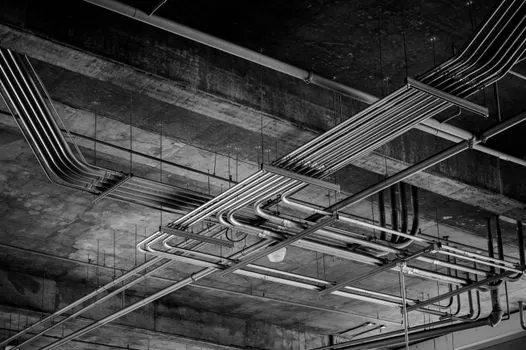
Single girder cranes pair with either wire-rope hoists (heavier duty, more lift) or electric chain hoists (cleaner, lighter, less headroom) [S2]. For pipeline yards, the wire-rope hoist wins wherever the lift exceeds about 5 ton, where the spool is a swinging load, or where the duty class pushes above Class C [S1]. Power is typically delivered through a bus bar or festoon system along the runway, and the crane bridge itself is fed via sliding conductors on the girder [S5]. A bus bar with a sliding current collector is more common on outdoor pipeline-spread yards because it tolerates dust and weather better than festoon cable [S5].
Where lifting takes place near hydrostatic-test pumps, methanol-cleaning skids, or fugitive-hydrocarbon zones, the hoist and pendant should carry a hazardous-area rating consistent with the classified zone, with enclosures meeting the appropriate dust- or gas-group protection concept (for example, increased-safety or explosion-proof, depending on zone) [S1]. Crane structure itself does not need to be certified to that rating, only the electrical components inside the hazardous boundary, so spec writers should split the spec into structural and electrical sections rather than buying a single one-line rating. Selecting the right single girder crane family for the duty is the first step before any electrical classification gets layered on top.
Comparison of Single Girder vs Double Girder vs Gantry
For pipeline site decisions, the three competing formats line up on four criteria:
Single girder (top-running or underhung): capacity typically 1–15 ton, span 5–31.5 m, headroom 1.0–1.5 m less than a double girder of the same class, and lower procurement cost because the bridge uses one beam plus a packaged hoist [S1][S2][S3][S6].
Mobile or rail-mounted gantry: capacity 5–200 ton, no permanent runway (the crane is wheeled or rail-mounted), outdoor-rated by default, but slower to position and needs level ground or rails [S1]. Gantry wins when the pipeline spread is a moving right-of-way, not a fixed yard.
For a fixed spool yard the single girder remains the lowest-cost-per-lift, provided the duty stays inside Class C/D and the hook approach below the bridge is acceptable for the spool sizes handled. See a deeper look at construction machinery and equipment envelopes when comparing formats.
Site Installation and Structural Integration
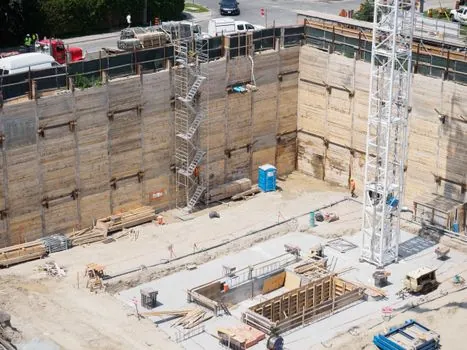
Field installation of a single girder crane typically follows seven steps: fix crane rails, splice the main girder (often shipped in 11 m + 9 m pieces to fit a 40 GP container of 11.8 m internal length), bolt end carriages to the main girder, mount the electric hoist and trolley, lift the assembled bridge onto the rails with a mobile crane, fix the bus bar and current collector, then terminate the electricals against the supplied drawing [S5]. The 11 m + 9 m two-piece girders are not a special pipeline-yask item; they reflect standard containerization, and a 20 m span rated at 5 ton fits this shipping pattern without field welding of the main span [S5].
For pipeline projects the structural check is rarely on the crane itself (the manufacturer certifies it) and almost always on the existing or new runway support steel. Under-running single girder cranes place the bridge weight plus live load into the roof structure, so the building columns and roof trusses must be checked for combined dead, live, and crane-load cases, typically per the local building code with the crane treated as a suspended load [S3]. Underhung units can usually reuse existing supports because wheel loads and bridge weight are lower than top-running equivalents of the same capacity [S3].
Standards to Anchor the Specification
Spec 74 from the Crane Manufacturers Association of America is the dedicated standard for top-running and under-running single girder electric traveling cranes using under-running trolley hoists; it is divided into seven sections covering general specs, service classifications, structural design, mechanical design, electrical equipment, an inquiry data sheet, and a glossary [S4]. For multi-girder top-running units, Spec 70 is the parallel document, while Spec 78 covers service and inspection, and Spec 79 covers operator manuals [S4]. Wiring on the electrical side should follow the National Electrical Code and any project-specific hazardous-area classification, with the crane manufacturer building to ANSI, NEC, and OSHA baselines in addition to CMAA [S2].
Verbatim from CMAA's published scope: Spec 74 "promotes standardization" and "provides a basis for uniform quality and performance of single girder cranes," with its newest edition adding updated details on electrical systems and wind restraints [S4]. Wind restraint matters on outdoor pipeline yards where the crane may sit on an open runway during a storm, not just inside a covered bay. Always cite the specific Spec number (74, not just "CMAA") when writing the procurement document, and match the duty classification letter to the lift profile rather than picking the highest letter for safety margin.
Common Pitfalls and Failure Modes
Three spec errors dominate pipeline-yard single girder purchases. First, sizing the hoist for the heaviest spool, then forgetting the average load: a hoist rated 10 ton but lifting 3-ton spools at 8 cycles/hr spends its life near no-load, which accelerates hoist brake wear and chain/rope fatigue cycles [S3]. Second, ordering an under-running crane when the building steel was never checked for the additional suspended load, leading to runway-sag and trolley-tracking complaints within the first year [S3]. Third, selecting a single girder for an application that should be a crawler crane class lift: lifting a 30-ton filter skid with a 15-ton-rated single girder because it is cheaper and "good enough" is the textbook over-spec that turns into a tip-over or structural-yield incident the first time the load swings.
Track the next signal: any project re-spec that adopts a higher CMAA class (Class D or E) without moving to a double girder, or a procurement that calls for hazardous-area electricals without naming the protection concept, is a candidate for an end-of-year vendor shortlist review.
This topic is covered further in Solenoid Coil Selection for Power Generation: Voltage, Insulation, and IP Ratings.