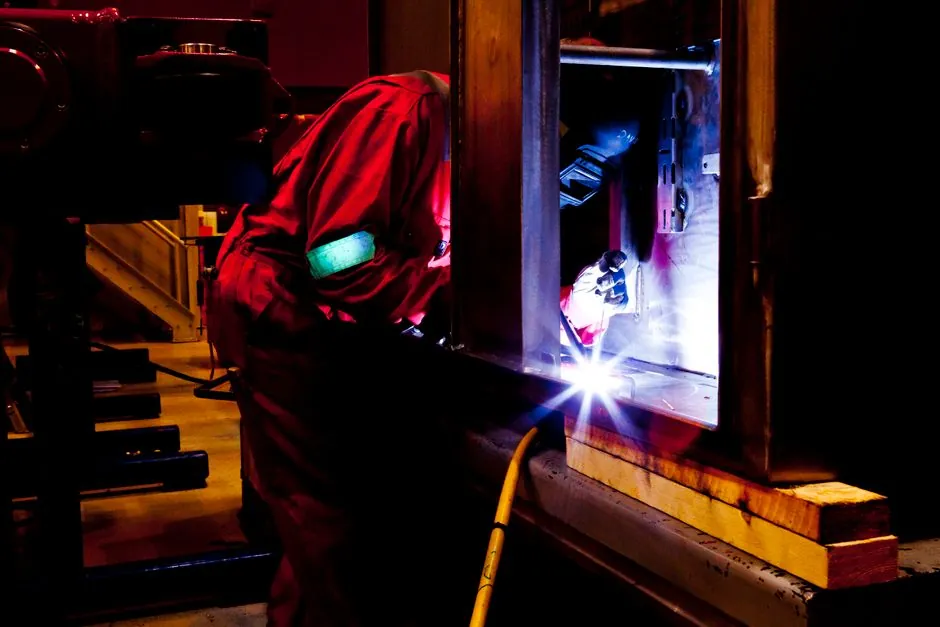
The short answer for a pipefitter choosing a root-pass process: TIG (GTAW) is the go-to for stainless, aluminum, and any code-critical pipe root, while Stick (SMAW) remains the workhorse for carbon-steel field pipeline and structural runs. Both processes produce a sound root pass when joint prep, amperage, and travel speed match the base metal and position [S1][S5].
Root-pass work is where the four main arc welding processes separate by use case. Western Welding Academy's September 2026 guidance places Stick as the field standard and TIG as the precision and root-pass standard, while MIG (GMAW) and flux-cored (FCAW) handle fill passes in shop and structural work [S1]. YesWelder's process write-up confirms that any modern arc process can lay a root pass, but Stick and TIG are the two that show up on procedure qualification records for pressure piping [S5].
Process mechanics that drive root-pass selection
TIG uses a non-consumable tungsten electrode with filler rod fed by the welder's other hand, plus a foot pedal for amperage control, and produces the cleanest, most precise arc of any manual process [S1]. Stick uses a consumable flux-coated electrode that generates its own shielding gas as it burns, which is why it tolerates wind, rust, and dirty steel that would defeat a gas-shielded process [S1][S3]. For pipe root passes this means TIG is specified where cleanliness, low heat input, and visual aesthetics on the inside of the bore matter, and Stick is specified where portability and tolerance to contamination dominate.
Western Welding Academy's Expert Pipe Welder program runs 24 weeks of TIG booth time precisely because the process demands two-hand, one-foot coordination and a steady arc length, skills that map directly to open-root pipe work [S1]. Stick training is shorter to competence but the process trades arc precision for ruggedness, a trade that suits remote cross-country pipeline spreads where gas bottles and machine weight slow the crew down [S1].
Joint prep geometry for TIG root pass on pipe
TIG root-pass joint prep is tighter than Stick prep. YesWelder lists four prep conditions for a TIG root: proper bevel angle, moderate gap, no land, and minimal high-low mismatch [S5]. The typical bevel angle for a TIG root pass is 30 to 40 degrees, with ASME power piping specifications commonly calling for a 37.5-degree bevel and API codes often specifying 30 degrees [S5]. The root opening (gap) for a TIG root generally runs 1/16 inch to 1/8 inch, with 1/8 inch cited as a typical target [S5].
These numbers matter because TIG relies on a controlled molten pool at the root; too much land or too tight a gap and the welder cannot fuse the root face, too wide a gap and the pool sags into the bore. The reference article on GTAW and TIG welding nomenclature walks through how the same process maps to three different spec sheets, which is the source of confusion when crews cross between ASME and API work. For carbon-steel root passes, the Shielded Metal Arc Welding process definition is the closer reference because the prep tolerances loosen and electrode class (E6010, E7018) drives selection instead of bevel angle to the fraction of a degree.
Decision matrix: TIG vs Stick vs MIG vs FCAW for pipe root
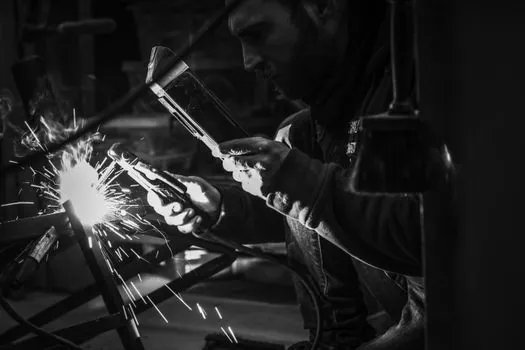
Putting the four processes against four decision criteria gives a specifier something to write into a WPS. Portability favors Stick and self-shielded FCAW, both running on a small engine-driven machine with no gas bottle, while TIG and MIG need a shielding gas supply [S1][S2][S3]. Root-pass quality on stainless and aluminum favors TIG, with Stick rated acceptable but visibly rougher inside the bore [S1][S5]. Field tolerance to wind, rust, and dirty base metal favors Stick, then self-shielded FCAW, with gas-shielded MIG and TIG at the bottom of that ranking [S1][S3]. Learning curve and welder availability favor Stick and MIG, while TIG demands the longest training path and commands the highest hourly rate in pipe-fitting and nuclear work [S1].
ESAB's orbital-welding process comparison notes that both MIG and flux-core are substantially more expensive and less portable than TIG for pipe work, and that a TIG root pass is the preferred start when weld quality is the deciding spec [S2]. For shop-built stainless pharmaceutical or food-grade piping, the matrix points to TIG root with TIG fill. For cross-country carbon-steel pipeline, the matrix points to Stick root with Stick or FCAW fill. For shop fabrication of carbon-steel pressure vessels, MIG root with flux-core fill is common where position and code allow. The key is matching the process to the row of the matrix that the inspector will actually check on the WPS.
Use cases, code fit, and limits
Stainless steel pipe in pharmaceutical, semiconductor, and food-grade plants is the canonical TIG root application, with the inside of the bore left smooth for clean-in-place and crevice-corrosion control [S5]. Aluminum pipe in HVAC, cryogenic, and aerospace work is the second canonical TIG root case, where Stick simply cannot match the pool control on a non-ferrous base metal [S1][S5]. Carbon-steel pipe in ASME B31.1 power piping and ASME B31.3 process piping commonly takes a TIG root followed by Stick fill-and-cap, a hybrid that PTTI's process guide and ESAB's process selection article both reference as standard practice on code jobs [S2][S3].
The limits of TIG on pipe are real. Travel speed is roughly half of Stick for a comparable root opening, weld prep must be cleaner, and the welder must coordinate two hands and a foot for arc length, filler dip, and amperage [S1][S5]. Stick's limits are also real: the flux coating leaves slag that must be chipped and ground between the root and hot pass, the arc is less stable on low-amperage thin-wall pipe, and stainless Stick roots show visible oxide tint and potential sensitization if the heat input is not controlled. For pipefitters specifying a WPS, the practical rule from the research is: TIG when the base metal is stainless or aluminum, when the code is ASME B31.3, or when the inside of the bore will be inspected; Stick when the job is carbon-steel field pipeline, when portability matters, or when the crew is qualified in SMAW but not GTAW [S1][S2][S5].
Filler, gas, and position notes
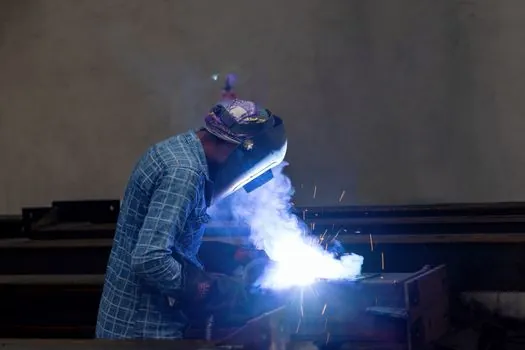
For TIG root passes on stainless, the typical filler is an austenitic rod matched to the base metal (308L for 304/304L, 316L for 316/316L), with backing gas of argon or argon/helium purging the bore to prevent sugaring on the inside surface [S1]. For TIG root on aluminum, filler is a 4043 or 5356 rod with argon shielding, and AC balance is tuned for cleaning action on the oxide layer [S1]. For Stick root on carbon steel, the typical cellulosic E6010 runs on DC+ for deep penetration in the open root, while E7018 covers the hot, fill, and cap passes on DC+ or AC [S3]. Position matters: TIG holds up in all positions including 6G fixed pipe, while Stick with E6010 is the only common cellulosic rod that runs uphill on a fixed pipe root in the field [S1][S3].
Gas-shielded MIG root pass is rare on code pipe but shows up on shop-welded carbon-steel headers where the joint is rotated (1G or 2G), the prep is a tight zero-gap root, and the fill and cap follow with flux-core. Hobart's community discussion notes that a MIG root capped with TIG fill is workable for non-critical shop work, but for code pipe the consensus is to commit to TIG or Stick for the root and not mix processes inside a single WPS unless the procedure is explicitly qualified [S4].
Trackable signals for spec updates
Two signals to watch in the next six months: ASME Section IX and AWS D1.1 committee ballots on updated root-pass qualification ranges for thin-wall stainless, and the next ESAB Warrior Edge CX and Renegade VOLT product briefs on integrated pulsed-TIG pipe programs that bundle foot-pedal and torch for orbital and manual pipe work [S2]. A WPS review against the 2026 edition of AWS QC7 is the next trackable spec update for any pipefitter running procedure qualifications on root-pass work [S1][S5].
The underlying component specifications are covered under arc welder, tig welder, and welding cutting tool.