
Smart camera selection in 2026 is decided at the spec sheet, not the brochure: buyers are lining up sensor resolution, on-board processing, communication interfaces, lens mount, lighting integration, and environmental rating before shortlisting any vendor [S4].
Industrial smart cameras are purpose-built imaging devices with an embedded processor, memory, and communication ports that execute image-acquisition and processing algorithms locally rather than relying on a host PC, with network communication built in and algorithms packaged as fixed callable modules [S4]. The same category also covers AI-enabled CCTV surveillance cameras for perimeter detection, anti-social behaviour, and people-counting duties, where on-device inference replaces the traditional "dumb" NVR pipeline [S2]. Consumer variants, such as Wi-Fi and NFC-enabled interchangeable-lens models, add app-based control layers to the same imaging chain [S3].
Sensor, Resolution, and Shutter Architecture
CMOS global-shutter sensors dominate new industrial smart camera designs in 2026 because they eliminate rolling-shutter distortion on moving conveyor and robotic lines, with the smart camera's processor, FPGA, or DSP co-located on the same board as the imager [S4]. Resolution is paired to the inspection task: 1.6–5 MP covers barcode, OCR, and presence/absence checks, while 8–20 MP is reserved for sub-pixel metrology, defect classification, and high-speed web inspection.
Frame rate is dictated by line speed: at 10 m/s of web travel, a 2 kpixel line-scan smart camera needs roughly 5 kHz of line rate, and area-scan alternatives require either a global shutter or strobe synchronisation. The Sony α5100 Fast Hybrid AF system uses 179 phase-detection AF points and touch-focus for consumer applications, but industrial smart cameras deliberately trade hybrid AF for deterministic global-shutter timing [S3]. Buyers comparing cameras should also confirm spectral response (mono vs colour vs NIR) and pixel pitch, since pixel size sets both low-light sensitivity and the optics class required to feed the sensor.
On-Board Processing and Algorithm Library
Industrial smart cameras ship with packaged vision modules covering geometric edge extraction, Blob analysis, greyscale histogram, OCV/OVR (optical character verification/recognition), simple positioning, and template search, exposed as callable functions without user programming [S4]. The internal architecture pairs a dedicated image processor with general-purpose CPU and memory blocks, so heavy CNN inference runs on the vision DSP while GUI and protocol handling run on the host CPU [S4].
For 2026 builds, the dividing line is between rule-based vision (Blob, edge, OCV) running comfortably on 1–2 GB RAM platforms, and deep-learning inference (defect classification, OCR on curved surfaces) which typically requires an embedded GPU or NPU with 4–8 GB and INT8 quantisation support. Buyers should ask vendors for a published frame-rate-at-target-accuracy number (for example, "12 fps at 99% classification accuracy on the supplied validation set"), not just peak TOPS. The fact that algorithms are packaged as fixed modules lets integrators shorten deployment time but also locks them into the vendor's library roadmap [S4].
Communication Interfaces and System Integration
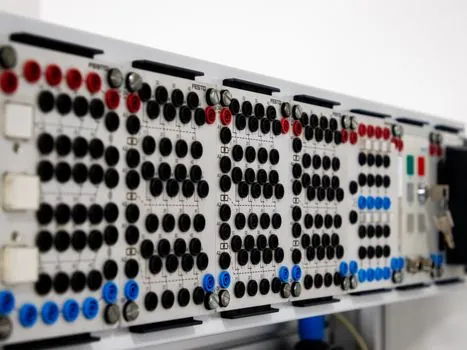
Industrial smart cameras integrate network communication as a core block rather than an add-on, and they are built with Ethernet interfaces that support multiple standard network and fieldbus protocols, allowing multiple smart cameras to be combined into larger machine-vision systems [S4]. The typical on-board port set is Gigabit Ethernet for image and result transport, RS-232/RS-485 for legacy PLC and trigger lines, and digital I/O for hardware trigger, strobe, and reject signals.
For 2026 factory projects, buyers should confirm native support for the protocol stack in use: PROFINET, EtherNet/IP, EtherCAT, or Modbus TCP for PLC hand-off, plus GigE Vision or USB3 Vision for frame-grabber-less PC integration. Surveillance-class AI cameras instead expose ONVIF, RTSP, and vendor-specific REST APIs to NVR or cloud back-ends, and integrators are explicitly choosing between upgraded NVR/DVR pipelines and cloud-based inference for legacy retrofits [S2]. Either way, bandwidth sizing matters: a 5 MP camera at 30 fps in MJPEG generates roughly 450 Mbit/s, which rules out 100 Mbit links and dictates compressed streams or 1 GigE uplinks.
Optics, Lighting, and Mechanical Fit
Lens mount is a hidden cost driver: C-mount is the industrial default, S-mount (M12) suits embedded and miniature smart cameras, and F-mount or custom bayonets only appear on high-end scientific units. Field of view, working distance, and sensor pixel size together set the required focal length, and a mismatch on any of the three forces the buyer into a more expensive lens line or a re-designed mounting bracket. For higher-end consumer and prosumer smart cameras, the Sony α5100's E-mount platform supports a wide interchangeable-lens ecosystem for flexible framing [S3].
Lighting is part of the camera spec, not an accessory: backlight, dome, ring, coaxial, and structured-light sources are specified alongside the camera because the algorithm library only performs when contrast is controlled. Industrial buyers should treat the housing (IP67 or higher for washdown, IP65 for general factory), the operating temperature window (typically 0–50 °C commercial, -10–60 °C industrial, and -30–70 °C for outdoor traffic and perimeter deployments), and the vibration rating as first-class selection filters rather than afterthoughts. For a deeper dive into optical and lighting trade-offs on a related spec-first build, see Laser Profile Scanner Selection: 4 Spec-First Criteria for 2026 Buyers.
Use-Case Mapping: Industrial vs Surveillance vs Consumer
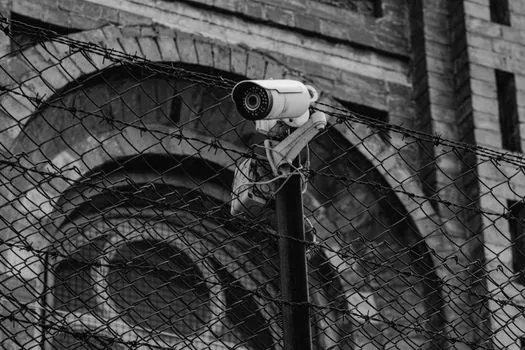
Industrial smart cameras fit deterministic, high-speed factory inspection: 100% inline defect detection on bottling lines, sub-millimetre gauging on machined parts, OCV/OVR on pharmaceutical packaging, and code reading on logistics sortation [S4]. They are not the right answer when the task is wide-area outdoor monitoring, where AI CCTV cameras with on-device detection, longer-range optics, and weather-rated housings take over [S2].
Within surveillance, the published duty split is clear: perimeter detection (vehicle and intrusion alerts on fenced perimeters), anti-social behaviour detection and deterrence (loitering, aggression, vandalism), and people counting and management (occupancy, queue length, dwell time) are the three workloads vendors openly target [S2]. Consumer smart cameras, including the Sony α5100 E-mount platform, instead target enthusiast photography with 179-point Fast Hybrid AF and touch-focus rather than 24/7 inference duty [S3]. Selecting across these three lanes is therefore a question of duty cycle, environment, and inference location, not brand.
Limits, Failure Modes, and Sourcing Discipline
Industrial smart cameras fail in predictable ways: rolling-shutter artefacts on moving parts, insufficient depth-of-field on 3D-featured workpieces, lighting drift between shifts, and on-board memory exhaustion when inspection pipelines grow beyond the original spec. They are also the wrong tool for sub-100 µm metrology, hyperspectral imaging, or any application where the working distance is more than a few metres, since fixed-focal lenses and integrated lighting cannot be scaled that far. Buyers who ignore the algorithm library roadmap risk being trapped on a fixed module set that does not keep pace with new SKU variants. [S3]
For surveillance-class AI cameras, the documented limit is dataset bias: perimeter and anti-social-behaviour detection accuracy varies sharply with weather, camera angle, and population density, and vendors that publish per-scene precision/recall numbers are safer to specify than those that quote a single headline accuracy [S2]. GDPR and privacy compliance is an explicit selection criterion in the UK and EU markets, with published vendor guidance covering signage, retention, and subject-access-request handling [S2].
Sourcing discipline applies to every spec line: every numerical claim in the proposal (frame rate, latency, IP rating, operating temperature) should be cross-checked against the camera's datasheet and the relevant IEC or ISO standard. Buyers who anchor their shortlist on resolution and price alone tend to over-spec on optics and under-spec on processing, a pattern visible across both industrial and surveillance deployments. For a parallel spec-first decision framework on rotating equipment instrumentation, see Tachometer selection: 7 spec-first criteria for rotating equipment, and for an applied view of spec-driven instrument selection across flow technologies, see Electromagnetic Flowmeter Selection: 6 Spec-First Criteria for Process Engineers. A wider reference on the imaging device family itself, covering area-scan, line-scan, and surveillance variants, is mapped on the smart camera page.
Trackable next signals for 2026 spec-first buyers: vendor release notes for new algorithm modules in OCV/OVR and CNN classification, and updated UK and EU GDPR guidance for AI CCTV deployments, both of which are public and version-stamped. The third node to watch is the published frame-rate-at-target-accuracy benchmark for embedded NPUs, which is replacing raw TOPS as the headline industrial-vision metric.
For the relevant spec sheets and selection criteria, see smart meter, and smart valve positioner.