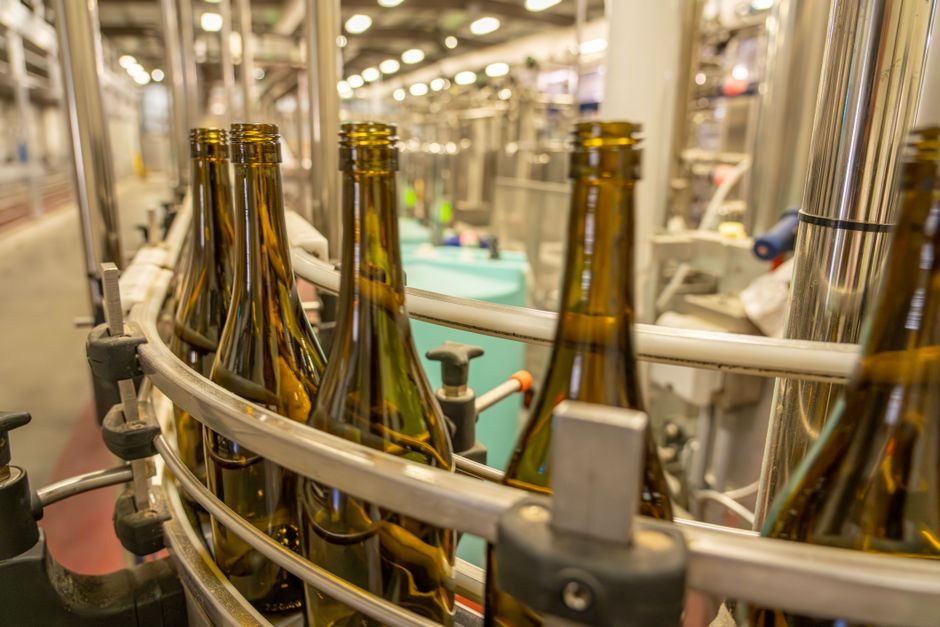
Modern smart food processing lines in 2026 are built by stacking a Distributed Control System (DCS), PLCs and variable-frequency drives on top of sanitary stainless equipment to automate sorting, washing, forming, cooking and packaging under FDA, USDA and FSMA frameworks [S1][S3].
The product envelope covers de-coring, de-watering, optical sorting, UV-C disinfection, hygienic handling, robotic pick-and-place, slicing, dicing, forming, cooking, weighing, mixing, bagging and end-of-line packaging — supplied across fresh-cut produce, ready meals, meat/poultry/fish, dairy and plant-based categories [S2][S3][S6].
What "Smart" Means in a Food Plant
ABB frames smart manufacturing as a 24/7 control room supported by a Distributed Control System (DCS) that monitors asset utilisation, process efficiency and production quality, with built-in safety and cyber-security layers [S1]. On the line, "smart" is the combination of optical sorters, foreign-body removal, UV-C disinfection, hygienic robotic handling, vision inspection and end-of-line checkweighers — all stitched into a single recipe-driven batch record [S2]. Coastal Manufacturing describes its scope as turn-key systems that run from raw intake through washing, inspection, sizing, mixing, packaging and shipping, with CAD-designed and CNC-cut stainless assemblies [S3]. For spec context on the physical equipment half of that stack, the food processing equipment manufacturing process map lays out the material and selection logic behind these lines.
Core Building Blocks of an Automated Line
Four functional blocks recur across every automated food line surveyed: raw-intake handling, in-line inspection, process conversion, and end-of-line packaging [S2][S3][S6]. Raw-intake handling uses de-watering/drying conveyors, vibratory feeders, and de-coring/de-stemming stations sized for fresh-cut throughput; Lingwood lists de-coring, de-watering, washing, dipping, sanitising and weighing/mixing as standard application modules for salads, vegetables, fruit, ready meals, meat, dairy and plant-based lines [S2].
Process conversion covers cooking, forming, slicing, shredding and dicing; Provisur Technologies organises its portfolio around separation, grinding, forming, slicing and cooking as five key equipment solution areas [S6]. The packaging tail — covered in detail at packaging machinery manufacturing — is where checkweighers, baggers and case packers close the loop, and where the most measurable ROI on smart investments shows up in OEE terms.
Sanitary Design, Materials and Compliance
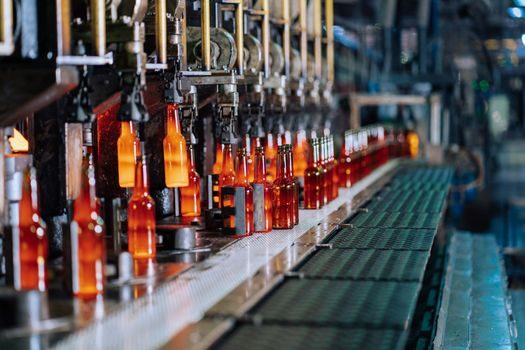
Sanitary design is non-negotiable: Coastal Manufacturing states that its equipment is FDA- and USDA-approved and follows FSMA guidelines, with robotic, orbital and purge welding available for high-purity work, plus waterjet cutting and CNC forming on stainless plate [S3]. That puts 304/316-grade stainless steel, fully-welded frames, sanitary conveyors, and clean-in-place (CIP)-friendly geometry at the centre of the spec — not as options.
Compliance is layered: FSMA's preventive-controls logic drives the documentation side, while FDA/USDA food-contact rules drive the material side [S3]. On the automation side, IEC 61131-3 governs PLC programming, ISA-88 governs batch/recipe structure, and IEC 61508 / IEC 61511 frame functional safety for any line running cooking or pressure vessels — a baseline engineers should confirm per site rather than assume [S1]. Lingwood's modules map cleanly onto these blocks: hygienic handling systems, optical sorting, foreign-body removal, UV-C disinfection, and weighing/bagging/packaging each carry their own hygienic-design burden [S2].
Who Smart Automation Is For — and Who Should Hold Off
Smart automation pays back fastest on high-SKU, high-throughput lines: fresh-cut salads, ready meals, processed meat and poultry, and dairy/cheese — categories where recipe changes are frequent and labour cost per kg is high [S2][S6]. Plants running 24/7 with multi-product changeovers, or those with traceability pain under FSMA Section 204, are the prime candidates for a DCS-plus-vision retrofit [S1][S3].
Hold off if you run a single-SKU, low-volume artisan line, a short-shift seasonal packer, or a process whose product geometry defeats vision systems (e.g. highly reflective wet product, deeply nested bulk solids). A simpler PLC automation approach or a stand-alone checkweigher will return capital faster than a full smart-line refit in those cases [S1]. Provisur's portfolio of separation, grinding, forming, slicing and cooking equipment is built around volume processors, not craft producers [S6].
Selection Criteria and Option Comparison
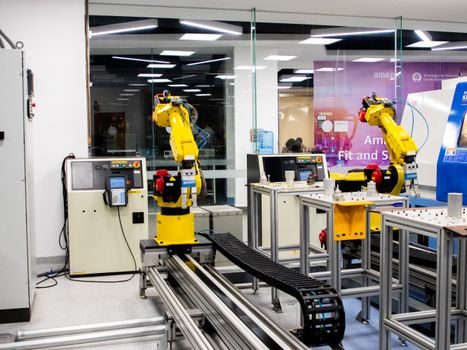
When spec'ing a smart food line, four criteria separate contenders: control architecture, hygienic design depth, vision/inspection capability, and service footprint. On control architecture, an ABB-class DCS suits 24/7 multi-line plants needing centralised recipe and asset management, while a PLC-plus-HMI stack is the right answer for a single dedicated line with a smaller operator pool [S1].
On hygienic design, vendors differ in welding capability (robotic/orbital/purge), surface finish (Ra values, electropolishing), and CIP integration; Coastal Manufacturing publishes robotic, orbital and purge welding on stainless as a stock offering [S3]. On vision and inspection, optical sorting and foreign-body removal are now table stakes for fresh-cut and processed-meat lines, and pair with metal detectors at the conveyor discharge [S2][S3]. On service footprint, the multi-brand integrators (e.g. Provisur) carry global spares and field service, while custom fabricators lean on regional millwright partners [S3][S6]. Use that matrix to triage two or three finalists before any factory acceptance test.
Real Use Cases and Failure Modes
Fresh-cut produce lines combine wash/dry conveyors, optical sorters, UV-C disinfection, robotic pick-and-place, and modified-atmosphere packaging — the most automated segment in 2026 [S2]. Processed-meat and poultry lines layer forming, cooking, slicing and checkweighing with metal detection and vision inspection; that is where smart-camera based quality checks earn their keep, and where a spec engineer should review smart camera options before locking the line layout [S2][S6]. Dairy and ready-meal lines add cooking, forming and clean-in-place loops that demand tighter functional-safety zoning [S6].
Failure modes to spec against: sensor fouling under wash-down (drives IP69K enclosure choice and stainless sensor bodies); recipe drift on PLC lines without ISA-88 structure; data gaps on legacy conveyors lacking smart-meter telemetry — a gap closed by retrofitting smart meter class energy and flow instrumentation. Hygienic design failures trace back to weld quality and Ra finish, both of which are visible at FAT if you spec them up front [S3].
2026 Signal Stack: What to Track Next
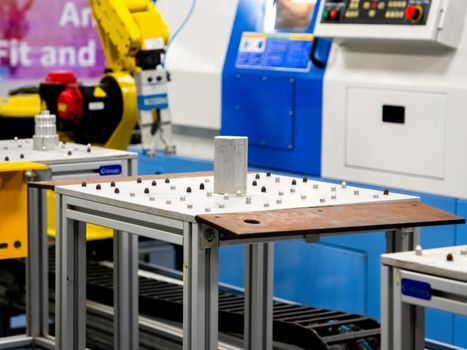
Three signals are worth watching through the rest of 2026: (1) tighter FSMA traceability enforcement pushing more lines onto ISA-88 batch structures; (2) convergence of smart valve positioner class CIP valve control with DCS recipe handling; (3) growth of robotic palletising and de-palletising cells at the line tail, where manual pallet jack traffic and AGV handoffs are being redesigned around pallet-spec standards. Plant-floor energy and pressure data will increasingly flow through pressure transmitter networks tied into the same DCS that runs the line — the convergence is already visible in ABB's control room and measurement-and-analytics stacks [S1].