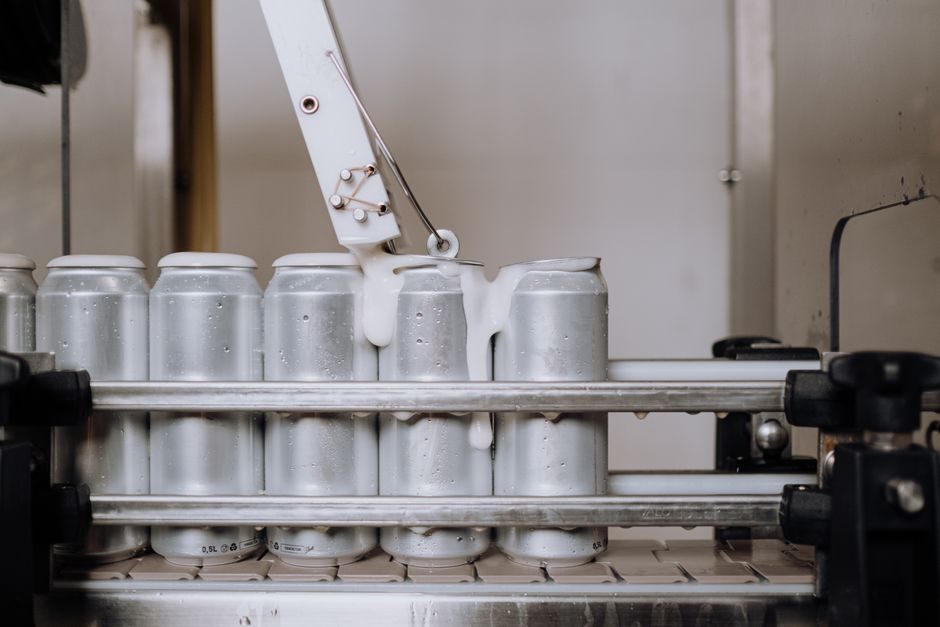
Bettis-branded Scotch yoke and rack-and-pinion pneumatic valve actuators from Emerson are now sold as turnkey Valve Operating System (VOS) packages, pairing the actuator with fully integrated controls, factory-tested and shipped from a single point of contact [S1].
ABB positions its linear pneumatic actuator line inside a broader 24/7 control architecture covering DCS, drives, PLCs, and measurement analytics, signalling that pneumatic motion modules are no longer bought as standalone parts but as nodes in a plant-wide digitalization stack [S2]. On the component tier, Bimba's FM series double-acting stainless-steel cylinder delivers 0.125-120 in stroke at 250 psi over a -20 °F to 400 °F window, the kind of envelope most spec sheets need to clear before any smart-feature conversation starts [S3].
Where the product class sits: definition and scope
A pneumatic actuator converts compressed-air energy into mechanical motion — linear thrust from a piston or rotary torque from a vane, rack-and-pinion, or Scotch yoke — to operate a final control element such as a ball, butterfly, or damper valve [S1][S2][S4]. Emerson's 11-model Bettis pneumatic line alone spans CBA300-series Scotch yokes, NG-series, RPX and G-series rack-and-pinion units, plus CBB and RPE variants, covering both on/off isolation and modulating duty across hazardous-area process plants [S1].
Linear variants add the cylinder-and-rod geometry, with Bimba FM series publishing explicit envelope numbers: bore 1.5-8 in, stroke 0.125-120 in, maximum operating pressure 250 psi, and stainless-steel construction for washdown or corrosive service [S3]. Wuxi Hongba Mechanical Electrical Equipment, a QMS ISO 9001:2008-certified and CE/EMC+LVD-approved maker from Jiangsu, lists high-speed linear actuators as a core product on its made-in-china profile, the kind of OEM/ODM source that fills the high-volume low-spec end of the market [S7]. For readers new to the motion-control side, the pneumatic actuator fundamentals reference page maps rotary and linear geometries against typical torque/thrust envelopes.
Selection criteria that actually move the spec
Four numbers decide a pneumatic actuator purchase more than any marketing claim: operating pressure, stroke or rotation angle, torque or thrust output at the stated supply pressure, and the hazardous-area certification scope [S1][S3]. Bimba publishes 250 psi maximum with a -20 °F to 400 °F temperature band and an 8 in maximum bore, and Emerson groups its Bettis range by operating temperature, actuation type, control type, valve type, industry, brand, power source, and certifications as filterable selection axes on its configurator page [S1][S3].
Failure-mode thinking belongs in the same selection matrix: spring-return versus double-acting, and the safety integrity level (SIL) of the integrated positioner, both feed into the same SIL-rated loop calculation. Bettis Scotch yoke units are typically specified where high breakaway torque is needed on quarter-turn valves; rack-and-pinion units are chosen when smoother torque profiles and lower friction matter more [S1]. For buyers comparing the rotary and linear geometries head-to-head, the pneumatic valve actuator comparison entry sorts the trade-offs by cycle life, speed, and maintenance access.
Smart-manufacturing integration: positioners, IO-Link, and digital twins
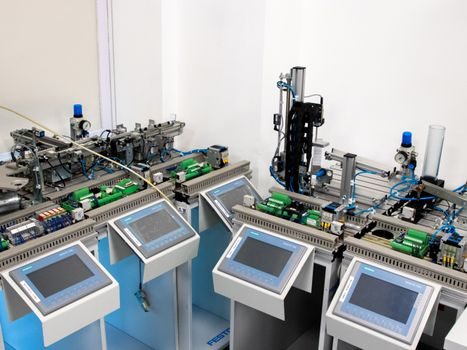
Smart pneumatic actuators in 2026 ship with on-board position feedback, HART or IO-Link communication, and partial-stroke test capability, the three features that turn a passive air-driven box into a diagnosable node on the plant network [S1][S6]. Emerson's VOS package integrates controls with the Bettis actuator so that the positioner, limit switches, and I/P transducer are commissioned together, eliminating the field-wiring variability that drove unplanned valve trips in legacy pneumatic loops [S1].
On the engineering side, MathWorks' Simscape Foundation Library example models a double-acting pneumatic actuator driven by a directional valve using Variable Local Restriction blocks, the same approach control engineers use to validate the digital twin before the steel arrives on site [S6]. For process plants running ABB Ability or Emerson DeltaV architectures, the linear pneumatic actuator profile page is published under ABB's Measurement and Analytics product tree, the right location to drop it into a plant-level digitalization rollout [S2]. The companion entry smart valve positioner functionality goes deeper on HART 7 / WirelessHART diagnostics layered on top of the pneumatic spring pack.
Side-by-side comparison of the dominant configurations
Three configurations dominate 2026 purchasing: quarter-turn rotary (rack-and-pinion or Scotch yoke), linear cylinder, and proportional/variable-supply units. The table below lines them up against the criteria that show up on every RFQ: [S3]
Quarter-turn rotary (Bettis CBA300, NG-series, RPX, G-series): torque range runs from small quarter-turn packages to heavy isolation duty; typical pressure supply 40-120 psi (3-8 bar); hazardous-area certification scoped per order; suited to ball, butterfly, and plug valves in oil & gas, power, and chemical service [S1].
Linear cylinder (Bimba FM series): 1.5-8 in bore, 0.125-120 in stroke, 250 psi max, -20 °F to 400 °F, double-acting stainless-steel construction, NFPA-interchangeable mounting kits — strong fit for damper actuation, gate valve stroking, and clean-in-place skids [S3].
Proportional/variable-supply linear (Wuxi Hongba high-speed linear actuator range): OEM/ODM pricing, ISO 9001:2008 and CE/EMC+LVD certified, sample service available, focused on the high-volume machine-builder tier where price per axis dominates [S7]. Buyers who need a deeper rotary-versus-linear decision tree should also read the pneumatic actuator selection matrix reference.
Use cases by industry and duty cycle

For oil and gas, chemical, and power generation isolation duty, Bettis Scotch yoke and rack-and-pinion units dominate the Emerson catalogue and are typically sold with hazardous-area certification and full VOS integration [S1]. Airmax Automation in India bundles pneumatic rotary, ball, butterfly, and damper actuators with motorized valves and steam pressure-reducing units for process skids, illustrating the Indian subcontinent's combined-actuator-and-valve bid model [S4].
For factory automation and discrete-manufacturing lines, Bimba's NFPA-interchangeable FM cylinder with optional rear-pivot or flange mount conversion kits is a common pick for high-cycle press, clamp, and divert applications where 400 °F capability matters during paint-line or foundry duty [S3]. The Chinese high-volume tier — Wuxi Hongba, the 27,600 m² Titan Automation plant running 350 sets of machines and 300 workers on ISO and NFPA cylinder lines, and the Jiangsu-based rotary quarter-turn suppliers on made-in-china — covers the 8,000-piece/month run-rates that global machine builders pull through every quarter [S5][S7][S8][S9]. Titan Automation's published floor area of 27,600 m² workshop plus 9,400 m² office, with 350 machine sets and 300 workers, sets a concrete scale benchmark for ISO/NFPA dual-standard cylinder capacity in 2026 [S5].
Limitations, failure modes, and what the spec must protect against
Every pneumatic actuator on a 2026 spec sheet has the same three failure modes: air-supply loss, stiction at the seal/piston interface, and positioner drift. Spring-return units address the first by mechanical default; the second and third are managed by material selection (stainless steel, low-friction coatings), scheduled seal replacement, and a smart positioner with continuous self-diagnostics [S3][S6].
Stainless-steel FM-series construction pushes corrosion resistance upward, but the published -20 °F lower limit rules out arctic LNG service without an arctic-grade seal kit, and the 400 °F upper limit is a dry-heat figure, not a steam-service figure [S3]. For buyers who already have an installed base and want to retrofit, ABB's Measurement and Analytics placement means a linear pneumatic actuator can be specified alongside flowmeters, pressure transmitters, and analytics on a single procurement document [S2]. Reference data on the pneumatic valve actuator maintenance envelope cross-references seal-kit part numbers against cycle counts.
Standards, sourcing, and what to verify on the datasheet
Every pneumatic actuator datasheet worth signing in 2026 should carry four data points: an operating-pressure figure with units, a stroke or rotation range, a torque or thrust curve at the stated supply pressure, and a hazardous-area certification reference tied to a recognised scheme (ATEX/IECEx/North-American equivalents) [S1][S3]. On the linear side, NFPA and ISO cylinder dimensional standards govern interchangeability; Bimba's FM series is explicitly described as interchangeable with older NFPA-style cylinders already in the field, and Titan Automation's catalogue lists both NFPA Standard Cylinder and ISO Standard Cylinder product lines [S3][S5].
Quality-system references that recur on supplier profiles in the past six months include ISO 9001:2008 (note: dated revision; verify current status), CE/EMC+LVD, and — for hazardous-area units — third-party certification marks tied to the named actuator family [S7]. Buyers reviewing Wuxi-made rotary quarter-turn units at the 10-piece MOQ tier should treat the US$20.00 unit price on the made-in-china listing as a sampling reference, not a tier-1 production price, and confirm certification scope directly with the factory [S9].
The next signal worth tracking is the migration from stand-alone pneumatic actuators to VOS-integrated packages with continuous diagnostics, and from HART-only positioners to IO-Link and Ethernet-APL variants on the linear-cylinder tier; both shifts are visible in the past six months of supplier-line activity and will reshape the standard RFQ template by the end of 2026 [S1][S2][S6].
This topic is covered further in EV Charging Station Market 2026: DC Fast, V2G and Wireless Set the Spec Curve.