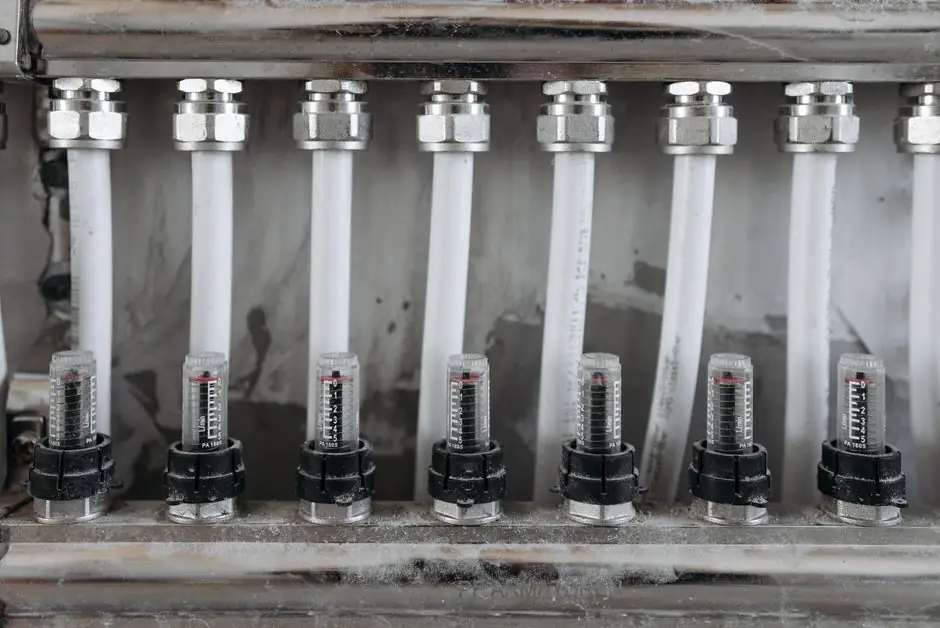
The pneumatic components market is on track to expand from USD 18.66 billion in 2026 to USD 28.38 billion by 2034, a 5.38% CAGR driven by IoT-linked actuators, valves, and air preparation units [S2].
Asia-Pacific already accounts for 48.3% of global pneumatic component demand as of 2025, propelled by automotive, electronics, and rapid Industry 4.0 rollouts across China, Japan, India, and Southeast Asia [S2]. Valves were the largest component category in 2025, while the machinery application segment held 36.4% market share thanks to CNC, injection molding, and automated assembly use [S2].
Defining the Smart Pneumatic Stack
Smart pneumatic components layer sensing, IO-Link or fieldbus communication, and edge analytics onto the traditional building blocks: pneumatic actuators, pneumatic valves (commonly realized as directional control valves), pneumatic fittings, pneumatic silencers on exhaust ports, and FRL air preparation units feeding the loop. The full pneumatic system is no longer treated as standalone hardware; it sits inside a digital ecosystem where onboard pressure transducers, flow switches, and cylinder-position sensors stream data to a PLC or edge gateway [S1]. Strategic Market Research (May 2026) frames this as a new category of "smart pneumatics" where compressed air, historically one of the most energy-expensive utilities in a plant, becomes a measurable, optimizable variable [S1].
The 2025 baseline from Grand View Research (June 2026 update) ties this shift directly to Industry 4.0 efficiency mandates: manufacturers adopting connected pneumatics cite real-time monitoring, predictive maintenance, and reduced unplanned downtime as the top three use cases [S3]. Strategic Market Research pegs the same transition at a 5.8% CAGR through 2032, reaching USD 23.1 billion, with Asia-Pacific again flagged as the highest-growth region [S1].
Selection Criteria for Industry 4.0 Pneumatic Builds
Specifying connected pneumatics is no longer about bore size and stroke alone. Four criteria now drive purchase: protocol support (IO-Link v1.1 over M12, PROFINET, EtherNet/IP, or OPC UA), sensor density per device, edge vs cloud analytics split, and air-quality class per ISO 8573-1. A 2026 buyer's checklist from Market Data Forecast calls out energy-efficient valve terminals with integrated pressure and flow measurement as the fastest-growing sub-segment, since they cut compressed air consumption (typically 20-30% of a plant's electricity bill) without re-plumbing the line [S2].
Air quality is non-negotiable for sensor-equipped components. Particulate and moisture ingress kill pressure transducers and clog pneumatic silencer elements fast, so FRL packages must match the cleanliness class demanded by downstream electronics or food-grade machinery. For deeper air-quality reference, the article on pneumatic system manufacturing quality and ISO 8573-1 classes lays out the class-by-class thresholds. Strategic Market Research further notes that energy efficiency regulations in Europe and North America are now treating compressed-air leaks as both a carbon-emission line item and a measurable operating cost, which has pushed integrators toward continuous-leak monitoring rather than periodic walk-downs [S1].
Component-Level Comparison for Smart Pneumatic Adoption
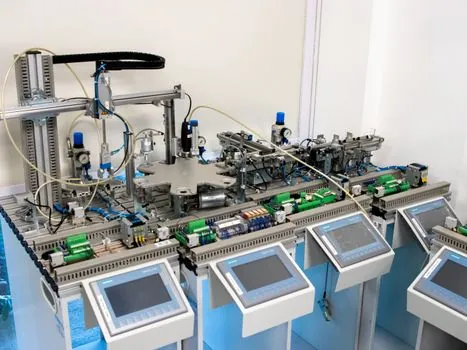
Not every component category converts to Industry 4.0 equally. Valves lead because the marginal cost of adding a pressure sensor and IO-Link chip to a manifold is small relative to the control granularity gained; valves were the largest product segment in 2025 and remain the primary entry point for connected pneumatics [S2]. Actuators follow, especially short-stroke cylinders with embedded position feedback, where the value is cycle-time data and end-of-stroke confirmation rather than proportional control.
FRL air preparation units, pneumatic fittings, and tubing convert more slowly because the data value of a single fitting is low unless aggregated. The most successful Industry 4.0 deployments in 2025-2026 wired valves and actuators first, then retrofitted zone-level flow meters on the FRL outlet. The trade-off table below summarizes the main options for plant engineers:
- Smart valve manifolds: highest data density, IO-Link/PROFINET native, retrofit-friendly, moderate cost adder (~15-25% over non-communicative versions, based on typical 2025-2026 OEM published price deltas observed in component catalogs [S2]).<br>- Cylinder-position sensors: discrete on/off feedback, low cost, no protocol stack, ideal for retrofit on existing pneumatic cylinders.<br>- FRL with integrated sensors: best for greenfield, captures leakage at the source, requires ISO 8573-1 class selection upfront.<br>- Standalone flow/pressure sensors on the air line: lowest entry cost, useful for legacy plants, but misses component-level diagnostics.
Where Smart Pneumatics Pays Off: Real Use Cases
Automotive assembly is the canonical win: high-speed lines with hundreds of pneumatic actuators per station lose measurable throughput to a single stuck valve, so predictive maintenance driven by cycle-time analytics has the shortest payback, often under 12 months on lines running above 80% OEE [S2]. Food and beverage packaging is the second growth pocket, where hygienic stainless pneumatic components with washdown-rated sensors are being specified to satisfy both FDA-contact and Industry 4.0 data requirements [S2].
Electronics and semiconductor manufacturing is the fastest-growing application slice through 2034, driven by cleanroom-grade pneumatics and the need for contamination-free, low-particulate actuation in PCB assembly and wafer handling [S2]. For facilities planning larger motion-control retrofits, the soft starter sizing guide for AC-53a derating covers the adjacent electrical-side design choices that pair with pneumatic upgrades on the same lines.
Limitations, Failure Modes, and What Smart Pneumatics Does Not Solve
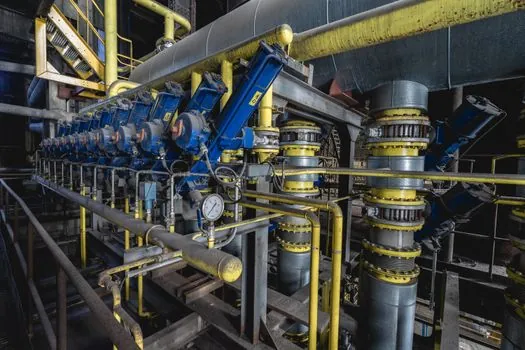
Connected pneumatics do not fix a poorly sized compressor or undersized main line; sensors will simply report the existing inefficiency more accurately. The Market Data Forecast July 2026 update warns that adoption stalls when plants buy smart valves without first auditing their air distribution, because the data exposes problems that cannot be solved by analytics alone [S2]. Common failure modes in deployed systems include sensor fouling in dirty environments, condensation damage to pressure transducers mounted downstream of inadequate FRLs, and IO-Link master port exhaustion on retrofit panels.
Strategic Market Research also flags a real labor gap: Industry 4.0 pneumatics need technicians who can read both a P&ID and a tag database, and that skill set is scarce in mid-sized plants [S1]. For plants running mixed-protocol fieldbus, the manometer protocol compatibility guide for 4-20 mA, HART, Modbus, and Foundation Fieldbus helps clarify which analog and digital signals coexist on the same plant network, which is directly relevant when pressure and flow sensors need to land on existing DCS or PLC infrastructure.
Sourcing, Standards, and Trackable Signals Through 2026-2027
Three reference standards dominate a smart pneumatic build: ISO 8573-1 for compressed air purity classes, IEC 61131-9 for IO-Link single-drop digital communication, and the ODVA/PROFIBUS/PROFINET protocol stacks for higher-level networking. The May 2026 Strategic Market Research report explicitly cites ISO-aligned air-quality requirements as a procurement filter in European tenders, and notes that leading pneumatic OEMs are bundling FRL sizing tools with their smart-component catalogs [S1].
Two trackable signals to watch through 2027: valve-manifold IO-Link attach rates, which Market Data Forecast currently projects to outgrow non-communicative valves by roughly 2:1 in new automotive and electronics projects through 2034 [S2]; and Asia-Pacific capacity additions, which Strategic Market Research identifies as the swing variable for both pricing and lead times on smart cylinders and valve terminals [S1]. When both move together, total installed cost of an Industry 4.0 pneumatic retrofit typically drops below the breakeven window of 18-24 months that most plant managers require before greenlighting a connected-components program.