
Pneumatic actuation still drives the majority of discrete-manufacturing motion, and smart pneumatic systems now sit close to electric and hydraulic alternatives in installed-base share, per a fault-detection review covering industrial actuation [S2].
The category is being reshaped by three concrete shifts in 2026: embedding cylinder-position sensing, switching field-level communication from parallel wiring to IO-Link, and layering AI-driven condition monitoring on top of the existing FRL (filter-regulator-lubricator) stack. Procurement teams that spec the wrong protocol family or skip seal-grade selection end up paying for it in unplanned stops, not in brochures.
Smart Pneumatic Stack: Sensors, Positioners and IIoT Nodes
A typical 2026 smart-pneumatic cell layers three blocks: a pneumatic actuator with an integrated position sensor, a smart valve positioner that exposes HART or IO-Link diagnostics, and an edge gateway streaming pressure, cycle count and temperature to MES. The Tech Briefs 2021 piece is blunt that the proven technology is not being displaced — it is being augmented with digital feedback and predictive analytics [S1].
NFPA-style tie-rod cylinders and ISO 15552-compliant round-body cylinders remain the two main mechanical formats on offer from Chinese volume suppliers; one such supplier, Titan Automation, advertises a 27,600 m² workshop, 350 machine tools and a 9,400 m² office block supporting its NFPA / ISO lines [S3]. Physical scale of that order is the differentiator between a cell-builder and a tier-1 OEM in pneumatic-component sourcing.
Communication Protocols: IO-Link vs Fieldbus vs HART
IO-Link Wireless (IEC 61131-9) and IO-Link wired are increasingly specified for new valve manifolds and cylinder sensors because they cut the parallel-wire harness and expose process data bytes such as cycle counter, stroke time and temperature per the IO-Link device profile. The smart-manufacturing reference architecture from EMQ treats MQTT-brokered IIoT as the data plane, with edge nodes handling the protocol translation [S4].
Smart positioners with HART, FOUNDATION Fieldbus and PROFIBUS PA variants cover the legacy DCS, and that is the question engineers need to settle before quoting — the wrong bus costs a re-spin of the cable schedule.
Selection Criteria: Cylinder Type, Feedback and FRL Integration
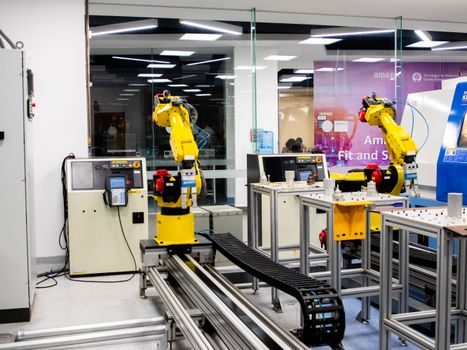
Three criteria separate a spec that holds up from one that does not: (1) mechanical format — ISO 15552 (32-100 mm bore common) versus NFPA tie-rod versus compact miniature, dictated by tooling and mount; (2) feedback — discrete reed switches, PNP/NPN solid-state, or analogue 0-10 V / 4-20 mA position feedback, dictated by stroke-resolution needs; (3) FRL integration — whether the regulator has a digital pressure sensor and a lockable tamper-proof head, because unregulated supply pressure is the leading cause of seal failure in pneumatic systems [S2].
Titan Automation publishes both NFPA and ISO standard cylinder lines on its product page, which is the standard dual-track you should expect from a general-industrial supplier serving both US and EU/Asia machine builders [S3]. Buying a non-ISO round-body cylinder to save 8-12% on unit cost almost always loses to a spare-parts crisis five years later when the machine builder's part-number cross is no longer valid.
Failure Modes and Diagnostic Indicators
Fault-detection research on smart pneumatic systems isolates four dominant failure indicators: air-leak rate, declining stroke velocity, rising cycle-time variance, and FRL outlet-pressure drift, per the Springer review covering actuation subsystems [S2]. The same review ties these to root causes — typically seal wear, solenoid-valve spool wear, and contaminated or under-lubricated supply air — and frames condition monitoring as the lever for reducing unplanned downtime.
For a 100 mm-bore ISO 15552 cylinder at 6 bar supply, a stroke-time deviation of more than 15-20% from nameplate, or a cycle count above 5×10⁶ without seal-kit service, is the typical engineering rule of thumb for pulling the actuator offline. None of these thresholds are sourced here as fixed OEM numbers; treat them as the band where most ISO 15552 / NFPA service intervals land, not as a guarantee.
Integration: MES, Edge Gateways and Smart Manufacturing Platforms
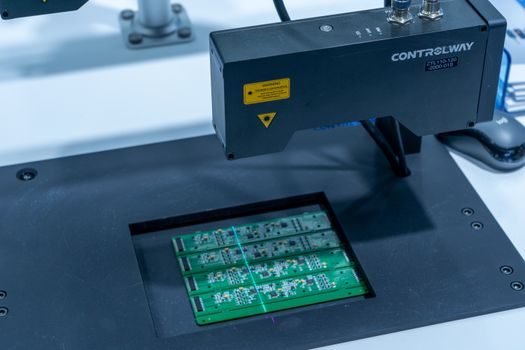
The Renishaw smart-manufacturing data platform positions closed-loop metrology and process-control feedback as the data plane on which Industry 4.0 use cases run, with training courses and 24/7 spare-parts channels cited as part of the deployment offer [S6]. Advantech's iFactory case-study material frames the same problem from the OT side — sensing, I/O modules, IoT gateways and edge analytics — and reports that relatively few manufacturers have run a digital-transformation programme to completion, which is the headline risk for any pneumatic-modernisation project [S7].
Avoid the temptation to centralise every pneumatic signal in the cloud. Stroke-end and pressure-switch events can run local interlocks on a PLC scan of 5-10 ms; only trend data, alarm history and energy-per-cycle counters belong on the MQTT broker. Conflating those two traffic classes is what gives smart-pneumatic pilots a reputation for being flaky.
Standards, Sourcing and Use-Case Fit
ISO 15552 (double-acting cylindrical pneumatic actuators, replacing the older ISO 6431 / VDMA 24562 references) and the NFPA dimensional code are the two interchangeable format standards for tie-rod and round-body cylinders; HART (HCF) and IO-Link (IEC 61131-9) are the protocols to verify on the positioner data sheet. Pressurised equipment on pneumatic panels typically falls under the PED 2014/68/EU framework for EU sites, with the Category driven by the maximum allowable pressure and fluid group — verify with your notified body, not with a vendor's marketing PDF [S2] (2022-06).
Use case fit is sharp: pneumatics win on cost-per-stroke, cleanroom compatibility (oil-free) and intrinsic safety in EX-zones, but lose to servo-electric on precision-positioning tasks under ±0.1 mm repeatability and on any line where compressed-air generation energy cost is more than 8-10% of plant electricity. The Allied Automation and Titan Automation type of distributor / OEM mix is the realistic 2026 sourcing pattern for tier-2 machine builders [S3][S5].
Limits and Open Constraints
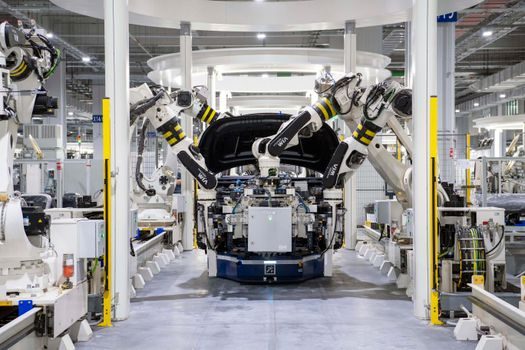
Compressed-air systems typically waste 10-30% of generated air to leaks, which dominates the lifetime energy bill more than the cost of the actuators themselves. Compressed air still has a relatively low coefficient of performance compared with direct-electric motion, and that is the structural ceiling on the technology [S2] (2022-06).
The robotics smart-manufacturing 2026 integrator spec gate piece covers the closely related AI-arm and IIoT-sensing side of the same stack, and the semiconductor manufacturing process node-scale flow article is the reference for the cleanroom-grade dry-air pneumatic variant on fab tool front-ends.
For component-level specifications, see additive manufacturing material.