
CATL has publicly targeted cost parity between its sodium-ion cells and LFP lithium-ion cells by the end of 2026, according to a June 2026 report citing the company's own communications [S8]. That single target reshapes the 2026 competitive landscape, because once sodium-ion reaches LFP cost levels, the chemistry stops being a niche stationary-storage play and becomes a direct alternative for entry-level EVs, two-wheelers, and grid storage in lithium-exposed markets.
The market sizing is messy and worth unpacking before vendor analysis: Mordor Intelligence puts the 2026 global sodium-ion market at USD 0.54 billion [S5], while Coherent Market Insights values it at USD 25.20 billion for the same year [S4] and InsightAce at USD 498.66 million in 2025 scaling to USD 11.99 billion by 2035 [S2]. The variance reflects whether the analyst is counting only dedicated sodium-ion cell revenue or the broader sodium-based battery family (including sodium-sulfur), and whether automotive pack-level value is bundled in. The Volta Foundation's review of 2026 commercial deployments puts global production capacity on track to surge from 70 GWh toward multi-hundred-GWh scale as Chinese provincial tenders award >100 MWh contracts [S3].
Cell Chemistry Segmentation: Polyanionic, Prussian Blue, and Layered Oxides
Three primary sodium-ion cathode chemistries are commercializing in 2026, with sodium iron pyrophosphate (NFPP), a polyanionic compound, identified as the leading option for grid storage due to thermal stability under abuse conditions including overcharge, external short circuit, crush, and thermal stress [S3]. Polyanionic structures resist oxygen release even during thermal runaway, a behavioral difference from NMC lithium chemistries that release oxygen and propagate fires, which has direct permitting implications for U.S. BESS projects where over 100 local authorities in New York alone have enacted moratoria covering roughly 8% of the state [S3].
Prussian blue analogs and layered metal oxides fill the mobility gap. According to Mordor Intelligence [S5], breakthroughs in Prussian-blue cathodes are closing the performance gap with lithium iron phosphate, particularly for two-wheelers and urban delivery fleets, in a market projected to grow at a 16.89% CAGR from 2026 to 2031. Layered oxides, including CATL's Naxtra chemistry at 175 Wh/kg cell-level energy density, are aimed at the passenger-EV duty cycle. The chemistry mix matters for buyers because cycle life, low-temperature performance, and depth-of-discharge all vary by cathode family, with NFPP variants accessing 95 to 98% of nominal capacity versus roughly 80% for typical lithium-ion packs constrained to 10 to 90% SoC windows [S3].
Vendor Map: Who Is Mass-Producing Sodium-Ion Cells in 2026
CATL (Contemporary Amperex Technology Co. Limited) leads the capacity race, with the Naxtra launch marking the first mass-produced sodium-ion cell at 175 Wh/kg and CATL-utility joint-venture plants working to secure vertical supply across China, Europe, and North America [S4][S5]. The rest of the 2026 active field, per InsightAce's competitive landscape section, includes HiNa Battery Technology, BENAN Energy Technology (Shanghai), AMTE Power plc (now AGM Batteries Limited), Natron Energy, TIAMAT, Jiangsu Zhongna Energy, Bluetti Power, Li-FUN Technology, Indi Energy, Altris AB, Farasis Energy, BYD, Aquion Energy (Juline-Titans LLC), and Faradion (acquired by Reliance Industries Ltd) [S2].
Three capacity anchors define the 2026 supplier map. First, HiNa Battery deployed a 100 MWh system in Nanning, Guangxi, that delivered 92% round-trip efficiency across 5,000 cycles at a levelized cost of storage below USD 0.10 per kWh [S5]. Second, Stora Enso and Altris are building European supply chain alternatives through a partnership plus Nacelle pilot production, which Coherent flags as a direct response to the EU Critical Raw Materials Act [S4]. Third, the U.S. DOE has placed a USD 50 million LENS Consortium bet to accelerate domestic sodium-ion R&D and manufacturing, while India's Atmanirbhar Bharat initiative is funding sodium-ion development specifically to cut a USD 15 billion lithium import dependency [S4].
Cost Stack and Raw Material Advantage
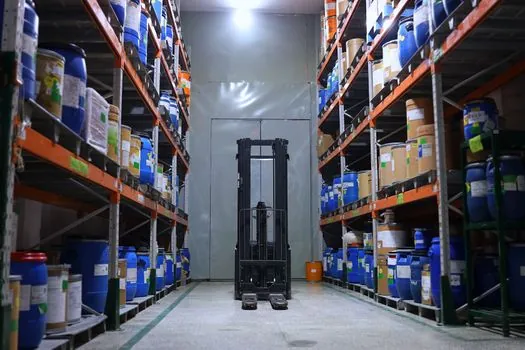
Sodium carbonate (soda ash) sits at roughly USD 300 per tonne with low price volatility, versus lithium carbonate that has traded between USD 13,000 and USD 80,000+ per tonne depending on spot month [S3]. On a kilogram basis that is the headline cost argument: sodium is over 1,000 times more abundant than lithium in accessible reserves and roughly 500 times less expensive to process into battery-grade precursor [S3].
Two further structural cost differences matter for procurement. Sodium-ion cells can use aluminum current collectors on both anode and cathode, eliminating the copper anode foil required in lithium-ion and supporting zero-volt storage and transport at 0% SoC without mechanical degradation [S3]. And non-aqueous sodium-ion cells can be produced on modified lithium-ion manufacturing lines, which compresses capex and shortens the commercialization runway by what Mordor estimates is nearly two years versus a greenfield chemistry [S5]. The Coherent cost reference frame puts sodium-ion at USD 40 to 77 per kWh on a 2019 theoretical basis against roughly USD 137 per kWh for lithium-ion in 2020; CATL's end-2026 LFP-parity target effectively tests the upper end of that range against current LFP spot pricing [S4][S8].
Application Split: Stationary Storage Dominates, Mobility Catches Up
Stationary energy storage commanded 71.8% of the sodium-ion market by share in 2025, and Mordor projects the transportation segment to grow at a 19.8% CAGR through 2031, with automotive demand specifically expanding at 23.3% CAGR [S5]. Coherent's segmentation reinforces the storage bias, with stationary energy storage at 72.7% of 2026 application share and consumer electronics at 29.8% of end-user share [S4].
The mobility wedge breaks into three sub-segments that map cleanly to cell format and capacity. Electric two-wheelers, three-wheelers, and entry-level passenger EVs in the 10 to 40 kWh pack band are the prime targets, with that capacity band forecast to grow at 14.3% CAGR from 2026 to 2033 in MarketsandMarkets' automotive segmentation [S1]. Light commercial fleets running short-to-medium duty cycles are the second wedge, and sodium-sulfur chemistries are forecast to capture 70% of the 2026 automotive sub-market by battery type on the back of higher energy density [S1]. Urban delivery fleets in India and Southeast Asia are the third, tied to the Prussian-blue 15-minute charge window [S5].
Regional Map: Asia Pacific Leads, Europe and North America Build Alternatives
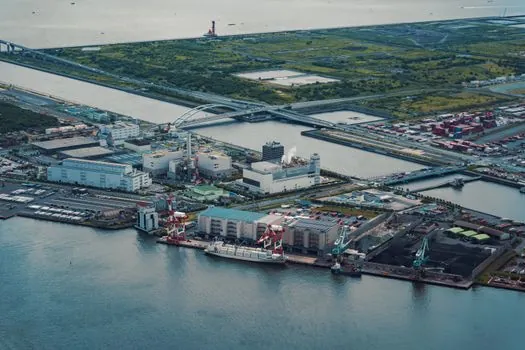
Asia Pacific held 45.6% of the 2025 sodium-ion market by value and is projected to grow at 19.5% CAGR through 2031, driven by China's policy-backed >100 MWh grid tenders in Guangxi and Jiangsu during 2025, the strategic-chemistry label from Beijing, and preferential China Development Bank financing [S5]. MarketsandMarkets puts the Asia Pacific automotive sub-market at USD 175.7 million in 2026 scaling to USD 479.7 million by 2033 at a 16.1% CAGR, the largest regional automotive figure in their dataset [S1].
Europe represents the alternative-supply bet. The Europe-only market was valued at USD 68.82 million in 2025 and is projected to reach USD 93.59 million in 2026 at a 36% CAGR, well above the global average, on the strength of Stora Enso-Altris and Nacelle pilot production, plus the EU Critical Raw Materials Act framework that names sodium-ion as a strategic diversification technology [S4][S9]. Coherent Market Insights [S4] ranks North America as the 2026 regional leader, holding a 40.2% share of the sodium-ion battery market. BESS demand, with Asia Pacific as the fastest-growing region in their model [S4]. The Mordor, Coherent, and MarketsandMarkets regional rankings do not agree, which is itself a procurement-relevant data point: analyst methodology, not just deployment, is driving the headline numbers.
Selection Criteria for Buyers and Off-Takers
For grid-scale BESS buyers, the decision is polyanionic NFPP versus Prussian blue versus layered oxide, with cycle life, depth-of-discharge, and thermal-runaway behavior as the gating criteria. For two-wheeler and entry-EV OEMs, the decision is energy density (75 to 200 Wh/kg for sodium-ion versus 120 to 260 Wh/kg for lithium-ion) against cost per kWh, with the CATL LFP-parity target as the trigger event [S4][S8].
For procurement teams sourcing from China, the same cell-level selection logic applies, but the 2026 buyer-side map is shaped by the battery passport and critical raw materials compliance stack rather than cell specs alone. Cross-referencing the EV charger sourcing landscape is useful because Chinese sodium-ion cell suppliers typically bundle DC charger compatibility and BMS integration kits for entry-EV platforms. For context on adjacent cell categories and demand projections into 2030, the battery cell demand spec map lines up capacity-build assumptions with end-use growth. The battery pack competitive landscape 2026 reference frames sodium-ion against structural-safety EV packs and portable power formats, which helps frame where sodium-ion fits structurally.
Limitations and Open Questions
Three constraints will define whether 2026 sodium-ion forecasts hold. First, the analyst market-size spread (USD 0.54B to USD 25.20B for 2026) means any vendor capacity claim must be checked against the specific segmentation the analyst is using, and procurement contracts should pin chemistry, format, and DoD limits, not just "sodium-ion" [S4][S5]. Second, the CATL LFP-parity target is a stated goal, not a delivered cost; spot LFP pricing and sodium carbonate pricing will both move through 2026 and the parity point could slip into 2027 [S8]. Third, supply concentration remains a structural risk: 100% of LFP cell supply, 99% of LFP cathode components, and 92% of anode components are still controlled by one country, and sodium-ion manufacturing has followed the same geographic concentration, so the supply-diversification thesis depends on European and U.S. pilot lines actually reaching commercial scale in 2026 and 2027 [S3].
Track the CATL Q4 2026 cost-parity announcement and the next round of Chinese provincial grid tenders (Guangxi, Jiangsu) for >100 MWh sodium-ion contract awards as the two highest-signal data points for whether the chemistry hits its 2026 commercial milestones; secondary signals include the Stora Enso-Altris Nacelle pilot production ramp and the first DOE LENS Consortium manufacturing-scale award [S4][S5].
Spec-level background on the components involved: pressure transmitter, flow meter, and industrial valve.