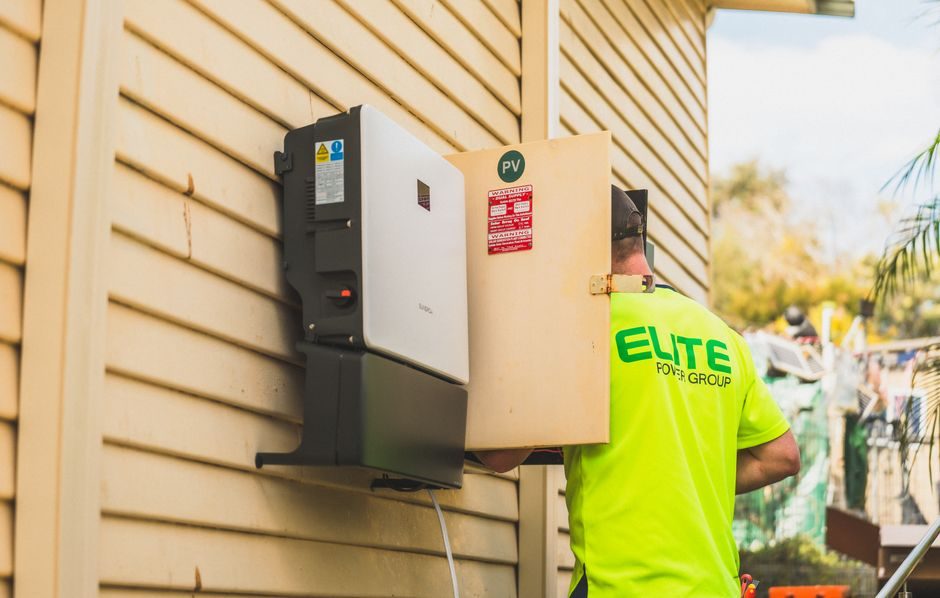
Solar inverters sit at the electrical mid-point of a PV plant: DC from modules enters, AC for grid, load or battery leaves, and inside the box sit IGBT/MOSFET switching stages, L/C filter magnetics, DSP/MCU control and a metal or IP65/IP66 plastic enclosure [S1]. A 2026 ENF Photovoltaic Directory sweep shows the active power band of commercially stocked inverters now stretches from 2 kW residential off-grid units (SUG, 93% efficiency) to 693 kW bi-directional battery inverters (Atess Power, 97.1-98.5% efficiency) and string inverters hitting 99.02% peak (Kehua 250 kW, 12 MPPTs, 1500 V DC) [S1].
That spread defines the upstream bill of materials and the downstream integration envelope: every kW class pulls a different mix of silicon, magnetics, busbar and enclosure content, and ships into a different buyer (residential installer, C&I EPC, utility developer). SankoPower's 2026-06 catalogue reinforces the residential-tier pattern with SolarPro 3.5-6.5 kW MPPT off-grid units and SolarPolo 5-10 kW hybrids that parallel up to 9 units for 220/110 VAC markets [S3].
Upstream Supply Chain: Silicon, Power Semis, Magnetics, Enclosure
The upstream stack of a solar inverter starts with silicon wafers converted into IGBTs, SiC MOSFETs and super-junction MOSFETs that do the DC-AC switching, then layer-on magnetic components (high-frequency or low-frequency transformers, toroidal inductors, CM chokes), DC-link film/electrolytic capacitors, DSP/MCU gate drivers, and an aluminium or IP65/IP66 plastic enclosure with copper busbars and connectors [S1]. Low-frequency-transformer designs such as Zlpower's 1-12 kW off-grid/hybrid line (MPP 25-75 V, max weight 30 kg) are explicitly transformer-heavy, while high-frequency hybrid units from SankoPower drop the LF transformer and integrate 100-120 A MPPT charge stages instead [S1][S3].
Three upstream pressure points matter for 2026 sourcing. First, the 1500 V DC string inverter class (e.g. Kehua 250 kW) drives demand for higher-voltage-rated IGBT modules and longer creepage/clearance on PCBs, which feeds back into semiconductor and laminate supply. Second, hybrid inverters with 8-12 MPPT trackers and 150% PV oversizing (Felicitysolar 8.8 kW IP65) need more analogue front-end channels per board, which pressures MCU and ADC supply. Third, IP65/IP66 outdoor ratings (East Group, Felicitysolar) push enclosure demand toward die-cast aluminium and UV-stable PC/ABS blends, two polymer families tracked in ABS plastic manufacturing routes.
Downstream Stack: PV Modules, Batteries, EV Charging, Grid
Downstream, the inverter is the gate that connects four load-side worlds: the PV array upstream of its DC inputs, the AC bus of the building or plant, the battery bank on its DC-coupled or AC-coupled port, and increasingly the EV charger or heat-pump load it orchestrates [S1]. ENF's 2026 listing of Felicitysolar's 50 kW IP65 hybrid shows 8 PV inputs and 4 MPPTs, with up to 12 units in parallel and explicit generator, smart-load and microgrid support, a feature set that ties the inverter into diesel-gen backup, microgrid forming and dual-battery clusters [S1].
Three downstream signals stand out for 2026 spec writers. Parallel capability of 6-12 units is now common in the 5-50 kW band (Felicitysolar 8.8 kW, SankoPower SolarPolo 5-10 kW), letting residential and small-commercial buyers phase capacity without replacing the master unit [S1][S3]. Communication protocols split between wired RS485/CAN for BMS handshakes (SankoPower SolarPolo, SolarPro 3.6-6.5 kW) and Wi-Fi/Bluetooth plus cloud apps (SankoPower SolarPolo 10 kW, PVSTAR) for the residential monitoring layer [S3]. On the grid-tie side, anti-islanding, ride-through and night-SVG support (Kehua 250 kW) tie the inverter into utility code-compliance testing, which is the same compliance envelope that governs revenue-meter accuracy and protection-relay coordination covered in paperless recorder selection.
Selection Criteria by Buyer Type
Specifying an inverter in 2026 is a buyer-type problem, not a brand problem. Residential off-grid buyers (SUG 2-6 kW, SankoPower SolarPro 3.5-6.5 kW) weight MPPT current rating (100 A built-in), 220/110 VAC dual output, parallel count and pure-sine waveform over efficiency [S1][S3]. Residential hybrid buyers add lithium/lead-acid BMS compatibility over CAN/RS485, IP65 outdoor rating, Wi-Fi/app monitoring, and self-consumption plus feed-in modes, exactly the SolarPolo 5-10 kW feature stack [S3].
Commercial and industrial (C&I) and small-utility buyers shift the decision matrix toward three factors: peak efficiency (97.6-99.02% across East Group, Sunplus, Kehua), MPPT count and DC voltage window (Kehua 250 kW ships 12 MPPTs on a 1500 V bus), and warranty term, which now stretches from 2 years (Zlpower, SUG) to 10 years (Felicitysolar hybrid) on the same directory page [S1]. Hybrid C&I units (Felicitysolar 27.5-55 kW, Atess 33-165 kW) add parallel scalability up to 12 units and dual independent battery inputs to reduce inter-cluster circulation, a real failure mode when 2-4 battery cabinets share one inverter [S1].
Architecture Comparison: Off-Grid vs Hybrid vs On-Grid String
Three architectures dominate the 2026 directory, and they line up cleanly against four decision criteria. Off-grid units (SUG 2-6 kW, SankoPower SolarPro 3.5-6.5 kW, Zlpower 1-12 kW) score high on autonomy and generator integration but sit at 93-95% efficiency with short 1-2 year warranties [S1][S3]. Hybrid units (Felicitysolar 8.8-55 kW, Atess 33-693 kW, SankoPower SolarPolo 5-10 kW) push efficiency to 97.1-98.5% and warranty to 5-10 years, with explicit on- and off-grid and microgrid modes, but cost more per kW because of the bi-directional battery port and extra MPPT channels [S1][S3].
On-grid 1500 V string inverters (Kehua 250 kW at 99.02%) win on peak efficiency, MPPTs and utility features (PLC comms, night SVG) but lack any off-grid autonomy, so the buyer must accept a grid-curtailment or anti-islanding risk profile [S1]. For projects weighing architecture against bill-of-materials, the upstream content delta is the giveaway: hybrids need an extra battery-side converter stage and more magnetics, off-grid needs an LF transformer or robust LC filter, and grid-tie strings minimise both at the cost of an external MV transformer and step-up station that the utility side then has to provide. The wider economics of that transformer and step-up supply chain sit inside the solar cell and module TW pipeline and the 2026 inverter market architecture split.
Failure Modes, Limits and Trackable Signals
Three failure modes show up repeatedly in the 2026 spec sheets, and each is trackable. Capacitor aging on the DC link is the classic inverter wear-out, accelerated when ambient exceeds the inverter's rated temperature and when the unit is run near 100% continuous load, which is why IP65/IP66 aluminium chassis (East Group, Felicitysolar) and fan-cooled derating curves matter for hot-climate installs [S1]. MPPT channel mismatch wastes energy when string lengths differ; the directory response is more MPPTs per box (Kehua 12, Felicitysolar 8 PV inputs on 4 MPPTs) and 150% PV oversizing headroom (Felicitysolar 8.8 kW) [S1].
Grid code rejection during low-voltage or frequency events is the third failure mode, and the 2026 mitigation is explicit anti-islanding, LVRT/HVRT and night-SVG (Kehua 250 kW) plus PLC communication back to the plant controller [S1]. On the sourcing side, two signals are worth tracking into the second half of 2026: warranty-term creep (Felicitysolar at 10 years on the 8.8 kW and 27.5-55 kW hybrid lines is now the directory ceiling [S1]) and parallel-count creep (SankoPower 9 units, Felicitysolar 12 units), because both reset the lifetime kWh-per-dollar calculation that EPCs and procurement teams run on tender day. For buyers comparing inverter OEM line-ups against installation-tier labour, the top solar inverter companies 2026 spec and sourcing round-up is the natural next reference.
Two trackable next nodes for spec writers: (1) refresh ENF's filter results at the 100 kW+ band to confirm whether more vendors break the 99% efficiency line that Kehua set, and (2) re-quote SankoPower's SolarPolo 10 kW all-in-one (built-in 10 kWh LiFePO4) as a benchmark for the residential "inverter + battery + WiFi/Bluetooth" bundle price that 2026 H2 tenders are starting to lump into a single line item [S1][S3].
For component-level specifications, see pressure transmitter, flow meter, and industrial valve.