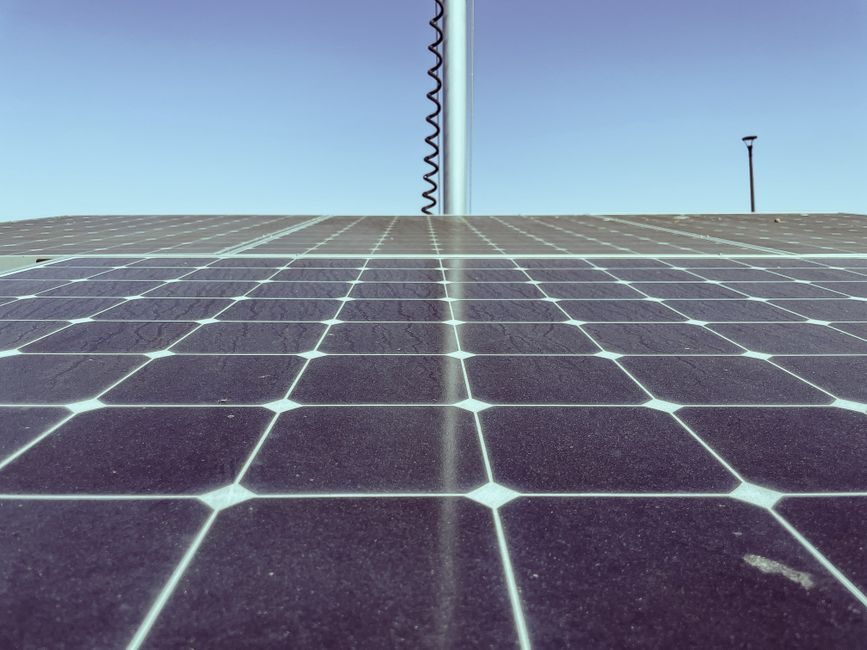
Solar panel smart manufacturing in 2026 is defined by three interlocking build blocks: turnkey 50-800 MW cell-to-module assembly lines, inline EL/PL/UVF testers, and automated potting/meter-mix cells for junction-box encapsulation [S2][S3][S5].
Buying teams increasingly spec full-line packages from a single supplier rather than spot-buying stations, because line balance, MES hooks, and warranty terms move together — see the solar panel manufacturing process overview for the cell-to-module flow these lines are designed around [S2].
Turnkey line capacity and what 50-800 MW really buys you
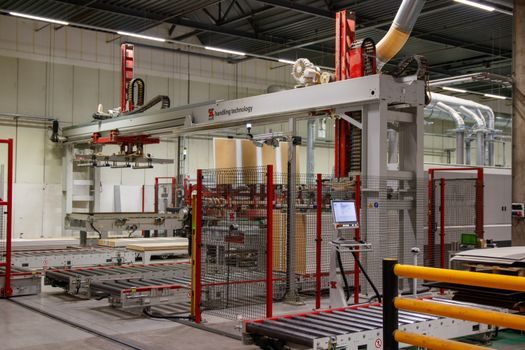
Ooitech and peers market full-automatic solar panel assembly lines in 50 MW, 100 MW, 250 MW, 500 MW, and 800 MW annual-output tiers, with each tier dictating the number of stringers, laminators, and framers on the bill of materials [S2]. The 50 MW entry tier is typically aimed at regional module assemblers running a single shift; the 500-800 MW tier is a multi-line, three-shift configuration with redundant laminator banks and a central MES [S2][S3].
Capacity per square meter, yield, and OEE are the three numbers a process engineer should pin in the RFQ, not the headline "MW" figure — two 500 MW lines from different vendors can show a 2-3 percentage point OEE gap on identical cell batches [S2]. Alibaba listings also surface ancillary categories (buses, DC optimizers, BOS hardware) that ride alongside the line quote, and the 50-800 MW envelope has become the de-facto purchasing band for new PV fabs in 2026 [S3].
Inline testing: EL, PL, and UVF as the quality gate
BrightSpot Automation supplies dedicated EL, PL, and UVF testers used for inline cell and module inspection, with its customer base cited as "200+ companies" across the solar manufacturing sector [S5]. Electroluminescence (EL) catches micro-cracks and broken fingers, photoluminescence (PL) reads carrier lifetime pre-lamination, and UV fluorescence (UVF) verifies encapsulant coverage — together they form a 3-stage gate that most 2026-era lines now run at full production cadence [S5].
The integration pattern is straightforward: PL after cell sorting, EL after stringing and again post-lamination, UVF as a final encapsulant-coverage check before framing [S5]. For reference, a 500 MW line producing ~1.2 million standard 60-cell modules a year needs testers with cycle times in the 25-40 second range per module to keep pace with the laminator output [S2][S5]. Smart-camera based vision gates are increasingly paired with the testers to feed defect coordinates back to the stringer — see smart-camera integration patterns used for closed-loop sorting [S5].
Junction-box potting: meter-mix, heat blankets, and the moisture battle
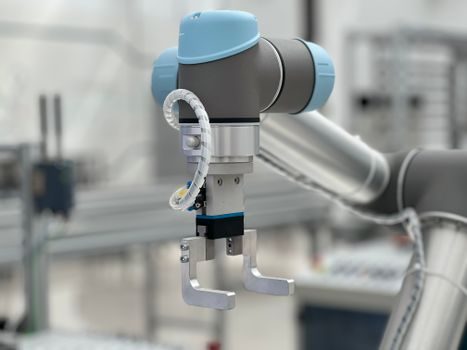
Exact Dispensing publishes an application story on solar panel potting that calls out agitation, full-coverage heat blankets, automatic drum replenishment, and drum-lift drum-change options as standard offerings for PV junction-box encapsulation [S1]. Junction boxes and the underlying PV circuitry sit exposed to moisture, heat, and UV; potting is the moisture barrier that decides field warranty cost, and meter/mix ratio accuracy — held by a smart valve positioner on the dispense head — is the lever that decides rework rate [S1].
The pain points the application story flags are familiar to any process engineer who has run a potting cell: ratio drift, voiding, and drum changeover downtime. Heat blankets keep the resin at a stable viscosity across an 8-hour shift, and drum-lift systems cut the pot-time penalty when a 55-gallon drum runs dry mid-shift [S1]. For plants driving toward Industry 4.0 traceability, these dispensing cells are increasingly tied to the same MES that runs the stringer and laminator, so a bad ratio event can be correlated back to a specific string and a specific shift [S1][S2].
Selection criteria: who the smart line is FOR (and not for)
Turnkey 50-800 MW lines are FOR module assemblers with a captive cell supply or a stable cell vendor, a working capex envelope north of low-single-digit million USD per 100 MW of capacity, and a logistics chain that can absorb containerised line deliveries [S2][S3]. They are NOT for cell-only fabs, lab-scale pilot lines, or buyers looking for a single station — those buyers should spec individual stringers or laminators from the same supplier catalog instead [S2].
Buyers sourcing for a hot, humid climate should also weight the meter-mix cell harder than the line brochure suggests, because junction-box field failure is dominated by moisture ingress, and a marginal potting ratio on a 500 MW line can move warranty cost more than a 1% OEE gain on the laminator [S1]. For shop-floor HMIs and operator panels, HMI panel selection should follow the same uptime discipline as the line itself — fanless, IP65-front, and rated for the cell-fab ambient [S2].
Comparison: how the three core automation blocks stack up
Against four decision criteria — throughput, defect-detection fidelity, sealing yield, and integration cost — the three core automation blocks score very differently, and a buyer usually specs all three rather than picking one. The comparison is qualitative because the public listings do not publish paired benchmark numbers on the same line: [S1]
Turnkey assembly line (50-800 MW): high throughput, defect detection delegated to inline testers, sealing handled downstream, integration cost dominated by laminator and stringer count [S2]. EL/PL/UVF testers: lower throughput per station but the highest defect-detection fidelity of the three blocks, sealing irrelevant, integration cost a small fraction of line cost [S5]. Meter-mix potting cells: medium throughput, no defect detection role, the highest single contribution to sealing yield and long-term moisture resistance, integration cost low relative to the line but high relative to its station count [S1].
Translated into spec language: spec the line for OEE and capacity, spec the testers for cycle time and resolution per module, and spec the potting cell for ratio tolerance and drum-change downtime [S1][S2][S5]. That three-axis spec is what separates a 2026-era smart line from a 2018-era automated line with the same headline MW number [S2].
Adjacent categories the catalog tends to surface
Alibaba and Made-in-China listings for "solar panel production" pull in adjacent categories that ride the same RFQ: solar junction boxes (the part the potting cell actually seals), aluminum structural carports and mounting hardware, and OEM/ODM contract manufacturing slots for buyers without their own line [S3][S4]. One Goldsupplier listing advertises a waterproof aluminum solar carport set with a 10-set MOQ and a negotiable price — typical of the BOS-adjacent SKUs that show up alongside the line quote [S6].
Made-in-China's filter panel shows ISO 9001:2015, ISO 14001:2015, and OEM/ODM markers across the custom solar-box factory cluster, with annual-revenue bands running from under 1 million USD to 10-50 million USD and headcount from under 5 to over 1000 — a useful proxy for the supplier-size spread a buyer is likely to receive quotes from [S4]. The strategic question for a 2026 buyer is the same one those suppliers are answering: do you want a process-protected scope advantage, and is the line a core asset or a contract-manufactured service — see stainless steel vs copper for how a similar make-vs-buy framing plays out in raw-material sourcing.
Limits, failure modes, and what the listings do not tell you
The public listings do not disclose laminator cycle time, EL camera resolution, or potting ratio tolerance in numerical form, which is the standard gap between marketing pages and an enforceable PO [S2][S3][S5]. A buyer who treats the 50-800 MW label as a performance spec is reading the wrong number — the underlying station counts, OEE targets, and warranty terms live in the line-level technical annex, not on the Alibaba listing [S2][S3].
Junction-box field failure remains the dominant warranty cost driver for outdoor PV modules, and a meter-mix cell that runs open-loop without ratio feedback will eat the savings of any laminator OEE gain within a few field years [S1]. The catalog will sell the line; it will not sell the warranty math, and that is the gap a 2026 RFQ has to close before signing [S1][S2][S5].
Standards, sourcing signals, and what's trackable next
ISO 9001:2015 and ISO 14001:2015 are the two quality and environmental management marks that show up most often on Chinese PV-equipment factory profiles, and they are a reasonable baseline filter for shortlisting line and station suppliers [S4]. For the electrical side of the line, the buyer's own IEC and UL compliance work runs against the module standard (IEC 61215, IEC 61730) rather than the line itself, and that is where the line's MES data has to be clean enough to feed the certification test reports [S4].
Two signals worth tracking through 2026 H2: first, whether the 800 MW tier starts to fragment into 1 GW+ blocks as cell supply consolidates, and second, whether inline EL resolution moves below 50 µm per pixel as TOPCon and HJT cell formats push finer-finger defect detection [S2][S5]. For related cell-format and chemistry context, the top lithium battery companies 2026 cell-format map shows the same per-format spec discipline that PV cell buyers are starting to apply to TOPCon versus HJT lines [S2].