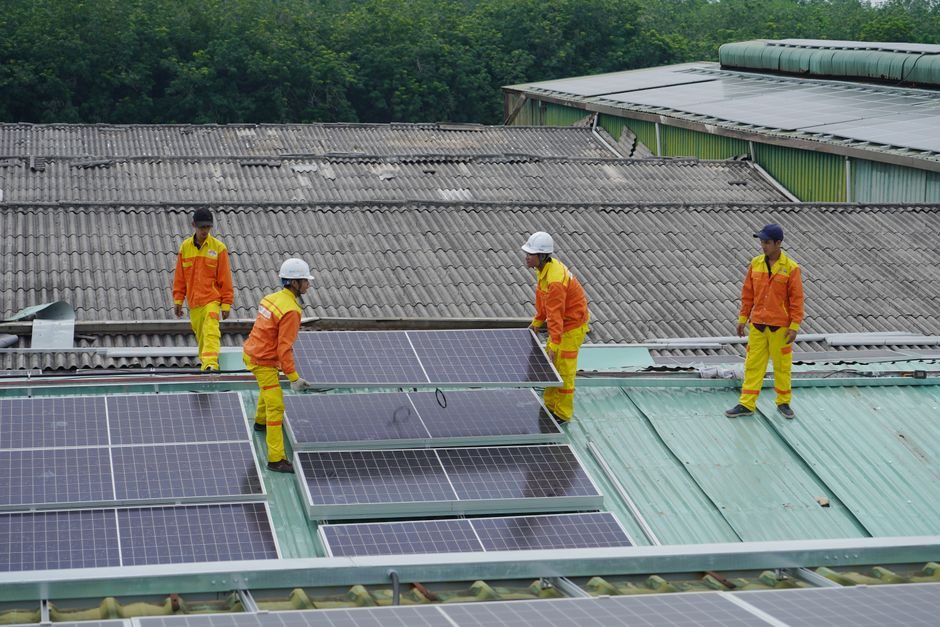
The defining feature of the 2026 solar panel supply chain is a roughly 25× price gap between brand-new factory-gate crystalline modules and tested second-hand poly stock, with the European second-hand spot market listing 265 Wp SolarWorld Sunmodule Plus units at €2.50/Wp (€662.50 per panel) and 285 Wp Canadian Solar CS6K-285P units at €2.00/Wp (€570 per panel equivalent) [S2][S3].
Procurement teams increasingly treat the chain as two parallel pools rather than one: a high-volume OEM poly/mono stream priced by the watt, and a long-tail spares-and-replacement pool priced per panel [S2][S3]. Grid-tied residential and small-commercial arrays in 2026 still require a frequency/voltage reference — usually the utility grid, sometimes a battery — before a PV source can deliver a usable AC output, which shapes how surplus stock is re-deployed in off-grid service work [S1].
New-build module technology split in 2026
Market segmentation in 2026 splits PV modules along three axes: technology (crystalline silicon vs thin-film), module type (mono vs poly within crystalline, and the CdTe/CIGS thin-film family), and grid connectivity (on-grid vs off-grid) [S4]. Crystalline silicon — mono and poly — continues to dominate global shipments; thin-film holds single-digit share but matters in utility-scale and building-integrated niches [S4].
Within crystalline, the visible second-hand listings from 2026 are still overwhelmingly poly: 265 Wp SolarWorld Sunmodule Plus SW 265 poly and 285 Wp Canadian Solar CS6K-285P both appear in the poly cell class on the European spares market [S2][S3]. New-build mono PERC and TOPCon lines, by contrast, are typically quoted in OEM press releases rather than in the per-panel spares channel, and the watt-price differential versus poly on the spot market reflects cell-efficiency and balance-of-system (BOS) gains rather than panel-level scarcity [S4].
For a deeper tech-and-price band comparison, see the crystalline vs thin-film 2026 sourcing map, which lines both families against cost-per-watt, temperature coefficient and lead-time.
Second-hand market: price bands, wattage classes, listing behaviour
Per-panel asking prices on the European second-hand market in 2026 cluster in the €500–€700 range for mainstream poly sizes, with the per-watt metric running €2.00–€2.50/Wp — roughly 20–30× typical 2026 factory-gate mono module levels [S2][S3]. Listings carry stock-keeping detail such as Secondsol item numbers (25311 for SW 265 poly, 29344 for CS6K-285P) and high view counts (10,985 views on the SolarWorld listing) that confirm a liquid, repeatedly-checked spares channel [S2][S3].
These panels are explicitly flagged as spare parts, not new-build material — useful for inverter replacement, string repair on legacy 60-cell arrays, and warranty top-ups where matching the original cell technology matters more than absolute efficiency [S2][S3]. The 265 Wp and 285 Wp classes are typical of the pre-2020 poly generation sized for residential rooftop inverters; mismatched wattage classes on a string cause mismatch loss, so buyers usually match the replacement to the original Bill of Materials [S2][S3].
Selection criteria for buyers in 2026
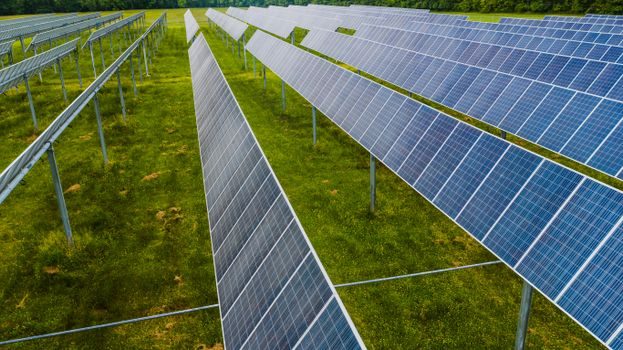
Buyers prioritising lowest € / Wp for a new on-grid array will land in the new-build mono channel; buyers maintaining an existing 265–285 Wp poly string will be served by the second-hand channel at a price premium per watt but with form-factor and connector compatibility preserved [S2][S3][S4].
Off-grid applications introduce a hard architectural constraint: a PV array feeding a stand-alone inverter needs a stable voltage and frequency reference, normally provided by a battery bank or by a grid-tie inverter's anti-islanding detection — running a PV source directly into a load without either reference is not a supported configuration in mainstream 2026 product literature [S1]. This rules out the "solar panel directly to load" use case for the bulk of the second-hand poly stock, restricting off-grid deployment to hybrid inverter + battery pairings.
Supply chain structure: who supplies what
The 2026 PV supply chain runs in tiers: Tier 1 cell/module OEMs (Jinko, Trina, JA Solar, LONGi, Canadian Solar, plus legacy SolarWorld lines) ship poly and mono modules globally; Tier 2 brokers move OEM surplus and B-grade stock at small discounts versus Tier 1 list price; Tier 3 channels (Secondsol-type marketplaces) handle tested, used and spare-part modules with full traceability by item number and view-count signal [S2][S3][S4].
The cross-link to other industrial sourcing channels is real: solar farm EPCs share a transformer, mounting and cable bill of materials with EV charging site builds, and a broader view of EV supplier and manufacturer directory 2026 helps when a single contractor is delivering both a PV array and an EV depot. Likewise, the wind turbine smart manufacturing and automation 2026 field map overlaps on inverter and power-conversion sourcing, which is increasingly shared between PV and wind EPCs.
Standards, ratings and compliance touchpoints
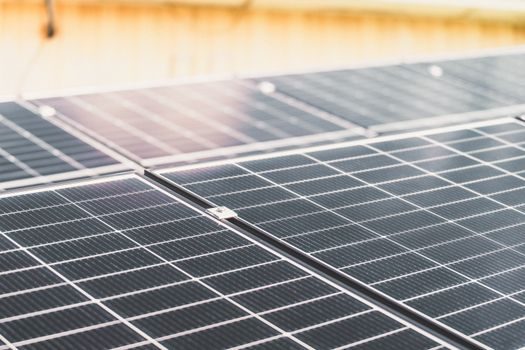
Module-level compliance in 2026 still keys to IEC 61215 (performance) and IEC 61730 (safety) for crystalline silicon, with IEC 61701 salt-mist corrosion optional for coastal sites; UL 61730 covers the North American equivalent. Second-hand panels retain their original certifications but the buyer inherits the remaining service-life risk, which is why European spares marketplaces emphasise item number, view count and the "special spare part" descriptor rather than a fresh IEC retest [S2][S3].
For grid-tied arrays, IEEE 1547 and the regional grid code (VDE-AR-N 4105 in Germany, G99 in the UK) govern inverter anti-islanding and frequency ride-through — these standards, not the panel, decide whether a 265 Wp or 285 Wp poly module can be added to an existing string without re-permitting [S1][S4].
Comparison: new-build vs second-hand channels on four decision criteria
On cost per watt, new-build mono OEM runs in the sub-€0.10/Wp range at factory gate in 2026, while second-hand poly on the European spot market sits at €2.00–€2.50/Wp [S2][S3][S4]. On lead-time, OEM channels quote 4–12 weeks ex-works factory; second-hand marketplaces dispatch from European warehouse stock within days [S2][S3]. On form-fit compatibility, second-hand poly in the 265–285 Wp class matches legacy 60-cell residential rooftops, whereas new-build mono modules typically use larger wafer formats and need new clamps and rail spacing [S2][S3][S4]. On warranty, OEM new-build carries 10–25 year product and power warranties; second-hand stock carries no OEM warranty and is sold as a tested spare part [S2][S3].
Limitations and failure modes in the 2026 chain
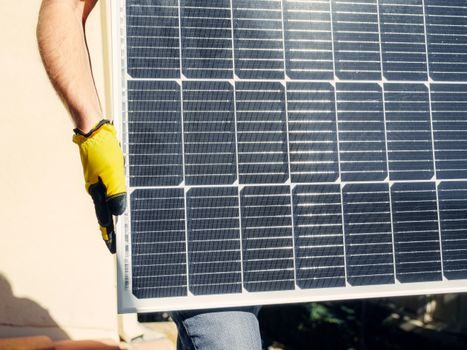
Three failure modes dominate 2026 supply-chain complaints: (1) string-mismatch loss when a higher-wattage new-build mono panel is retrofitted into a legacy poly string, dropping the string to the lowest-current module; (2) connector and junction-box ageing on second-hand poly modules approaching year 15 of service, where bypass-diode failure presents as a hot-spot in IR inspection; (3) inventory obsolescence in the second-hand channel when an installer stops holding a particular 60-cell poly part number, leaving ongoing O&M sites stranded [S2][S3].
A further constraint: a PV-only system cannot start a stand-alone AC load without a battery or grid reference, so any 2026 off-grid retrofit using surplus poly modules must include a hybrid inverter plus battery — adding €0.20–€0.40/Wp to the system cost and shifting the cost-optimisation case back toward the new-build channel [S1].
Trackable signals through the rest of 2026: factory-gate mono module price prints in the OEM quarterly press cycles (target band: sub-€0.10/Wp), European second-hand listing volumes for 265–285 Wp poly (Secondsol item numbers 25311 and 29344 are visible reference points), and any IEC 61215 / IEC 61730 re-certification activity on legacy poly part numbers [S2][S3][S4].
For component-level specifications, see dc power supply, switching power supply, and chain conveyor.