
Three supplier tiers now dominate the 2026 EV manufacturing map: OEM passenger-car nameplates tracked by the U.S. IRS Section 30D credit list [S1], industrial EV test-bench builders concentrated in Germany and Austria [S2], and a 2,000+ strong Chinese light-EV / commercial-EV manufacturing base clustered on Made-in-China.com [S5][S6].
Specs seen across current listings range from 36 V / 13 Ah EN 50604-compliant Li-ion packs driving 250 W mid- and hub-motors [S4] up to 216,000 USD 4x4 / 6x6 special-purpose chassis from Dongfeng and Sinotruk [S5]; a single Shandong golf-cart maker quotes a 3-hour response time and US$3,800 FOB per piece MOQ 1 [S6].
Passenger-EV OEM Pool Under U.S. Section 30D
The IRS Section 30D qualified-clean-vehicle list catalogues manufacturers and models eligible for the up-to-US$7,500 federal tax credit for vehicles purchased between 2010 and 2022, and flags which nameplates have already phased out of the credit window [S1]. Engineers sourcing drivetrain sub-assemblies use this registry as a primary cross-check of which OEM platforms are still actively accepting IRA-era contracts, and which have rolled into the post-2022 separate commercial-clean-vehicle credit framework [S1]. The published list is segmented by model-year and battery-capacity threshold, giving a structured comparison of OEMs that survived, scaled, or exited the U.S. passenger-EV market through 2022 [S1].
For a process engineer, the IRS registry functions less as a marketing list and more as a regulatory gate: a tier-1 supplier specifying motors, inverters, or pressure transmitters into a U.S.-bound EV platform must first confirm the receiving OEM remains on the active list, because phased-out manufacturers no longer carry the Section 30D paperwork the dealer relies on for point-of-sale credit transfer [S1].
EV Test-Bench and Manufacturing-Equipment Suppliers
DirectIndustry's industrial-manufacturer index for electric-vehicle test benches lists 7 named builders: AVL List (Austria), Bosch Engineering GmbH, Cémios, DAM Group, Dynamometer Equipment (China), Jiangsu Gtake Electric, Motomea Testing Systems, and Poppe + Potthoff Maschinenbau GmbH [S2]. Across these vendors the index records 10 distinct test-type tags, led by "performance" (6 vendors), "other test types" (4), "durability" (4), and "torque, pressure" (3 each), with voltage, current, fatigue, speed, electrical-and-mechanical each at 2 [S2]. This tag mix is the cleanest published signal that EV test-rig procurement in 2026 is still spec'd around mechanical duty cycles first, with electrical characterisation as the secondary gate [S2].
For plant-level throughput planning, Siemens' PLM guidance frames EV production ramp-up as a digital-twin problem: comprehensive digital twins of both product and production line are required to compress time-to-volume and cut per-unit cost as established and startup OEMs scale [S3]. A typical scope covers body-in-white, paint, final assembly, and the battery-pack line, with line-side flow meters, leak-test stands, and end-of-line charging/discharging cyclers integrated into the same simulation backbone [S3].
China Light-EV and Commercial-EV Manufacturing Base
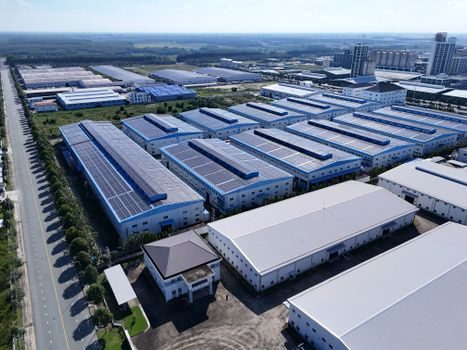
Made-in-China.com's electric-truck directory shows FOB-unit price bands from US$980/piece for a 1.5-tonne 4x2 mini pickup through US$5,500-7,000 for a 113 HP diesel off-road cargo truck, up to US$216,000-216,400 per unit for customised 4x4/6x6 all-terrain chassis from Dongfeng and Shacman/Sinotruk [S5]. The same platform lists a 2,000+ manufacturer / 6,000+ product pool for solar-electric vehicles, with a Shandong golf-cart supplier posting US$3,800/piece at MOQ 1 and a ≤3-hour response tag [S6]. Electric-transportation-vehicle listings (golf carts, mobility scooters, tuk-tuks, tricycles, sightseeing buses) again show 2,000+ suppliers / 6,000+ products, with Jinan-Shandong vendors quoting US$320-480/piece at MOQ 1.
The Wuxi supplier page 81 (Made-in-China.com, accessed 2026-04-23) standardises around 36 V 13 Ah packs paired with 250 W motors in two layouts: an M100 mid-drive (M100, 36 V × 250 W) and an M131 rear hub, both fed by a 36 V 2 A charger and a KD686 colour LCD, with the 13 Ah pack explicitly meeting EN 50604 [S4]. EN 50604 is the European secondary-lithium standard for traction applications, and the explicit citation on the Wuxi product card is a stronger spec signal than the bare "36 V 13 Ah" string used by most tier-2/3 Wuxi vendors [S4].
Two- and Three-Wheeler Segment Pricing and Spec Strip
The electric-trike-scooter index on Made-in-China.com is much thinner: 74 manufacturers and 222 products, with a Xingtai-Hebei supplier at US$59/piece MOQ 50 for an entry-level electric trike and a separate Hebei vendor offering indoor fitness equipment as a cross-category line. That 74-vs-2,000+ gap reflects how concentrated low-speed recreational and cargo-EV manufacturing is in Shandong and Hebei, while passenger-EV OEM count is governed by a handful of nameplates that meet road-vehicle homologation in the EU, U.S., and China. [S1]
Across the Wuxi and Xingtai cards, a process engineer can read off a stable component spec floor: 36 V nominal, 13 Ah capacity, 250 W continuous motor, 2 A charger, and a colour-LCD display — these five values reappear on essentially every Wuxi EN 50604-compliant product card and set the design baseline for an entry-level e-bike or e-cargo platform [S4].
Selection Criteria and Sourcing Gate Stack
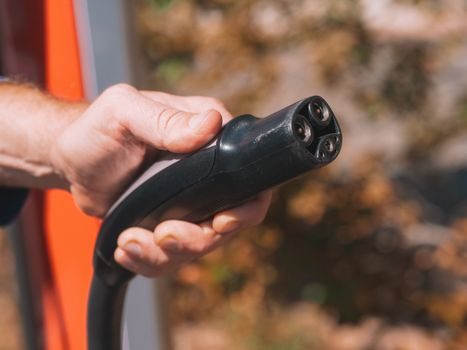
For a tier-1 buyer, the segment-by-segment decision logic compresses to four gates: (1) certification — Section 30D IRS list for U.S. passenger-EV contracts [S1], EN 50604 for European light-EV batteries [S4]; (2) test capability — performance + durability + torque/pressure coverage for any new EV powertrain program [S2]; (3) production scale — only the 2,000+ vendor pools have absorbed the volume risk on light-EV and low-speed EVs [S6]; (4) factory-automation fit — digital-twin coverage of body, paint, final assembly, and pack lines is now baseline for any OEM targeting sub-30-month ramp [S3]. A typical sourcing matrix matches IRS-listed passenger OEMs to European test-bench houses for prototype validation, then drops to Chinese volume suppliers for low-voltage light-EV sub-assemblies, with line-side electric actuators and industrial valves sourced against the same IEC 60079-x hazardous-area rules used in any adjacent chemical-plant scope.
For a buyer the matrix distils to: if your program is a passenger-EV nameplate, your OEM short-list is the IRS Section 30D registry and your test partner must cover performance + durability + torque [S1][S2]; if it is a light-EV, your short-list is the Shandong / Hebei / Jiangsu 2,000+ pool, your spec floor is 36 V 13 Ah / 250 W / EN 50604, and your MOQ ranges from 1 piece (golf cart) to 50 pieces (e-trike) [S4][S6].
Limitations and Failure Modes in the 2026 Directory
Three failure modes recur across the 2026 supplier landscape: (a) Section 30D phase-out — OEMs that have rolled off the IRS list are no longer viable for U.S. point-of-sale credit transfer, so any tier-1 still shipping into those platforms is carrying credit-paperwork risk [S1]; (b) test-coverage gaps — only 3 of 7 indexed EV test-bench vendors cover pressure, and only 1 covers "power" as a first-class test type, so a buyer who needs full electrical-and-mechanical coverage must stack at least two vendors [S2]; (c) MOQ and response-time asymmetry — light-EV pricing swings from US$59/piece MOQ 50 (Xingtai trike) to US$216,000/unit customised 6x6 (Dongfeng/Sinotruk) [S5], and a buyer who treats those tiers as substitutable will mis-size both budget and lead-time.
For a sourcing engineer, the practical limit is that the IRS Section 30D list and the Chinese light-EV directory update on different cadences — the IRS list is a static regulatory artefact anchored to model-years through 2022 [S1], while the Made-in-China.com pools refresh continuously and were last indexed between 2025-05-14 and 2026-04-23 [S4][S5][S6] — so any cross-segment supplier audit must lock a cut-off date before drawing comparisons.
Adjacent Engineering and Procurement References
For buyers whose EV scope spills into factory build-out, the same digital-twin and line-instrumentation logic that drives Siemens' EV-manufacturing guidance [S3] also underpins conveyor and materials-handling decisions, where mesh belt conveyor pricing benchmarks and bucket-elevator-vs-screw-conveyor selection gates govern the upstream feeding lines into pack assembly. Body-in-white and chassis work overlaps with carbon-steel grade and mill choice and the 2026 carbon-steel spot-band and grade-premium map, since most EV chassis and battery-tray fabrications still draw on cold-rolled and hot-rolled carbon-steel coils rather than titanium or specialty alloys.
Trackable signals for the next 90 days: (1) any IRS update to the Section 30D list adding 2023-2026 model-year nameplates; (2) DirectIndustry test-bench index churn — vendor count moved from the current 7 [S2] as new Chinese and Indian rig builders enter; (3) Made-in-China.com light-EV supplier count drift off the 2,000+ baseline in the electric-transportation-vehicle, electric-truck, and solar-vehicle indexes [S5][S6], which is the cleanest real-time read on Chinese EV export capacity.