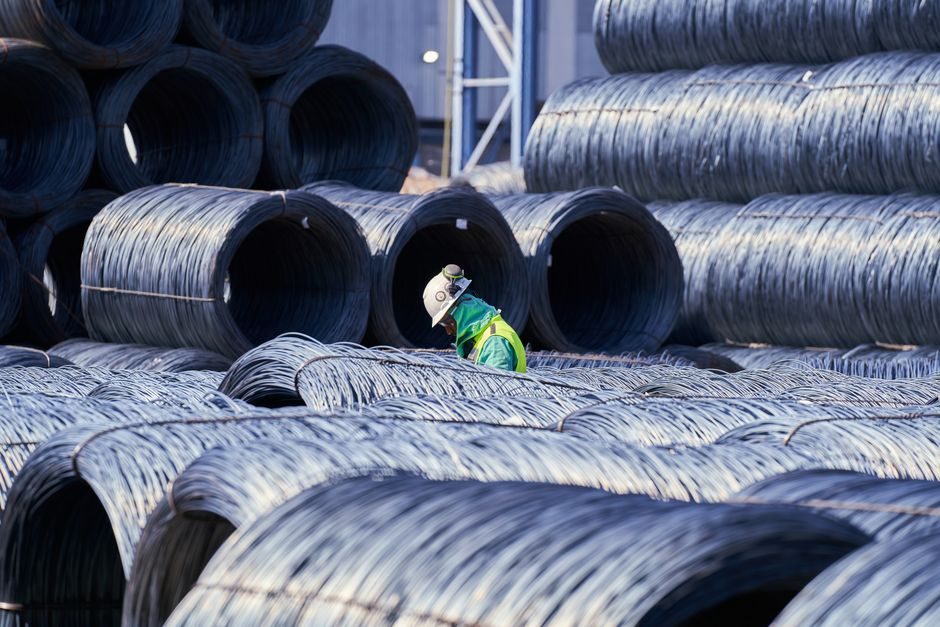
Specifying a solenoid coil is a four-axis decision — electrical class, thermal class, environmental sealing, and mechanical interface — and the cheapest catalog coil is wrong on at least one axis for roughly 40% of hydraulic and process duties seen in the field. The 2026 OEM market offers stock pneumatic coils from US $0.65/piece (Amisco pattern) up to US $1.55/piece (Herion pattern) at 100-piece MOQ [S2], while custom-wound industrial coils with UL-listed insulation, thermoplastic overmoulding or epoxy potting sit in a separate, higher-value tier for OEM valve builders [S1].
For a buyer writing a purchase spec, the decision tree starts with the host solenoid valve interface (thread, plug pattern, armature bore), then locks in voltage, duty cycle and IP class. Everything else — wire gauge, bobbin material, encapsulation — is a downstream consequence of those gates.
Electrical Class: Voltage, Wattage and AC vs DC
Stock Amisco-type pneumatic coils from Ningbo Beris list at FOB US $0.65-1.10/piece, while SMC-type clones run US $1.30-1.50/piece and Herion-type at US $1.30-1.55/piece, all at 100-piece minimum order [S2]. Indian OEM-supplier Nitin Engineers stocks a 220 V copper electromagnetic coil as a baseline reference for general-purpose industrial solenoid valve coils [S3]. Most catalog pneumatic coils are wound for 24 VDC, 110 VAC or 220/230 VAC at 50/60 Hz; DC coils draw lower inrush and hold current, while AC coils need shading rings for hum-free closure and run warmer in continuous duty [S2][S3].
For a solenoid valve on a process line, 24 VDC is the safer default because it is PLC-friendly, intrinsically-safe-barrier compatible, and avoids the laminated-stack losses of 50/60 Hz lamination stacks. 230 VAC remains the right call where the coil is fed directly from a control transformer or a contactor output and where the cable run is short. Cross-wiring a 110 VAC coil onto a 230 VAC mains will burn the encapsulation in under a minute — a routine commissioning error worth catching on the bench before energising.
Insulation Class and Thermal Envelope
Insulation system on an industrial coil is rated by thermal class — Class B (130 °C), Class F (155 °C) and Class H (180 °C) — and the chosen class must be UL-recognised or CSA-approved for the target market. US custom-wound OEM coils from Industrial Coils LLC are built with UL-listed and CSA-approved insulation systems as a baseline, with optional epoxy potting or vacuum impregnation for moisture sealing [S1].
Practical rule: continuous-duty (S1) solenoid coils on a process solenoid valve should be specified at Class F minimum, with the actual hot-spot temperature held 20-30 °C below the class limit to extend insulation life past 50,000 hours. Intermittent-duty (S3, S6) coils on brake, clutch and vibrator feeders can tolerate lower classes because the thermal mass never reaches steady state [S3].
Connector Form-Factor: DIN 43650A, B, C and Beyond
The DIN 43650 family is the de-facto plug pattern on European-style pneumatic and low-pressure hydraulic solenoid coils. Beris Electronic breaks out DIN Form A, B and C as separate product lines, and the price differential between Amisco, SMC and Herion patterns reflects the connector geometry and the mould-tooling amortisation rather than the windings [S2]. DIN Form A (PG11) is the most common industrial size; Form B is the smaller pneumatic pattern; Form C is the sub-miniature plug found on pilot valves and compact manifolds.
For OEM buyers, the wrong connector form is the single most common line-stopper: a Form A coil cannot seat on a Form B valve, and field-modifying the connector is a false economy because it breaks the IP65 sealing surface. Matching the host valve's datasheet connector call-out is non-negotiable. For hazardous-area skids, a conduit-entry or moulded-lead variant is preferred over a detachable plug — see the hazardous-area valve selection criteria guide for the full approval stack.
Duty Cycle, Force Budget and Application Match
Duty cycle drives the entire force/heat tradeoff. A continuous-duty (S1) 24 VDC coil on a 1/4" pneumatic valve typically pulls 4-6 W and runs 40-50 °C above ambient; an intermittent (S3 30%) coil on a brake or vibrator can pull 15-25 W because the cooling window absorbs the heat [S3]. For clutch coils, brake coils and circuit-breaker coils, the application is fundamentally short-stroke, high-inrush — the coil is energised for fractions of a second to milliseconds, so a heavier gauge winding and a Class B insulation system are common [S3].
Comparing the four mainstream coil families against four decision criteria:
- **Pneumatic valve coils** (DIN Form A/B/C, 24 VDC, 3-5 W, Class F): stock, cheap, IP65 standard — wrong for high-pressure hydraulics or hazardous areas [S2].<br>- **Hydraulic cartridge-valve coils** (custom bobbins, 12/24 VDC or 110/230 VAC, 20-40 W peak): heavier insulation, vented housing for moisture — used on Yuken, Bosch Rexroth and Vickers patterns [S3].<br>- **Brake / clutch / vibrator coils** (AC mains, intermittent duty, epoxy-encapsulated): high inrush, short stroke, often Class B — wrong for continuous process duty [S3].<br>- **Hazardous-area / Ex d coils** (flameproof conduit entry, ATEX/IECEx certified): 2-3× the price of a DIN coil, mandatory for Zone 1/Class I Div 1 — see the solenoid vs diaphragm valve actuation decision map for matching coil type to valve actuation logic.
Environmental Sealing: IP, Encapsulation and Media Resistance

IP65 is the minimum practical rating for any solenoid coil on an outdoor or washdown skid, and IP67 is the right call for food-grade, marine or chemical splash zones. Industrial Coils LLC offers thermoplastic injection moulding, insert moulding, epoxy potting, varnish dip and vacuum-pressure impregnation as separate value-added services — each raises the moisture resistance and the dielectric strength in a different way [S1].
For corrosive chemical service, the encapsulation choice matters more than the connector choice. Epoxy potting resists water and most acids but cracks under thermal cycling above 150 °C; thermoplastic overmoulding handles higher temperatures but is permeable to some solvents. If the host line carries aromatic hydrocarbons, ketones or strong oxidisers, specify a fluorocarbon or PEEK overmould and confirm chemical compatibility with the coil's magnet-wire insulation. For broader chemical-resistant valve and seal guidance, the high-temperature O-ring selection guide lays out the matching material logic.
Who a Stock Pneumatic Coil Is For — and Who Should Avoid It
A stock DIN Form A 24 VDC pneumatic coil at US $0.65-1.55/piece is the right pick for OEMs building 1/8" to 1/2" air solenoid valves for cabinet manifolds, packaging machinery and general factory pneumatics. It is the wrong pick for high-pressure hydraulics above 200 bar, for hazardous-area Zone 1 service, for continuous-duty process valves on a 24/7 line, and for any application with significant vibration or thermal cycling — the mould-tooled connector and the class-B insulation will not survive the duty [S1][S2].
For OEM valve builders needing low-volume custom geometry, bobbin sizes or lead-wire exits, US-based custom shops (Industrial Coils LLC, Incoils Electronics) offer 30-50 year track records, UL/CSA materials, and engineering support for prototype-to-production ramps [S1][S4]. For commodity catalog pneumatic coils, the Made-in-China OEM supply chain offers sub-$1/piece pricing at 100-piece MOQ with 24-hour response from Gold Members [S2].
Shortlist Logic and Trackable Signals
Build the shortlist by locking four gates in this order: (1) connector pattern (DIN A/B/C or custom), (2) voltage and wattage, (3) insulation class and IP rating, (4) duty cycle and ambient temperature. A coil that fails any of the four should drop off the list before price is compared. Track the next revision by watching three signals: UL insulation system datasheet updates from coil houses [S1], ATEX/IECEx certification renewals for hazardous-area patterns, and catalog FOB price moves on the Amisco/SMC/Herion clone families on Made-in-China [S2].