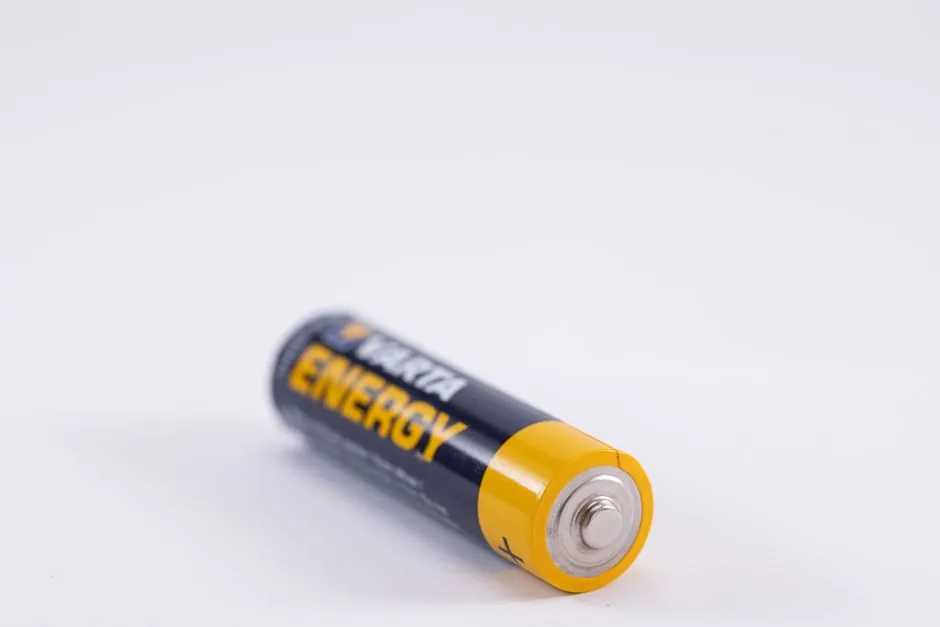
Solid-state batteries are expected to hold roughly 15% of the global EV battery market by 2030, with energy density running 2-3x higher than incumbent lithium-ion cells [S2]. That share sits inside a wider battery market projected to reach $400B by 2030 at a 16% CAGR, with lithium-ion still holding about 80% of total share and sodium-ion reaching roughly 10% on lower raw-material cost [S2].
Global passenger EV sales are forecast to reach around 39 million units in 2030, up from 17.6 million in 2024, which is the demand pull behind the chemistry diversification [S1]. In China alone, light-vehicle battery demand is projected to nearly double to 1.5 TWh between 2026 and 2035 (CAGR ~7%), and BESS installations are set to exceed 300 GWh by 2030 from 150 GWh in 2025 (CAGR ~15%) [S3].
What Solid-State Cells Are Actually Replacing
Solid-state batteries replace the liquid or gel electrolyte in conventional Li-ion cells with a solid electrolyte, which is the structural change that drives both the safety and energy-density claims [S2]. PatentPC's 2030 forecast puts the energy-density target at 500 Wh/kg versus 250 Wh/kg in 2023, a 2x improvement that translates directly into longer EV driving range per kg of pack [S2]. The same source flags solid-state as "2-3x" higher in energy density than current lithium-ion, with longer cycle life and reduced fire risk as the operational trade-off for the same chemistry family [S2].
Cost is the gating factor: solid-state electrolyte materials (sulfide, oxide, or polymer systems) and dry-room manufacturing lines are still more expensive per kWh than mature wet Li-ion lines, which is why the 15% share figure is concentrated in premium and pilot fleets rather than mass-market compact cars [S2]. For a deeper read on how the broader cell-maker landscape is stacking up, the sodium-ion competitive map covers the parallel chemistry track that competes for the same low-cost BESS and entry-EV slots.
2026-2030 Demand by Application Segment
Light vehicles remain the dominant volume driver: requirements for smaller, lower-powered cars in China are projected to nearly double to 1.5 TWh between 2026 and 2035 at a CAGR of roughly 7% [S3]. That growth is supported by regulation-led electrification, high customer acceptance, and China's leadership in LFP and emerging solid-state pilots [S3].
BESS is the second growth engine and is set to double by 2030: installations exceeded 150 GWh in 2025 and are projected to exceed 300 GWh by 2030 (CAGR ~15%) [S3]. Drivers are renewable integration, AI data-center power demand, and energy security, with sodium-ion gaining share in stationary storage because of lower cost and superior cycle life versus conventional Li-ion [S3].
For EV packs specifically, Battery Pack Competitive Landscape 2026: EV Structural Safety vs Portable Power covers how solid-state, LFP, and sodium-ion stacks are being positioned against form-factor and abuse-tolerance requirements. Industrial and stationary storage buyers can also compare the spec trade-offs through the industrial valve selection logic lens, since BESS thermal management and DC-side protection hardware follow similar engineering gates.
Chemistry Comparison: Li-Ion, Solid-State, Sodium-Ion

Three chemistries are splitting the 2030 demand pie. Lithium-ion stays dominant at roughly 80% of the global market share, anchored by LFP for cost-sensitive vehicles and NMC for higher energy density packs [S2]. Solid-state targets the 15% premium-EV and long-range slice with 2-3x energy density gains over current Li-ion, at higher per-kWh cost [S2]. Sodium-ion captures about 10% of the battery market by 2030 on the back of abundant raw material and lower supply-chain risk versus lithium and cobalt [S2].
On the criteria that matter to a specifier: cost per kWh favors LFP and sodium-ion; energy density per kg favors solid-state and NMC; cycle life and thermal-runaway tolerance favor LFP and solid-state over conventional NMC; raw-material geopolitical risk is lowest for sodium-ion and LFP [S2][S3]. The decision rule for 2026-2030 procurement is: LFP for mass-market passenger EVs and BESS, sodium-ion for low-cost stationary and entry-level two-wheelers, solid-state for premium long-range EVs and aerospace/medical niches where the $/Wh premium is acceptable [S2][S3].
Who Solid-State Is For, and Who It Is Not For
Solid-state is for OEMs targeting 600+ km WLTP range, premium pricing tiers, and safety-critical applications where thermal-runaway risk must be minimized, including aerospace, medical implants, and certain defense platforms [S2]. It is also the natural fit for buyers who can absorb a 20-40% pack-cost premium in exchange for the energy-density step-change [S2].
Solid-state is not yet for cost-sensitive mass-market passenger EVs, urban delivery fleets on tight TCO math, or large-scale stationary BESS, where LFP and sodium-ion deliver lower $/kWh and proven cycle life above 6,000 cycles [S2][S3]. Buyers in those segments should wait for second-generation solid-state lines (post-2028) before specifying solid-state for non-niche duty cycles [S2].
Manufacturing and Supply-Chain Constraints
Three constraints gate solid-state scale-up. First, sulfide and oxide electrolyte synthesis requires dry-room environments below -40 °C dew point, which adds capex versus conventional Li-ion lines [S2]. Second, lithium and cobalt supply concentration in a few geographies remains a risk, even as LFP reduces cobalt intensity; solid-state sulfide variants still need lithium metal anodes in most designs [S2][S3]. Third, cell-format flexibility is still limited: most 2026-2028 solid-state production targets are pouch or prismatic, with 4680-style cylindrical formats lagging [S2].
China's lead in LFP is roughly four years ahead of the rest of the world, with fifth- and sixth-generation LFP cells closing the performance gap to NMC [S3]. That gap will likely re-open in solid-state, where Chinese pilots are scaling first; global buyers should plan for a 2027-2028 supply window before 2030 volume contracts are realistic [S3]. Process engineers tracking solid-state line throughput should reference the flow-meter and pressure-sensor spec pages, since dry-room N2 purity and electrolyte-coating tension control are the two instrumentation gates that drive cell yield.
Standards, Testing, and Safety Anchors
No single IEC or ISO standard governs solid-state cells as a category yet; the current rule of thumb is that solid-state packs are qualified against the same UN 38.3 transport, IEC 62660 series cell performance, and IEC 62619 stationary abuse tests as conventional Li-ion, with additional OEM-defined nail-penetration and thermal-shock protocols [S2].
For BESS integration, UL 9540A fire-propagation test results and IEC 62933 series grid-interconnect compliance remain the binding requirements regardless of cell chemistry, which means sodium-ion and solid-state packs need the same system-level certification path as LFP today [S3]. For process-side instrumentation in cell and pack assembly, the pressure-transmitter and PLC spec pages map the canonical 4-20 mA HART, PROFIBUS, and EtherNet/IP signal stacks used on dry-room and formation lines.
Trackable signals for the next 12 months: (1) whether any Chinese LFP/solid-state pilot announces a sub-$100/kWh pack cost for solid-state before Q4 2027, and (2) the first EU OEM volume release of a solid-state passenger BEV with confirmed 700+ km WLTP range. If neither materializes by mid-2027, the 15% 2030 share figure carries downside risk versus the baseline forecast [S2].