
The Asia Pacific region captured over 54.0% of global solid-state battery market share in 2025, driven by the expansion of EV manufacturing [S1].
Lithium-metal anode chemistry commanded 55.05% of the 2025 EV solid-state battery market by anode material, growing at a 44.10% CAGR through 2031 [S6].
Market Sizing and Growth Trajectory
The global solid-state battery market was valued at $119 million in 2025 and is projected to grow from $149.43 million in 2026 to $3,360.77 million by the end of the forecast period, per Fortune Business Insights (August 3, 2026) [S2]. A parallel estimate from SNS Insider places the 2025 base at $167.76 million with a 42% CAGR to $5,592.06 million by 2035 [S5]. The $48 million gap between the two 2025 baselines reflects the early-stage nature of commercial shipments: most output is pilot or pre-revenue rather than high-volume series production.
Materials alone represent a $1.20 billion market in 2025, scaling to $1.56 billion in 2026 and $22.25 billion by 2036 at a 30.4% CAGR, with an incremental opportunity of $20.69 billion across that window [S4]. This materials figure matters because electrolyte powders, cathode actives, and lithium-metal anode foils are the binding constraint on cell output, not cell assembly equipment.
Regional Concentration and Country-Level Growth
Germany accounted for more than 19% of the European solid-state battery market in 2026, with the regional market projected to reach $624 million by 2032 as automakers invest in safer, higher-energy cell technologies [S9]. Within the materials segment, India leads country-level growth at a 34.2% CAGR through 2036, followed by China at 32.8%, South Korea at 31.0%, the USA at 29.5%, Japan at 28.5%, Germany at 27.8%, and the UK at 26.5% [S4].
Government-backed battery manufacturing incentive programmes in India, China, South Korea, and the USA are driving dedicated solid-state material production facility investments, which is why the two fastest-growing country CAGRs are in the same region where the largest installed market already sits [S4]. Japan and South Korea remain technology leadership hubs with established OEM qualification pipelines, while the US expansion is tied to IRA-style incentives and defence/aerospace demand pull [S4][S5].
Leading Manufacturers and Competitive Positioning
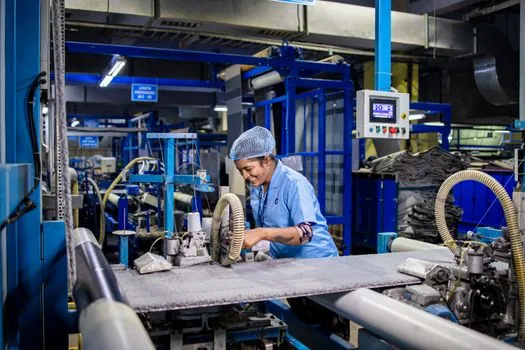
The named-vendor short list across reporting houses converges on a core set: QuantumScape Corporation, Toyota Motor Corporation, Solid Power Inc., Samsung SDI, LG Energy Solution, Ilika plc, Murata Manufacturing, Hitachi Zosen, Panasonic Holdings, and Narada Power, with Blue Solutions (France), ProLogium Technology (Taiwan), Cymbet, and BrightVolt also cited in separate tallies [S3][S4][S7]. QuantumScape's 14.8% lead in materials is the only vendor-level share figure published with a specific percentage in the current research set; the remaining players are listed by name without quantified shares.
Competitive differentiation runs through three axes: electrolyte chemistry IP portfolios, scale-up manufacturing capability, and exclusive supply agreements with automotive OEMs [S4]. Sulfide-based and oxide-based electrolyte systems are the two front-runner chemistries, with both chemistries scaling from laboratory batches to multi-ton monthly production volumes [S4]. Polymer electrolytes remain in the mix but are not leading the race for high-energy-density EV cells based on the cell-chemistry split reported [S6].
Cell Chemistry and End-Use Split
Lithium-based solid-state batteries hold 82.5% share of the materials market by battery type in 2026, with automotive applications representing 41.4% of end-use demand in the same year [S4]. The dominance of lithium chemistry is consistent with the lithium-metal anode lead of 55.05% in the EV-focused market sizing [S6]. For comparison, the broader cell demand picture, including how this segment stacks against sodium-ion and conventional Li-ion, is mapped in the Battery Cell Demand 2026-2030: Spec-to-Volume Map reference.
End-use breakdown spans EV powertrains, grid-scale energy storage systems, consumer electronics, and aerospace and defence power units [S4]. The 41.4% automotive share is the single largest end-use line, and consumer electronics and medical devices are pulling US demand growth, with the US market projected to grow from $67.10 million in 2025 to $2.24 billion by 2035 [S5].
Vendor Comparison: Selection Criteria for Spec-In

For procurement teams evaluating solid-state cell suppliers, four criteria emerge from the published data: chemistry type, scale-up status, OEM qualification depth, and geography. QuantumScape scores on chemistry (ceramic solid electrolyte plus lithium-metal anode) and OEM tie-ins, but is still pre-high-volume series [S4]. Toyota, Samsung SDI, and LG Energy Solution bring automotive-scale cell-making infrastructure and existing OEM relationships, with the caveat that solid-state is one programme among many in their lithium-ion portfolios [S4][S7].
ProLogium (Taiwan) and Blue Solutions (France) sit in a smaller-volume specialty tier, with Blue Solutions already shipping solid-state packs in niche EV and bus programmes and ProLogium focused on ceramic separator and oxide-electrolyte scale-up [S3]. Ilika (UK) is positioned for small-format cells, including medical devices and industrial IoT sensors, rather than EV traction packs [S3]. Murata and Hitachi Zosen are incumbents in Japanese solid-state R&D consortia, with Hitachi Zosen's involvement tied to manufacturing equipment rather than cell production [S4].
Limitations and Open Questions
Vendor-level market share figures beyond QuantumScape's 14.8% in materials are not published in the current research set, which makes a clean revenue-share ranking impossible without proprietary shipment data. The 2025 baseline disagreement ($119M vs $167.76M across two houses) confirms the market is still too small and too pilot-heavy for a consensus number, and analyst projections out to 2031-2036 rely on OEM launch commitments that have historically slipped [S2][S5].
The wider competitive picture, including how solid-state cell makers compare against sodium-ion entrants and conventional Li-ion pack builders, is covered in the Sodium-Ion Battery Competitive Landscape 2026: Cell Makers, Costs, and Market Sizing piece, while the structural safety and portable power trade-offs across pack formats are dissected in Battery Pack Competitive Landscape 2026: EV Structural Safety vs Portable Power. A parallel cell-maker view focused on sodium-ion is also published as Sodium-Ion Battery Market Share by Manufacturer, August 2026.
Track the next two data points: any 2026 quarterly disclosure from QuantumScape on shipment volume or cell yield improvements, and the first announced multi-year electrolyte supply contract between a Japanese or Korean OEM and a sulfide-powder producer; both will tighten the vendor ranking and shift the regional growth map.
Spec-level background on the components involved: pressure transmitter, flow meter, and industrial valve.