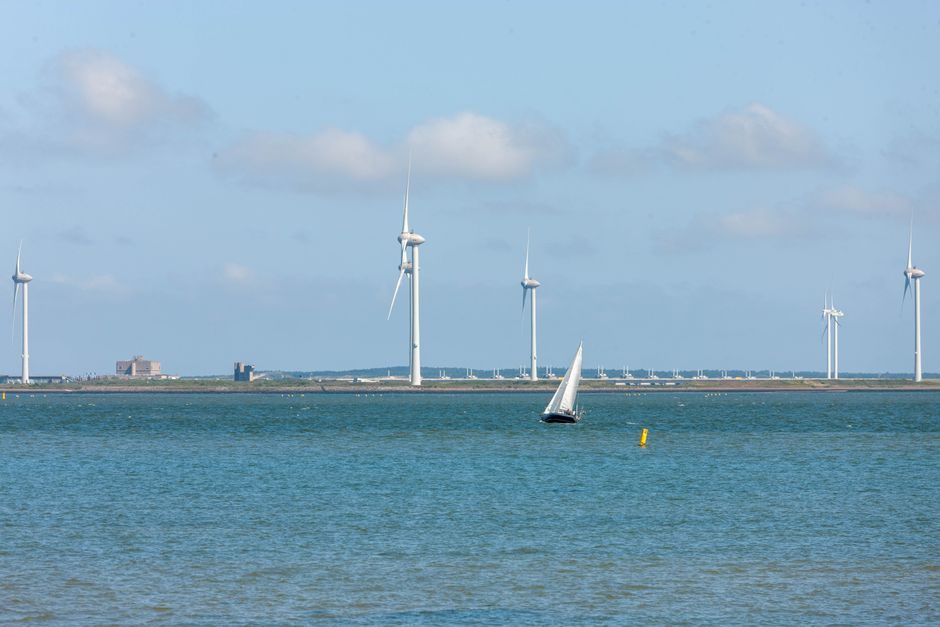
Offshore wind foundation work is being pulled by a hard market signal: the global offshore wind energy market was valued at USD 39.89 billion in 2023 and is forecast to reach USD 110.62 billion by 2032, expanding at a 12% CAGR over 2023-2032 [S4]. That near-doubling on a nine-year window directly translates into jacket, monopile, and floating-substructure tonnage, which is the bottleneck the industry is sizing against for 2026.
Foundation demand is not decoupled from installation capacity. The offshore wind turbine installation vessel market, segmented into self-propelled jack-up, normal jack-up, and heavy lift vessel categories across North America, Europe, Asia-Pacific, and LAMEA, has been quantified across the 2019-2026 forecast window with the same core vendor list [S1]. A2SEA, Fred. Olsen Windcarrier, Gaoh Offshore, Geosea, Jack-Up Barge, MPI-Offshore, SEAFOX, Seajacks, Swire Blue Ocean, and Van Oord remain the active installation contractors shaping which foundations can actually be placed in a given quarter [S1].
Foundation type selection: water depth, turbine rating, serial production
Monopiles remain the default for water depths up to roughly 30-40 m, jacket/lattice structures dominate the 30-60 m band, and floating semi-submersibles or spar buoys are being specified beyond 60 m where seabed conditions permit, a depth-and-turbine-rating matrix every spec engineer confirms against site-specific metocean data [S1].
Turbine size escalation is the second driver. As individual units move into the 14-18 MW class, monopile diameters are pushing past 10 m and individual pin weights past 1500 t, which forces the foundation supply chain toward thicker plate (often API 2W/2Y grade), larger welds, and serial rather than one-off fabrication. Jacket fabrication scales differently — modularity, node-castings, and grouted sleeve connections become the through-line cost lever, and vendors that can deliver repeatable tolerances under DNV- or IEC-based quality plans win tenders. For a deeper breakdown of the drivetrain feeding the same towers, the wind turbine gearbox market 2026: main vs yaw, onshore vs offshore sizing reference lays out the parallel size and torque escalation.
2026 vessel and installation capacity constraint
Self-propelled jack-up vessels (SPJs) carry the largest share of foundation installation because they combine transit speed, leg-elevating stability, and deck area for the next-generation monopile and jacket modules, while normal jack-ups serve the secondary tier and heavy lift vessels cover occasional oversized loads [S1].
The 2026 bottleneck is not order book intent — it is the SPJ fleet's leg length, deck load, and crane reach, all of which gate what can be lifted. Hostile-weather downtime is the structural drag Allied Market Research explicitly flags on offshore wind vessel economics, and it applies equally to foundation campaigns that cannot run hammer operations above certain sea-state thresholds [S1]. For spec engineers, this means a 2026 monopile order needs an installation window contractually tied to SPJ availability, not just a steel-mill delivery slot. The same wave-and-current loading that drives structural sizing also sets the operating envelope for the hammer and the grouting crew.
Geographic split: where the foundation tonnage is being placed
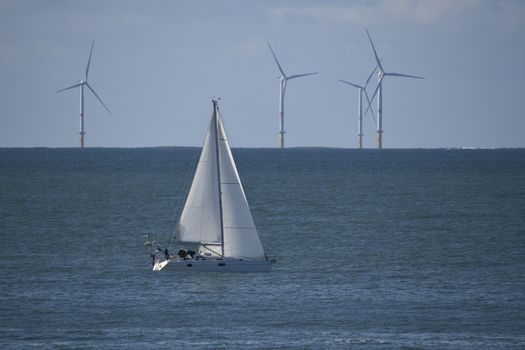
Europe retains the heaviest 2026 foundation pipeline on the strength of North Sea, Baltic, and UK Round 4 / AR5 build-out, with Rest-of-EU growth (France, Italy, Turkey, Sweden, Poland, Denmark, Portugal) projected to contribute 40% of incremental European wind-turbide services revenue over 2020-2025 at an 8.21% CAGR [S2].
Asia-Pacific is the second growth pole, led by China and followed by Japan, Taiwan, South Korea, and Vietnam. The U.S. East Coast is the third pole, but Jones Act vessel constraints, combined with a thinner domestic SPJ fleet, mean U.S. projects are scheduling around 2026-2028 installation windows rather than running flat-out. LAMEA is the fourth tier, with Brazil and parts of the Middle East in early developer pipelines. For European service sizing, the wind turbine gearbox market 2026: main vs yaw, onshore vs offshore sizing comparison underscores the same regional concentration that drives foundation demand, with the OEM service segment being the largest revenue line as fleets age and warranty work compounds [S2].
Standards, materials and the corrosion gate
Offshore foundations are specified against a tightly layered standards stack: API 2W/2Y for plate, DNVGL-ST-0126 for jacket design, IEC 61400-3-1 for fixed-bottom turbines, IEC 61400-3-2 for floating turbines, NACE MR0175/ISO 15156 for sour-service weld consumables, and ISO 12944 / NORSOK M-501 for coating systems on the splash and submerged zones [S1].
Material selection is converging on higher-toughness S355/S420 for monopile transition pieces and S460 for jacket bracing, with copper-nickel 90/10, super-duplex, or HDG + sacrificial anode cathodic protection on connector hardware. Splash-zone coatings are migrating from legacy 3-coat epoxy to glass-flake vinyl ester or polyurethane topcoat systems because the dynamic wave-load zone on 15+ MW monopiles has shown premature fatigue at standard DFTs. Internal secondary steel — boat landings, J-tubes, cable trays, and anode brackets — is being procured in 316L for the splash and atmospheric zones, which is where pressure transmitter and flow meter instrumentation lines tie in for process monitoring of scour, pore pressure, and tendon load on floating units. Drivetrain protection up-tower depends on the same industrial valve and PLC control hierarchy that drives the yaw, pitch, and hydraulic lock systems referenced in the parallel top wind turbine gearbox manufacturers in 2026: spec-driven ranking write-up.
Risk register: serial fabrication, welds, and grid interconnect
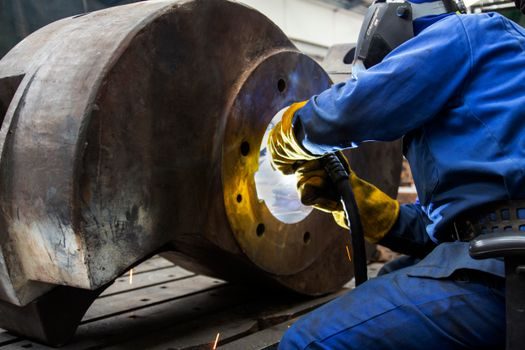
Three failure modes dominate 2026 foundation risk: (1) weld defect rates during serial monopile production, where a single critical girth weld can scrap a 1500 t pin, (2) grouted connection fatigue on jacket leg-to-sleeve interfaces when grout stiffness is not matched to the dynamic response of the tower, and (3) schedule slip driven by grid interconnect queues, which leaves fabricated foundations stockpiled at the marshalling port and consumes working capital. [S3]
Counter-measures are practical: 100% UT/PAUT on critical girth welds with pre-qualified WPS to AWS D1.1 or EN 1090-2, factory pre-grouted sleeve assemblies with documented grout modulus, and dual-sourcing of transition piece fabrication to de-risk any single yard. The cleanest 2026 procurement path is a two-vendor monopile strategy — one serial yard, one contingency yard — rather than single-source. Coatings should be QA-d witness-tested with holiday detection at ≥ 1100 V DC and pull-off adhesion ≥ 12 MPa per ISO 4624.
Forecast triangulation and what 2026 actually buys
Cross-checking the wind-energy top line against adjacent signals: the wind-turbine services market in Europe alone is set to grow by USD 2.21 billion from 2020 to 2025 at an 8.21% CAGR, with 40% of that growth originating from Rest-of-EU [S2], and the global offshore wind energy market is on a 12% CAGR through 2032 from a USD 39.89 billion 2023 base to USD 110.62 billion by 2032 [S4]. Adjacent infrastructure markets confirm the same build cycle: the global offshore AUV market was valued at USD 93.11 million in 2025 and is projected to reach USD 246 million at a 15.1% CAGR over 2026-2032, driven by survey demand for the same foundation sites [S6].
For 2026, the practical reads are: (a) jacket and monopile serial-fabrication capacity is still the binding constraint in Europe and will remain so through 2026, (b) U.S. East Coast foundations are booking installation slots into 2027-2028 because the SPJ fleet has not expanded proportionally, and (c) floating-substructure demand will stay niche through 2026 outside Scotland, Norway, and a small French Mediterranean cluster, before scaling in the second half of the decade. For spec engineers weighting sourcing risk, the cleanest near-term decision is a multi-vendor monopile award with a locked installation contract against an SPJ of confirmed leg length and crane reach, and a coating specification that does not gamble on the splash zone.