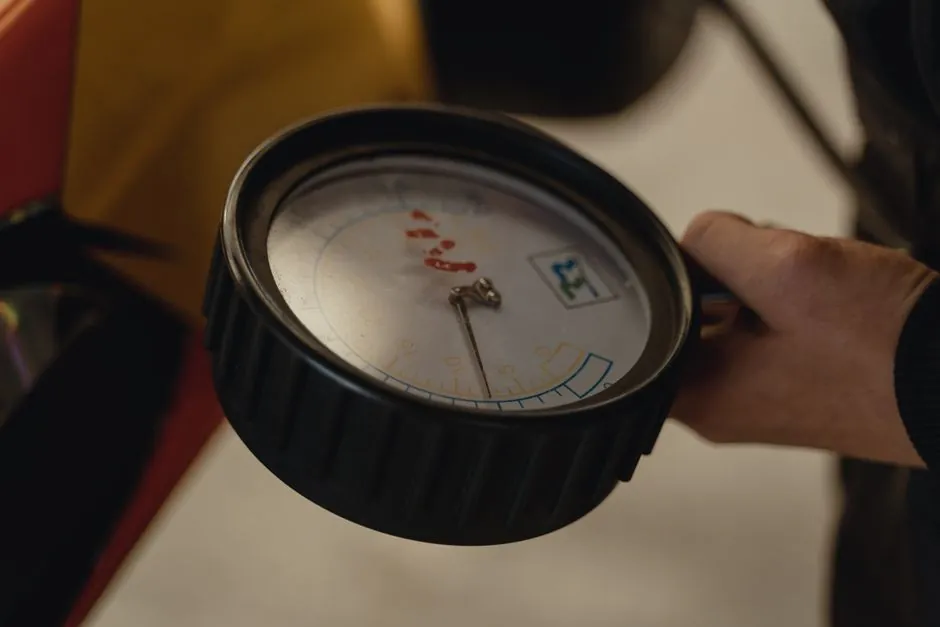
A custody-transfer turbine flow meter can provide ±0.15% linearity and ±0.02% repeatability, but those instrument figures do not remove installation, fluid-property, and calibration errors from the delivered measurement [S7].
The specification applies to clean, liquid petroleum products measured with a rim-rotor design; natural gas custody transfer has different accuracy needs, with 0.1% described as the standard requirement [S2][S3].
What 0.15% Accuracy Means in a Custody Transfer
A custody transfer meter establishes the quantity exchanged between ownership parties, so the specified error must cover the complete measurement system rather than the flowmeter body alone. For natural gas custody transfer, Emerson identifies 0.1% as the standard accuracy requirement, compared with 0.25% for typical gas-flow measurement applications [S3].
For liquid custody transfer, the turbine meter’s ±0.15% linearity represents a wider error band than the 0.1% accuracy standard cited for natural-gas custody transfer [S3][S7]. Linearity describes how meter output follows reference flow, while repeatability describes the ability to return the same result under repeated conditions; neither specification, by itself, proves the total custody-transfer uncertainty.
The project specification should therefore separate meter accuracy from installation error, calibration uncertainty, repeatability, and any bias correction. That distinction prevents a nominal ±0.15% instrument from being represented as a guaranteed ±0.15% transfer result.
Turbine, Coriolis, and Ultrasonic Selection
A rim-rotor turbine flow meter is suited to clean liquid petroleum products, where high pulse resolution supports custody-transfer measurement. Hoffer CT Series sizes from 4 to 12 inches use a rim-rotor design, support self-lubricating, ceramic ball-bearing, or tungsten-carbide sleeve options, and are designed around API Standard Chapter 5.3 [S2].
A Coriolis flow meter provides a different route to custody-transfer approval. ABB's CoriolisMaster received international-standards approval for key custody-transfer applications, showing that liquid measurement does not have to default to turbine technology [S1]. The cited material does not provide a comparable CoriolisMaster accuracy figure, so a ±0.15% claim cannot be transferred to that platform.
An ultrasonic flow meter can maintain accuracy through viscosity changes and may avoid recalibration when fluid properties change between product batches. Panametrics describes testing its Sentinel LCT8 ultrasonic flowmeter as suitable with five diameters of upstream straight run and discusses shortened straight runs between the meter and a flow conditioner [S4].
Selection Criteria for Liquid Petroleum

Fluid cleanliness and viscosity are the first gates for turbine selection because a turbine converts fluid velocity into rotor speed and pulse output. The Hoffer CT Series is specifically described for liquid petroleum products and applications where high pulse resolution is critical [S2]. A clean liquid service also avoids many particulate, entrained-gas, and phase-change effects that can destabilize a turbine rotor.
Pulse resolution should be checked across the complete operating range rather than at one nominal flow. Hoffer identifies wide flow turndown as a defining CT Series feature, while its 4–12 inch rim-rotor offering is intended to increase pulse resolution [S2]. The selected size must still maintain its specified performance at minimum, normal, and maximum operating flow.
Material and bearing requirements need a defined service basis. These are options rather than universal requirements, and the selected wetted materials must be compatible with the actual hydrocarbon, additives, contaminants, and temperature range.
Installation and Ancillary Equipment
A ±0.15% meter still needs a controlled measurement environment. Inlet disturbances, pipe alignment, flow direction, electrical noise, and downstream piping can affect the relationship between reference flow and meter output. The installation drawing must therefore define straight runs, reducers, fittings, valves, and support locations instead of relying only on the meter datasheet. [S4]
The pickup system and flow computer form part of the accuracy chain. Hoffer CT meters can use multiple pickup coils for redundancy or bidirectional-flow measurement, and the manufacturer offers signal conditioners and flow computers for complete installations [S2]. A higher pulse count can reduce quantization error, but it does not correct poor flow conditioning or an unsuitable calibration procedure.
For a turbine specification, the flow computer should receive the approved meter coefficient, K-factor, fluid reference conditions, line pressure, temperature inputs, and custody-transfer test configuration. These controls turn the instrument accuracy statement into a traceable transfer calculation rather than an isolated factory characteristic.
Verification, Calibration, and Failure Modes
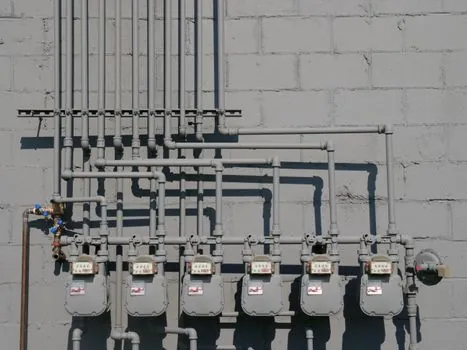
Annual verification is a practical control for commodity-metering systems, and a master-meter proving arrangement can reduce both duration and uncertainty. Interstates described an ammonia proving operation that changed a multi-workday scale-based test into a four- to five-hour on-site procedure using a state-certified master flowmeter and closed-loop recirculation; the reference flowmeter was accurate to better than 0.1% of rate [S5].
That case also shows why fluid conditioning matters. Ammonia boils at -28°F, and initial phase changes created unstable calibration conditions until an extended wet-down cooled the lines and hoses and reduced vapor pockets [S5]. For hydrocarbon custody transfer, the same principle applies: proving is credible only when the fluid, temperature, pressure, and phase remain controlled across repeated runs.
Common failure modes include flow-profile distortion, fouling or bearing wear, unstable phase conditions, incorrect meter coefficients, poor signal conditioning, and operation outside the validated flow range. An oval-gear flow meter or paddle-wheel flow meter should not be substituted merely because both can produce pulses; their hydraulic behavior, pressure loss, and sizing rules differ from the turbine design.
Standards, Contracts, and Acceptance Tests
Custody-transfer performance can be governed by OIML or API requirements, national rules such as INMETRO in Brazil, and agreements between the transferring parties [S4]. For turbine liquid meters, Hoffer states that the CT Series is designed for compliance with API Standard Chapter 5.3, while the broader petroleum-meter comparison traces the recognition of turbine technology for custody-transfer measurement to API work beginning in 1970 [S2][S6].
The procurement document should require more than the phrase “0.15% accurate.” It should define whether the value is ±0.15% of reading, ±0.15% of rate, ±0.15% of span, or a linearity statement; identify the tested reference procedure; specify fluid, temperature, pressure, viscosity, and flow range; and state the maximum installation contribution [S7].
Acceptance should separate three results: laboratory linearity, repeatability, and the installed measurement-system uncertainty. Repeat runs must remain at controlled temperature and phase, the proving method must have uncertainty better than the allowable transfer error, and any correction factor must be traceable to the approved configuration. Without that separation, ±0.15% linearity can be mistaken for a contractual guarantee that the research does not establish.
When a 0.15% Turbine Meter Is the Correct Choice
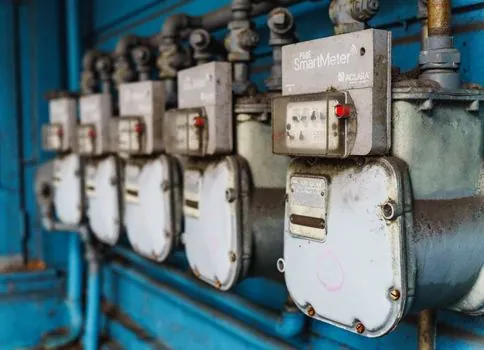
A ±0.15% rim-rotor turbine meter is a defensible selection for clean liquid petroleum custody transfer when the line has a suitable flow profile, the operating range is validated, and periodic proving can meet the contract error limit [S2][S7]. It is not the default answer for dirty, entrained-gas, phase-changing, or high-viscosity service, nor is it the natural choice for natural gas custody transfer where 0.1% accuracy is the cited requirement [S3].
Specification closure requires four documents: the meter and pulse-system data sheet, the installed flow-computation configuration, the straight-run and piping arrangement, and the proving or verification plan. Track two signals before approval: the certified reference-meter uncertainty, which was better than 0.1% of rate in the ammonia proving example, and the achieved repeatability of the complete custody-transfer run [S5].