
Fettling grinder selection on a heat-treatment-line RFQ is driven by the post-quench stock that must be removed, the abrasive required, and the dust zone the grinder will sit in, not by motor power alone.
Heat treatment shifts dimensions unevenly, so the buyer must declare the post-heat-treat stock allowance per surface in millimetres and pair it with a target Ra/Surface-finish range, per general RFQ guidance [S1]. A fettling grinder is then sized to that stock, not to the nominal part drawing, which is a frequent source of over- or under-spec on shop-floor quotes.
Line-Item 1: Post-Quench Stock Allowance and Target Tolerance
Heat treatment of steels such as SAE 4340 per AMS 6409 typically changes critical dimensions by 0.05 to 0.30 mm on small gears and by 0.5 to 2.0 mm on large gears or rings, with thin walls and large flat faces distorting the most, so buyers should loosen critical tolerances before heat treat and re-tighten them on the fettling line [S1][S2]. On a request for quotation, the buyer should declare: pre-heat-treat tolerance class (for example ISO 2768-mK or a custom ±0.10 mm), the post-heat-treat stock allowance per surface in mm, the final post-grind tolerance, and the target surface finish in Ra µm or microinch. PPAP runs typically use a hardness specification window such as 59 to 61 HRC, and the Cpk is then calculated against the post-grind dimensional window, not the pre-heat window [S2]. A heat treatment furnace line that feeds a fettling cell must therefore budget the fettling cycle time from the realistic stock figure, not from the print nominal.
Line-Item 2: Abrasive Type, Bond, and Grit vs Stock
The RFQ should call out: abrasive type, grit size, hardness grade, bond type, and maximum allowable wheel speed in m/s. After softer processes such as annealing or stress relief, a softer bond and finer grit are usually selected because the workpiece no longer behaves like hardened stock. The RFQ must also call out whether the line will use a bench or pedestal floor grinder for heavy flash and parting-line removal, or a swing-frame grinder for large castings, since the wheel size, spindle speed, and dust extraction port all change with that choice. [S1]
Line-Item 3: Motor Power, Wheel Size, and Spindle Speed
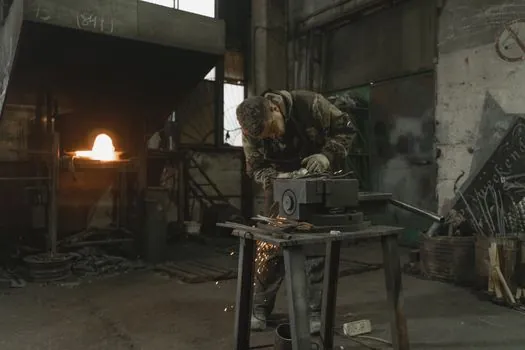
For through-hardened steel at 58 to 62 HRC, a 5.5 to 7.5 kW swing-frame grinder is typical for stock above 1.5 mm, a 3.0 to 4.0 kW pedestal or bench grinder handles 0.3 to 1.5 mm, and a 1.5 to 2.2 kW heat detector-monitored inline cell handles finishing under 0.3 mm, by typical industrial convention. Voltage and phase must be stated explicitly, since 400 V three-phase 50 Hz, 460 V three-phase 60 Hz, and 380 V three-phase 50 Hz are all encountered on European and North-American lines, and an omitted line forces a requote. The RFQ should also state the wheel diameter in mm, the rated spindle speed in rpm, and whether a variable-frequency drive is required to slow the wheel for finishing passes. Abrasive wheel safety is typically covered by ISO 610 and related regional standards, so a line that simply says 'grinder for fettling' without these fields will almost always be sent back. [S2]
Line-Item 4: Dust Class, Filtration, and Hazardous-Area Rating
Heat-treatment fettling generates fine metallic and abrasive dust, and the line's dust class (for example L, M, or H per commonly used European classifications) must be declared, along with the required filtration efficiency and the ATEX zone rating if the line sits near a quench oil tank or a gas-fired heat treatment furnace. RFQs that omit the ATEX or IECEx zone force the supplier to add a 15 to 30 percent price contingency for hazardous-area certification, and that line item is one of the most common drivers of quote inflation. Buyers should also require a dust-extraction interface diameter in mm, a minimum airflow in m³/h, and a spark-arrestor or pre-separator specification, because retrofitting these after award is expensive. The RFQ should call out whether the cell will be served by a centralised ducted system or by a stand-alone filtered unit, since the fan motor and filter area scale with that decision. [S1]
Line-Item 5: Throughput, Fixturing, and Operator Interface
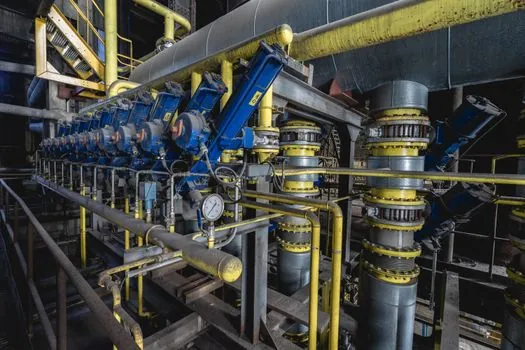
Fettling cycle time is set by the longest pass across the heaviest face, not by the average part, so the RFQ should declare: number of parts per hour, largest face to be ground in mm, fixture type (manual, power-assist, or robot-loaded), and the operator-station reach envelope. A swing-frame grinder on a heavy-truck gear line typically processes 8 to 20 parts per hour per station, while a robot-loaded cell with a 7.5 kW spindle can reach 30 to 60 parts per hour, with PPAP studies used to validate that the fettling step does not push the Cpk below 1.33 on any critical dimension [S2]. Hand-arm vibration, noise, and dust exposure at the operator station should be called out in dB(A) and m/s² limits, because retrofitting vibration-damped handles and acoustic enclosures after award is a frequent requote trigger.
Line-Item 6: Standards, Documentation, and Quality Plan
The RFQ should reference the abrasive-wheel safety standard, the hazardous-area standard where applicable, the CE/UKCA/UL machinery directive, and the supplier quality requirements such as PPAP level, Cpk target, and inspection-sampling plan per AQL, since heat-treatment fettling is the last process before final inspection on many lines [S1][S2]. Buyers should also require a documented process capability study on at least 30 consecutive parts covering stock removal, surface finish, and any post-grind hardness re-check, because the fettling step can overheat the surface on through-hardened steels and pull local hardness below 58 HRC if the abrasive is wrong or the feed is too aggressive. For an inline build, asking for the full type-III PPAP package, control plan, and FMEA before award typically costs nothing and prevents the warranty scrap that comes from an under-spec'd fettling cell.
Common RFQ Mistakes and How to Avoid Requote Cycles
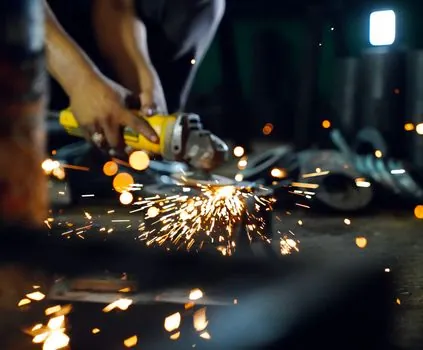
The three RFQ errors that most often force a requote on a heat-treatment fettling grinder are: omitting the post-heat-treat stock allowance in mm, leaving the ATEX/IECEx zone blank, and stating only motor kW without wheel diameter, spindle speed, and abrasive specification, because suppliers cannot price a swing-frame cell without all four. Other frequent omissions are: voltage and phase, dust class, duty cycle in hours per shift, fixturing scope, and the standard that the abrasive wheel must be certified to. A complete line item should be quotable in a single pass, and the cheapest RFQ to quote is almost always the one that quotes first and accurately. Tracking the safety mat price and cost guide for 2026 procurement is a useful parallel exercise, because operator-side guarding, mat placement, and dust zoning decisions are all made at the same RFQ stage and tend to be won or lost together on a heat-treatment line.</h2> <p>Buyers ready to release the RFQ should send the post-quench stock allowance, the abrasive and wheel spec, the dust class, and the hazardous-area zone on the same drawing sheet, then request a fixed quote with a documented Cpk on at least 30 parts. Watch for the first-pass quote to return with a blank on PPAP level or on the abrasive standard: both are signal that the supplier has padded the price for unknowns, and both are usually resolved with a single clarification email. For related spec discipline on adjacent equipment, the sprinkler system price and cost guide shows the same hazard-zoning logic applied to facility protection, and that overlap is increasingly relevant when a heat-treatment cell sits inside a larger hazard-classified building. [S1]