
A pinch valve specified for steam condensate service is selected on five non-negotiable parameters: full-bore elastomer sleeve, body pressure class matching the line rating, continuous-temperature rating above the maximum condensate temperature, an actuator package sized for the line pressure, and end connections that match the existing trap discharge piping.
The dominant misconception in condensate-line RFQs is treating a pinch valve as a flow-control element. In condensate recovery it functions as a full-isolation or open/closed dump valve, with the elastomer sleeve as the only wetted part and the metal body carrying no process fluid [S1][S6].
Why a Pinch Valve, and Why Only on Condensate — Not Live Steam
A pinch valve closes by compressing a flexible elastomer sleeve against itself, so the working medium contacts only the sleeve; the metal body and stem stay isolated, which is the reason the design is widely used on abrasive slurries, chemically aggressive water, and food-grade fluids [S5][S9]. The same full-bore, drop-tight closure is what makes it attractive for steam condensate manifolds, where the line carries hot water with dissolved oxygen and CO₂ rather than two-phase steam [S7].
Condensate at the steam trap discharge typically sits 5–15 °C below saturation for the operating pressure and is mechanically the most aggressive fluid in the steam loop because of flash steam, water hammer, and entrained solids. A metal-seated globe or ball valve will handle the temperature, but the elastomer sleeve of a pinch valve absorbs condensate hammer and tolerates particulate far better than a metal seat, which is why condensate recovery skid builders often substitute it for a ball valve at the dump line. A pinch valve must never be installed on live steam upstream of the trap: the sleeve elastomer is the temperature limit, and continuous steam will exceed it.
Five RFQ Parameters That Force a Clean First Quote
Paste these five lines into the RFQ in this order; missing any of them triggers a clarification loop.
<b>1. Line size and end connection.</b> State the nominal line size and the existing pipe standard. Ho-matic 88-series pinches stocked in the ½"–2" range on Tri-Clamp DIN 32676 series A covers food and pharma condensate, while flanged ANSI CL150 bodies in ductile iron with butyl sleeves are the 1"–24" utility-condensate default [S3][S8]. Specify DN, NPS, flange class, or Tri-Clamp size on the line — do not write "matches existing".
<b>2. Operating and design pressure.</b> Condensate manifolds usually sit at 0.5–10 barg. A solenoid-pinch like Keyto 1269 is rated 80 kPa max with a -70 kPa vacuum tolerance, so a condensate line at 8 barg needs a CL150 flanged body, not a low-pressure solenoid-pinch [S4]. Quote the design pressure on the RFQ; vendors price elastomer and body wall thickness against it.
<b>3. Continuous and peak temperature.</b> Saturated steam at 10 barg is 184 °C; condensate at the same pressure runs 170–180 °C. EPDM sleeves, the most common default, are typically rated to 130–150 °C continuous; natural rubber and butyl sit lower; FKM and PTFE push above 180 °C continuous. Match the sleeve elastomer to the highest expected skin temperature, not the nameplate steam pressure [S8].
<b>4. Sleeve elastomer and food/pharma compliance.</b> Natural rubber, EPDM, nitrile, butyl, FKM, and PTFE-lined sleeves are stocked across industrial lines. For condensate that re-enters a boiler or a clean utility, EPDM or butyl is standard; for pharmaceutical condensate, a stainless-steel-bodied 78-series Tri-Clamp with FDA-grade sleeve and ATEX-rated housing is the cleanest drop-in [S3][S6].
<b>5. Actuation and control signal.</b> Pneumatic spring-return is the default for fail-safe-open condensate dump valves; electric on/off via solenoid coil (e.g. 24 VDC or 110/230 VAC) is the choice for BMS-integrated condensate pumps; hand-wheel gear is the choice for manual bypass [S1][S2][S5]. For modulating control on a condensate line, do not use a pinch valve — the sleeve deforms non-linearly and the curve drifts with wear; use a control valve from the steam separator trim list instead.
Pinch Valve vs Ball Valve vs Globe Valve on Condensate
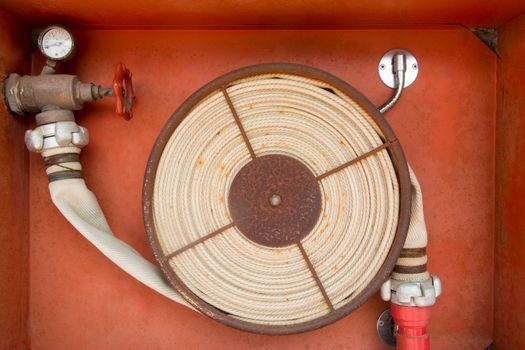
Comparing the three practical candidates for a condensate isolation valve on a 3" CL150 line, 8 barg, 180 °C peak: [S8]
<b>Full-bore flow path.</b> Pinch and full-port ball both pass pig and slurry; reduced-port ball and globe throttle. The pinch is the only one of the three where the working fluid touches only elastomer [S1][S9].
<b>Resistance to water hammer and entrained solids.</b> Pinch absorbs hammer because the sleeve flexes; ball and globe transfer hammer to the seat and stem packing, which is the leading cause of packing failure on condensate service [S5][S8].
<b>Temperature ceiling.</b> Ball and globe are limited only by body and seat material (typically 200–425 °C depending on trim). Pinch is limited by the sleeve elastomer, which tops out around 180–200 °C continuous for premium compounds. On a true high-pressure condensate line above 15 barg with saturation above 200 °C, the pinch is out of its window and a metal-seated ball is the correct call.
<b>Modulating accuracy.</b> Neither pinch nor on/off ball is suitable for continuous modulation. If the line needs to throttle condensate flow to a heat exchanger, specify a globe or a characterised segmented ball; if the line is on/off dump after a steam trap, a pinch is the better fit.
<b>Price and lead time.</b> A 1-1/2" CL150 flanged pinch with butyl sleeve and pneumatic actuator lands at roughly USD 700–1,200 in single-piece resale channels, materially cheaper than a comparable stainless globe [S8]. A 1-1/2" full-port stainless ball lands 10–25% above that, with a comparable lead time. For DN50 and above the gap widens; for DN15–DN25 a Tri-Clamp pinch can actually cost more than a sanitary ball once the pneumatic actuator is included.
Sleeve and Material Choices for Condensate Service
Natural rubber sleeves are the default for abrasive water service up to about 70 °C continuous, which makes them unsuitable for any condensate line above atmospheric flash temperature. EPDM sleeves raise the ceiling to roughly 130–150 °C and resist steam condensate chemistry well, which is why most condensate-recovery OEMs default to EPDM unless the buyer asks otherwise [S8].
Butyl sleeves sit between natural rubber and EPDM on temperature (about 110–130 °C) and add better gas permeability, which is useful on vacuum condensate return lines where air ingress is a problem [S8]. FKM and PTFE push the temperature ceiling to 180 °C and beyond, at a 3–6× sleeve-cost premium and a longer lead time; the buyer should only specify these if the condensate temperature is documented to exceed 150 °C continuous [S3].
For the body, ductile iron with epoxy coating is the utility default; stainless 1.4404 (316L) is the choice for clean-utility and pharmaceutical condensate, and is what the Ho-matic 78 and 88 series use on their Tri-Clamp wetted fittings [S3][S6]. Aluminium-alloy housings (6026 in the Ho-matic range) are fine for non-wetted actuator frames but should not be specified as the pressure-containing body on a condensate line [S3].
Actuation, Position Feedback, and Integration
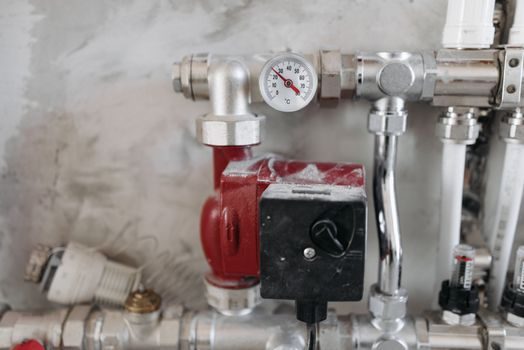
Spring-return pneumatic is the default for fail-safe-open condensate dump valves because loss of air signal opens the line and prevents condensate backup into the steam header. FESTO's VZQA series is the typical pick for low-pressure pilot-actuated service in 2-way, 3-way, mixing, and shut-off functions, and is widely cross-referenced for OEM skid builds [S5].
Electric on/off solenoid is the right call for BMS-integrated condensate return stations. The Keyto 1269 solenoid-pinch, for example, is a single-channel unit sized for sample and pure-water lines; for general condensate duty, specify a 24 VDC or 110/230 VAC coil, IP65 minimum, with a mechanical position indicator on the body so a technician can read open/closed without energising the coil [S4][S10].
For modulating control on a condensate line, do not specify a pinch valve. If the process needs proportional condensate flow, route it through a separate control valve sized on Cv, and use the pinch as the upstream full-isolation valve only. Trying to modulate with a pinch collapses the sleeve non-linearly and shortens service life; the published VZQA datasheet is explicit that the valve is designed for shut-off, mixing, and dosing, not for continuous throttling duty [S5].
Common RFQ Mistakes and the Requote They Trigger
<b>Writing "pinch valve" with no elastomer.</b> Vendors cannot quote without the sleeve compound, and the choice swings the price by 3–6×. Always write "EPDM sleeve, food-grade" or "butyl sleeve, utility" on the line [S3][S6][S8].
<b>Omitting the temperature ceiling.</b> A pinch rated to 80 °C on a 170 °C condensate line will blister in a week. Quote the maximum continuous temperature on the RFQ, not just the operating pressure [S5][S8].
<b>Asking for a pinch to "modulate" condensate flow.</b> Specifying a modulating pinch forces the vendor to either refuse the bid or propose a control-valve substitute. Decide on/off vs modulating before the RFQ goes out, and pick the right architecture for each role on the skid [S5].
<b>Specifying aluminium as the pressure-containing body.</b> Aluminium-alloy actuator housings (e.g. 6026) are common non-wetted frames, but they should not be specified for the pressure-containing body on a condensate line above a few hundred kPa [S3].
<b>Forgetting the end-connection standard.</b> "Flanged" is not a complete RFQ; write ANSI CL150, EN 1092-1 PN16, Tri-Clamp DIN 32676, or screwed G/NPT explicitly. A missing flange class is the single most common clarification loop on pinch-valve RFQs [S3][S6].
Field Checks After Installation
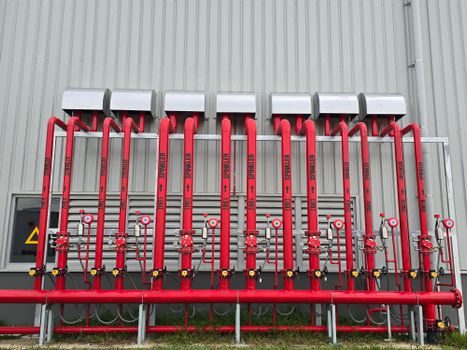
Three field checks confirm a correctly specified pinch on a condensate line. First, with the line at operating temperature, confirm the closed position is drop-tight at the design pressure; a weeping sleeve on a 3-month-old pinch usually means under-sized actuation or a sleeve that has relaxed and needs re-torquing at the body flange [S1][S8]. Second, stroke the valve through full open–close at least five times and time the cycle; pneumatic spring-return units on DN50 should stroke in 1–3 s, and any reading above 5 s suggests a stiction issue between sleeve and body [S5]. Third, after 90 days in service, measure the downstream temperature at the steam trap discharge and confirm no superheat creep; a 5–10 °C creep is the early warning of a sleeve that has lost elasticity and is letting flash steam through the closed position [S7].
For related spec-driven selection patterns, see the flow sensor buyer's map and the PPR pipe selection gates.