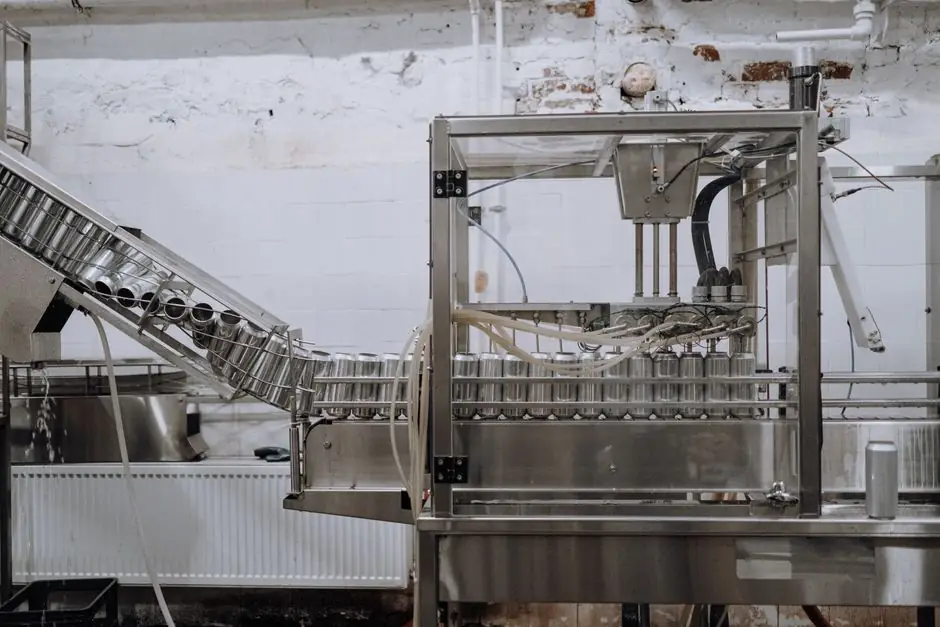
A 316 stainless steel coil siphon with PN20 pressure class and 1/4" male/female process connections is the stock instrumentation interface for pressure transmitters on steam and hot-vapour lines, listed at €22.88 by Syveco [S3].
Coil siphons, thermowells, diaphragms, and impulse lines form the wetted hardware that decides whether a process control loop reads true or drifts, and the material call usually defaults to 316/316L stainless for oxygen and aggressive service, with carbon steel acceptable for non-corrosive lines [S2].
Why the coil geometry, not the transmitter, sets loop accuracy
The coil siphon's job is to hold a water seal between the hot process tap and the instrument, so the sensing diaphragm only sees hydrostatic head plus a steady, cool static pressure; the working fluid is condensed steam, not flashing vapour [S1]. For low-pressure service two or three helical turns are enough to span the required pressure range, while high-pressure measurement on superheated steam can require up to 20 coils packed into the same 1/4" envelope, because each added turn adds condensate leg and damps pulsation [S4]. A common field error is to undersize a siphon on a saturated-steam line that routinely sees wet/dry cycling, which lets slug flow reach the stainless steel diaphragm and produces a 1–3% zero shift within a shift of operation.
316 vs 316L: when the L-grade actually matters
316 stainless is the historical default for thermowells and siphons in oxygen and high-purity service, where ignition energy and cleanliness dominate the material call, not strength [S2]. 316L drops carbon to 0.030% max specifically to suppress sensitisation and intergranular corrosion after welding, which matters for fabricated coil siphons and for plants that must weld to existing 316L piping under ASME B31.3 without a post-weld heat treatment. For non-oxygen, non-agroservice below 400°C, carbon steel siphons are routinely substituted to cut cost, and the only penalty is reduced corrosion allowance, not accuracy, so the instrument-side process control behaviour is unchanged. Sour service (NACE MR0175 environments) is a separate selection branch and typically forces a hard-faced or alloy-825 thermowell rather than a standard 316 siphon.
Pressure class, thread standard, and the part the datasheet hides
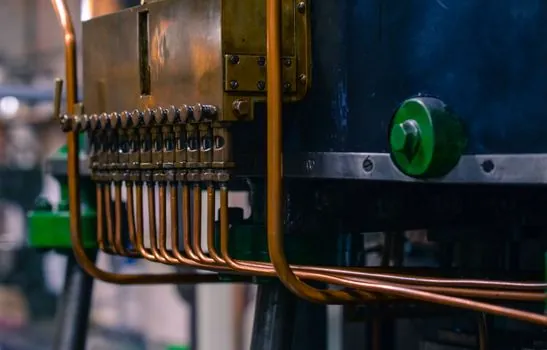
PN20 on a 1/4" siphon corresponds to roughly 20 bar at room temperature, with the allowable working pressure dropping as temperature climbs; this is the same derating curve that governs the matching stainless pipe tap. The male/female thread pattern lets the siphon swivel into the impulse line without twisting the transmitter manifold, which is the small detail that prevents a side-load fracture at the NPT thread root during commissioning. Field practice: torque the male thread into the process tap first, then orient the coil, then land the female end on the instrument valve, with thread sealant rated for the service (PTFE tape for general use, kevlar/PTFE paste for steam above 200°C). [S3]
Coil count and condensate leg: the engineering table that does not ship with the siphon
A practical sizing rule, drawn from the IDC instrumentation reference, is that low-pressure elements use only two or three coils to span the required pressure, whereas high-pressure elements can require up to 20 coils to maintain a stable water column [S4]. A 1/4" siphon with eight to twelve turns is the usual compromise for 10–40 bar saturated steam on a standard 4-20 mA pressure transmitter. Adding turns past the condensation point does not improve accuracy, it just increases response time, and on a fast loop (compressor surge line, for example) that added lag is what causes the controller to chase a phantom oscillation. If response time matters more than steam isolation, a balanced diaphragm seal with capillary fill is the correct alternative, not a deeper coil.
What stainless steel actually buys you on the siphon
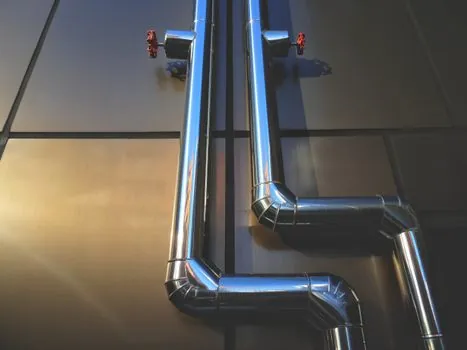
Stainless is selected for three reasons in priority order: corrosion resistance in wet/waxy/oxygen service, galvanic compatibility with the matching stainless pipe tap, and cleanability for hygienic or oxygen service. It is not selected for strength, because the pressure containment is set by the thread and the wall, not the alloy, and a carbon steel siphon of the same schedule will hold the same PN20 rating on air and inert gas. The practical failure mode on a stainless siphon is not burst, it is crevice corrosion at the female thread root where condensate pools, which is why 316L with proper gasket seating outperforms 304 in steam cycles that swing through ambient. See a related engineering brief on motor grader commissioning for comparison-side process discipline logic, in Motor Grader Testing and Commissioning. [S2]
Selection checklist for the next purchase order
Specify five items on the PO to avoid a wrong-shipment: (1) body material 316 or 316L with cert to EN 10204 3.1; (2) pressure class PN20 (or PN40 if the line runs above 20 bar); (3) end connections male x female 1/4" NPT, or G/BSP if the plant is metric; (4) coil count appropriate to the service pressure, three to five turns for low pressure, eight to twelve for steam, up to twenty for superheated high pressure; (5) cleaned and double-bagged for oxygen service where applicable [S3][S4]. Skipping any one of these turns a siphon into a generic fitting, and the next failure usually shows up as a transmitter zero shift, not as a leak. For broader alloy selection context across process hardware, the Defense AM Material Selection spec map covers comparable decision logic for stainless and nickel alloys in critical-service equipment.
Track two signals going forward: whether Syveco or equivalent EU distributors restock the PN20 1/4" 316 coil siphon at the €22.88 price point, and whether any vendor publishes a published high-temperature derating curve beyond 200°C for the same fitting.