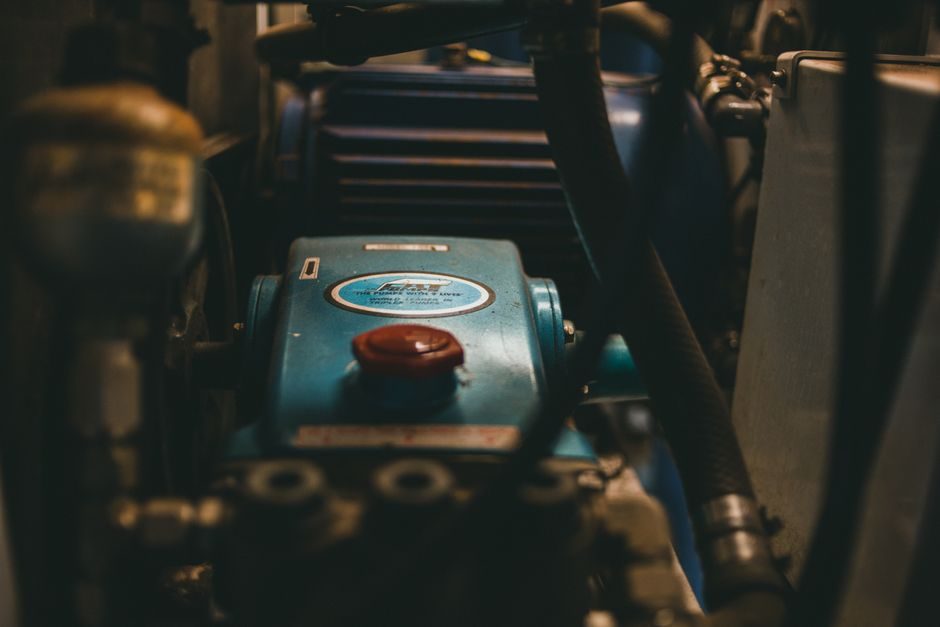
A steam trap is an automatic condensate discharge device that opens on the difference between steam and condensate (or on temperature), and closes when live steam tries to escape — its only job is to keep steam in the line and water out. A pressure reducing valve is a control element that holds downstream pressure at a fixed setpoint by throttling the steam flow, and it does not, by itself, remove condensate.
Both sit on the same steam header in most process plants, and most Chinese steam-valve catalogues — Yongjia Goole Valve, YDME/Canton, and similar Wenzhou-based OEM line-ups — list them as a matched pair alongside safety relief valves and Y-strainers [S2][S3][S4]. Getting the two functions confused is one of the most expensive piping errors on a 2026 steam retrofit, because the failure modes are silent: a PRV used as a trap leaks steam continuously, and a trap used as a PRV cannot hold downstream pressure under varying load.
Function and Operating Logic
A pressure reducing valve in a thermal-liquid network stays fully open while downstream pressure at port B is below the setpoint, and progressively closes as port B approaches or exceeds that setpoint, with the throttling element driven by the differential between upstream and downstream pressure [S1]. A steam trap does the inverse in terms of energy: it stays closed while steam is present and opens only when cooler condensate (or air on start-up) reaches it, so the working fluid leaving the device is liquid water plus flash steam, not live steam at full header pressure.
Both devices sit in the same HS-code family for import duty purposes — both pressure-reducing and safety valves fall under HS heading 8481 (taps, cocks, valves and similar appliances), which explicitly includes pressure-reducing valves. That classification matters for EPC bidders: duty rate, CCC certificate, and inspection/quarantine requirements travel with the HS line, not with the marketing description.
Where Each Device Goes in a Steam Line
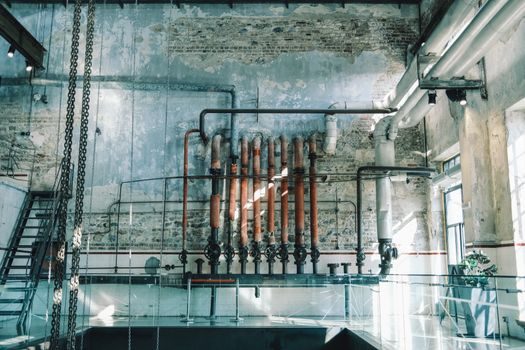
The PRV is always placed on a steam main or branch where pressure is being stepped down — typically after a pressure letdown station, before a low-pressure header feeding trace heating, steriliser autoclaves, or jacketed reactors. A Y-strainer is mounted immediately upstream of the PRV; a steam separator is normally mounted further upstream to drop entrained moisture out of the supply before it reaches the valve seat [S2][S3].
The steam trap sits at every low point of the steam system: drips from steam mains at 30–50 m intervals, drip legs ahead of PRV stations, discharge from heat exchangers, reboilers, coil heaters, and jacketed vessels, and the outlet of sub-distribution headers. A PRV that sees slug condensate on its inlet will pit the seat in a matter of weeks; a trap fitted downstream of a PRV that has no upstream separator will discharge continuously because the steam is already wet.
Selection Criteria: PRV
Selection pivots on four numbers: maximum upstream (inlet) pressure, downstream setpoint, maximum mass flow at full load, and the chosen control characteristic (linear or equal-percentage). For saturated steam, the valve body must be rated for the upstream saturation temperature — a 10 bar g inlet runs about 184 °C, a 25 bar g inlet about 225 °C — and the seat / trim material must resist wire-drawing at high pressure drop [S6].
For a pilot-operated (piston- or diaphragm-actuated) PRV, sizing is governed by the published Cv curve, the allowable noise level (PCV body sized to keep the sound level below ~85 dB(A) at 1 m where local regulation applies), and the maximum recommended differential pressure. A direct-acting (spring-and-diaphragm) PRV is acceptable for low-capacity branch duties but is more sensitive to inlet pressure variation; downstream pressure droop on a typical unit is in the order of 5–15% of setpoint as flow goes from zero to maximum.
Selection Criteria: Steam Trap
Trap selection is driven by condensate load (kg/h), pressure differential across the trap (inlet pressure minus back pressure), steam temperature, and the condensate's cleanliness. Three functional families dominate: thermodynamic (disc) traps, which are cheap, compact, and tolerant of superheat but discharge cyclically and do not handle water-hammer well; float-and-thermostatic (F&T) traps, which discharge condensate continuously and vent air on start-up, the default for process heat exchangers; and inverted-bucket traps, which tolerate dirty condensate better than F&T but discharge more steam at low load. [S1]
For a typical drip-leg on a 10 bar g steam main, a 1/2" or 3/4" thermodynamic disc trap is normal; for a 5 t/h process reboiler, a 1" or 1-1/2" F&T trap is the default. A thermodynamic trap that is undersized for the condensate load will back up condensate into the line and produce water hammer, which is the most common reason disc traps are mis-applied on 2026 retrofit work.
Side-by-Side Comparison: PRV vs Steam Trap
The two devices are not interchangeable — the table below lines the main options up against four decision criteria so a process engineer can pick the right one in the first thirty seconds. [S2]
Function: PRV holds downstream pressure at a fixed setpoint by throttling flow [S1]. Steam trap discharges condensate and air while retaining live steam.
Operating state at design condition: PRV is partially open (modulating). Steam trap is closed (opens only on condensate arrival).
Typical location: PRV on pressure letdown station between high- and low-pressure headers. Steam trap at every low point, drip leg, and heat-exchanger outlet [S2][S3].
Failure mode when undersized: PRV cannot hold setpoint at peak load, downstream pressure droops. Steam trap backs up condensate, causes water hammer and wet steam at the consumer.
Common 2026 Specification Mistakes
Three errors appear repeatedly in the boiler-room specifications reviewed across 2026 Q1–Q2 projects. First, treating the PRV as a condensate-removal device — it is not; condensate ahead of a PRV must be caught by a steam trap on the upstream drip leg, otherwise the valve seat sees slugs of water on every cycle [S1][S6].
Second, specifying a thermodynamic disc trap on a modulating control application such as a steriliser or jacketed reactor — the disc trap will discharge live steam every time the disc lifts, costing the plant in fuel. F&T or inverted-bucket is the right call there.
Third, leaving the upstream Y-strainer off the PRV station. A 20-mesh or 40-mesh Y-strainer with a blow-down valve is mandatory upstream of every PRV on a steam line; without it, a single piece of scale lodges in the seat and the valve passes full inlet pressure downstream, which is how PRV stations fail [S2]. On the cost side, a Q1 2026 price scan of imported steam pressure reducing valves shows the valve body itself starting in the low-hundreds USD for 1/2"–2" sizes in 316 stainless and rising steeply for higher-pressure Class 300/600 bodies — figures that align with the wider 2026 steam-valve market covered in the Safety Relief Valve 2026 Price & Cost Guide, where pressure class and certification drive the bulk of the spend.
Standards, Certification, and Sourcing
PRV bodies are typically specified to ASME B16.34 (valve design and testing) and, for steam service, fitted with trim rated for saturated-steam temperatures. Steam trap bodies use the same ASME B16.34 line and are typically tested on a calibrated air- or water-test rig by the manufacturer before shipment, with published discharge-capacity curves the buyer uses to size the trap against the calculated condensate load [S3][S4].
For plant builds in 2026, the supply base is concentrated in Wenzhou, China: Yongjia Goole Valve, YDME/Canton Valves, and a long tail of similar OEM shops offer PRV + steam trap + safety relief valve as a single sourced package, and the larger of these suppliers hold ISO 9000 plus Chinese TS (special-equipment) certification for pressure-pipeline components [S3][S4]. For EPC packages that ship to the EU, ATEX 2014/34/EU requirements on the actuator and the IEC 60079 series on hazardous-area certification apply to the pilot assembly on a pilot-operated PRV; for North American deliveries, ASME marking and, where used, CRN registration are the usual requirements. Standard body markings to look for on a 2026-vintage PRV include the pressure class, the body material code, and the manufacturer's name — a missing mark is a quick way to reject a quote at goods-in.
For a 2026 retrofit, the next decision node is sizing: take the upstream saturated-steam pressure, the desired downstream setpoint, and the maximum mass flow at full load to the Cv curves of two or three shortlisted PRV bodies, and do the same for the steam traps against the calculated condensate load at each low point. A 1/2" 316SS thermodynamic disc trap and a 1" flanged F&T trap from the same Chinese OEM can typically be on a project site inside four to six weeks of PO; a Class 300 pilot-operated PRV is closer to ten to twelve weeks, and that gap usually drives the procurement sequence for a Q3/Q4 2026 steam retrofit.