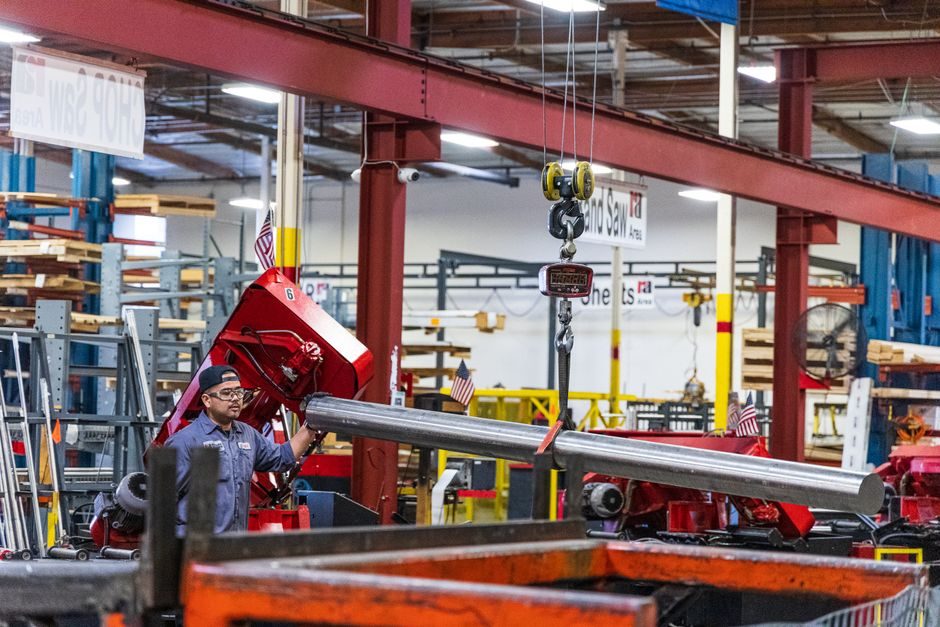
OEM steel manufacturing means the buyer owns the print: the factory runs your tooling, your tolerances, your brand label, and your material call-out — the supplier's contribution is capacity and process know-how [S6]. ODM flips the ownership: the factory contributes its own product design, often patent-pending, and the buyer rebrands or lightly customises it [S6]. In steel-intensive categories — surgical instruments, structural sections, wire rod, rolling-mill turnkey lines — both models appear side by side on the same sourcing portals, and the same supplier can offer either track depending on what the buyer's RFQ asks for [S1][S2][S3].
The practical split is about IP, tooling cost, and time-to-market. An OEM engagement typically starts from a buyer-supplied 2D or 3D drawing — for medical-grade steel, OEM shops run full in-house process chains including milling, drilling, grinding, hardening, electro-polishing, sandblasting, passivation, laser marking and final cleaning [S1]. An ODM engagement starts from a supplier catalogue line — for example a steel frame wall system or a helical dead-end clamp for ADSS fibre cable — which the buyer then rebrands or parameter-tunes [S2][S3].
Where Each Model Fits on a Steel Bill of Materials
OEM dominates where the buyer needs a specific alloy, temper, or surface finish that no catalogue line delivers: a 65Mn/60Si2MnA spring-steel strip for automotive suspension, a vacuum-heat-treated surgical scissors body with tungsten-carbide inserts, or a precision-stamped sheet-metal bracket with ±0.05 mm flatness [S1][S8][S9]. These are all goods where the engineering specification precedes the sourcing decision and where the supplier executes against an externally-owned print.
ODM dominates where the buyer's differentiator is channel, service, or assembly, not metallurgy: stocked steel frame wall systems, food-service steel warmers, lighting chassis, and helical cable fittings all ship as off-the-shelf configurable units that the ODM owner can adjust for colour, branding, and minor dimensional tweaks [S2][S3][S5][S7]. For a first-time steel importer with no in-house metallurgist, ODM collapses 6–12 months of design and trial tooling into a quote-and-accept cycle [S6].
Cost Structure, Tooling, and NRE Split
OEM buyers carry the non-recurring engineering (NRE) burden: print ownership, die cost, fixture cost, and the trial-article scrap rate. On medical-instrument OEM lines, the supplier's process window is set by the buyer's drawing rather than the factory's standard routing, which is why OEM shops invest in tracing systems — one European OEM surgical-instrument maker built a self-customised ERP that tracks each lot from material identification through to the doctor's hand [S1]. That traceability cost is amortised across the buyer's volume, not the factory's catalogue.
ODM buyers pay a per-unit premium that bakes in the factory's prior NRE spend. The factory recovers its die, fixture, and design cost across many rebranded buyers, which is how an ODM steel-frame-wall line can be quoted at lower MOQ than a custom OEM equivalent on the same portal [S2]. For steel-rod and clamp ODM work, the supplier typically holds the product design, the sample policy, and sometimes the brand — Vilun Electric, for example, markets its own "Vilun" label while still offering OEM/ODM service on helical fittings [S3].
Decision Matrix: OEM vs ODM for Steel Buyers
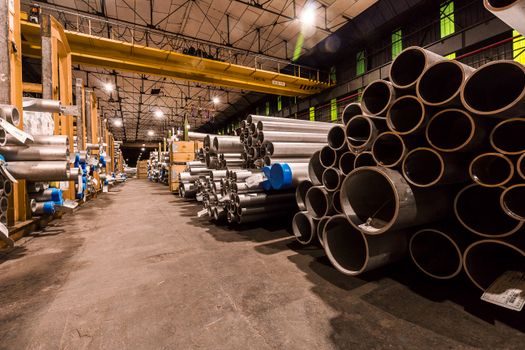
Use OEM when: (a) the alloy or heat-treat call-out is non-standard — e.g. 65Mn/60Si2MnA spring steel, aluminised steel, Magnelis, VCM, or powder-coated steel for automotive tier-1s [S8]; (b) the surface finish is qualified to an external standard, such as CitriSurf passivation on stainless surgical instruments or vibrator finishing for mirror-polished milling faces [S1]; (c) the buyer's brand must carry a regulatory marking that requires batch traceability [S1].
Use ODM when: (a) the buyer's differentiation is downstream of the steel part — channel, kitting, installation, warranty; (b) the buyer's launch window cannot absorb 3–6 months of die trials; (c) the steel item is a commodity category — frame walls, food warmers, lighting bodies, dead-end clamps — where many factories already ship a competitive catalogue line [S2][S3][S5][S7]. ODM is also the default for buyers sourcing from lighting and consumer-electronics OEMs that publish explicit "OEM & ODM total-solution" process flows covering concept, design, prototyping, and certification [S5].
Process Capability the Steel Buyer Should Audit Either Way
Regardless of OEM or ODM label, the audit list for a steel supplier is the same: in-house process chain, machine park age, heat-treatment furnace OEM, CAD/CAE stack, and quality-system certification. One medical OEM shop documents more than 200 processing machines including an IPSEN Germany vacuum heat-treatment furnace, with SolidWorks used for 3D design and master-sample reverse engineering [S1]. For structural and stamping work, audit the press tonnage, the precision-machining cell, and the sheet-metal fabrication capacity — suppliers that list all three under one roof cut the sub-tier risk on a precision-stamped steel component [S9].
Certification status splits the field. Made-in-China factory listings distinguish between ISO 9001:2008, ISO 9001:2015, ISO 14001:2004, and OHSAS 18001:2007 holders, and the newer ISO 45001 supersedes OHSAS 18001 — buyers should ask for the current standard number, not the legacy label [S2][S7]. Revenue bands on the same portals run from under USD 1 million to over USD 10 million, and the R&D-capacity flag (OEM, ODM, Own Brand, or Other) tells the buyer how much of the factory's engineering is sold as a service versus kept in-house [S2][S3][S7].
Failure Modes and Constraints to Engineer Around
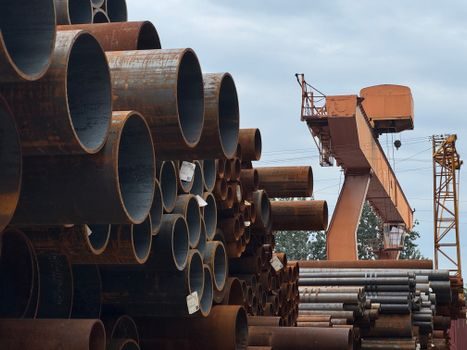
OEM traps: the buyer owns any drawing error, so a typo in a tolerance or a missing surface-finish call-out becomes a factory-acceptable defect under the print. Force a PPAP or First Article Inspection clause with metallurgical test reports on every lot [S1][S9]. ODM traps: the supplier owns the design, so a third-party reseller can buy the same catalogue line and undercut you — IP protection here is a contract clause and a brand-marking strategy, not a patent. Verify the ODM factory's exclusive-supply policy before signing [S6].
Hybrid traps: a factory offering "OEM/ODM" on its profile can mean it does both, or it means the sales desk will route your RFQ to whichever cell is less loaded that week. Pin the engagement model in the PO, including who owns the tooling, who holds the print revision, and who pays for die modifications on a running part [S2][S3]. For buyers comparing stainless steel versus carbon steel finishes on the same OEM/ODM line, also remember that the audit list above is identical — the model label does not change the metallurgical QA demand.
Sourcing Signals Worth Tracking on the Steel OEM/ODM Market
Track three signals over the next two quarters: (1) factory-side disclosure of ISO 45001 migration off OHSAS 18001 on the major B2B portals, since buyers will start rejecting the legacy label [S2][S7]; (2) explicit ODM exclusive-territory clauses appearing in stamped-steel-component and automotive-steel RFQs, as a hedge against the catalogue-leakage trap noted above [S8][S9]; (3) turnkey steel-rolling-mill integrators publishing their design-to-commissioning scope, since that is the clearest OEM signal in capital-equipment steel — one such integrator publishes a wire-rod, bar, angle, and pipe line portfolio as a single deliverable [S4]. For buyers weighing alloy steel spring strip against standard carbon steel for an automotive programme, the OEM-vs-ODM decision is upstream of the alloy decision and dictates who carries the metallurgy risk [S8].
See also our earlier report, Lab Portable Gas Detector Selection: Sensor Stack, Certification, and Use-Case Map.