
Steel plate and steel fiber are both "steel", both sold by the tonne, and both governed by mill test certificates — but they live at opposite ends of a casting yard [S1][S4]. A plate is a 2D rolled product cut from continuous-cast slab, characterised by through-thickness tensile, impact and chemical uniformity, and is bought to standards such as EN 10025-2 for S235/S275/S355, ASTM A36/A572, API 2H for offshore, JIS G3106 SM490, and the marine grades EH36/DH36 from ship classification societies [S1][S2][S3]. A steel fiber is a short, discrete length of drawn, cut, cold-rolled, or melt-extracted wire, typically 0.5–1.2 mm diameter × 13–60 mm long, dosed per cubic metre of concrete, refractory, or shotcrete to bridge micro-cracks that plain rebar cannot reach at that scale steel fiber.
Three signals shape the 2026 sourcing picture: Chinese plate exporters in Zhengzhou and Tianjin — including Henan BEBON International, Xinsteel Industrial, and China Steel United Group — continue to lead on EN/ASTM/JIS cut-plate, LP (longitudinally profiled) plate, and API 2H offshore plate [S1][S2][S3][S4]; stainless plate (304, 316L, 2205 duplex) commands a 1.6–2.0× price premium over carbon A36 in mid-2026 spot quotes per the China steel market roundup; and steel fiber demand is being pulled upward by refractory upgrades in steel mills and by tunnel/shotcrete shotcrete growth in transit infrastructure. Plate and fiber are complements, not substitutes, and the buying logic is separate.
Form, Grade, and Where Each Material Is Specified
Steel plate is a flat-rolled product with thickness generally ≥3 mm (below that it becomes sheet/strip), and is ordered to a base grade, an impact-tested subgrade, and often a through-thickness "Z" class. Carbon-manganese structural grades (S355J2+N, A572-50, SM490YA) dominate the cut-and-weld market; quenched-and-tempered grades (S690QL, S960QL, A514) cover crane booms, dump-truck bodies and chassis; API 2H / 2W / 2Y cover fixed offshore structures; ASTM A516 Gr.60/70 plus SA-387 cover pressure-vessel and boiler service; ship plate EH36, DH36, FH36 follows the rules of IACS members LR, DNV, BV, ABS and CCS [S1][S3]. Thickness drives price and lead time more than grade does — every additional 6 mm of thickness can move the price by single-digit percent, and 80–150 mm sour-service plate with Z35 through-thickness testing routinely runs 8–14 weeks from Chinese mills in 2026 [S1][S4].
Steel fiber sits in a different spec universe. The product is governed by ASTM A820 (carbon steel fiber for concrete), EN 14889-1 (defining Group I cold-drawn wire, Group II cut sheet, Group III melt-extracted, Group IV cold-drawn mill-cut), and JIS A6208. Dosage is the design variable: 20–30 kg/m³ is typical for slab-on-grade crack control, 40–60 kg/m³ for industrial floor joints and tunnel segments, 60–80 kg/m³ for heavy-duty pavement and refractories, and 80–120 kg/m³ in high-performance refractory castables where the fiber must hold a hot face together through thermal cycling. Anchor, hooked-end, crimped, and straight geometries each change the pull-out bond; hooked-end cold-drawn wire is the volume benchmark for tunnelling and pre-cast segments steel fiber.
Mechanical Behaviour: Strength Path vs Crack-Bridging
Plate takes load as a 2D membrane: tensile strength runs 400–630 MPa for S355, 690–960 MPa for Q&T grades, with Charpy V-notch typically specified at 27 J (–20 °C) for J2, 40 J (–40 °C) for NL, and 34 J (–60 °C) for offshore EH36 [S1]. A 25 mm S355J2+N plate with MTC 3.1 will typically yield at 345–355 MPa and fail around 470–630 MPa, values that are reproducible mill-to-mill and quarter-to-quarter.
Steel fiber delivers its value through post-crack residual strength across a cracked concrete section, not through the base tensile strength of the wire itself. The same 1000 MPa cold-drawn wire that pulls like the Q&T plate above becomes, after being chopped to 35 mm and dosed at 40 kg/m³, a system whose equivalent flexural strength ratio (Re,3 / R1,3 per EN 14889-1 beam test) is in the 0.4–0.8 range. That ratio — not the wire's UTS — is what an engineer compares against rebar or mesh. For a process engineer's mental model: plate moves stresses as a continuous body; fiber transfers stresses across cracks that have already opened. Treating fiber as "tiny plate" or plate as "thick fiber" both lead to wrong specs.
Decision Frame: Plate, Fiber, or Plate + Fiber + Rebar

Use a 4-criterion screen — load path, geometry, environment, cost-per-tonne-per-function. A bridge deck plate girder, a pressure-vessel shell, a dump-truck body, an offshore jacket brace, a ship hull side, and a crane boom all want plate, with grade picked by yield, impact and through-thickness class [S1][S3]. A tunnel segment, a refractory lining, an industrial floor, a precast tunnel ring, and a slope shotcrete face all want fiber, with type picked by crack-control demand, pumpability, and fire rating.
Combined systems are common and often the right answer: a steel-fibre-reinforced concrete (SFRC) tunnel segment with a traditional rebar cage uses 30–50 kg/m³ hooked-end wire plus reduced rebar to control shrinkage and improve impact behaviour during TBM shove; a precast slab with macro-synthetic plus steel fiber can replace light mesh; and a refractory castable in a steel-mill ladle uses 80–120 kg/m³ stainless 310/330 fiber plus anchors. Picking fiber where you needed plate (a structural beam, a flange, a hull plate) is a category error; picking plate where you needed fiber (crack control in a 150 mm thick slab) wastes material and ignores the failure mode.
Procurement and Lead-Time Levers in 2026
Plate lead time in mid-2026 splits into three bands. Stocked commodity A36 / S275JR / S355JR in 3–25 mm: 2–4 weeks ex-warehouse from Tianjin, Shanghai, and Zhengzhou exporters [S3][S4]. PV/boiler plate A516 Gr.70, A387 Gr.11, and ship plate EH36 in 10–50 mm: 6–10 weeks mill-direct. Q&T 690/890/960, abrasion-resistant 400/450/500 HB, and 80–150 mm sour-service Z35: 8–14 weeks, with price-by-inquiry [S1]. For a fuller walk through grades, standards and cost levers see the steel plate buying guide 2026; for the wider China-mill and Japan-mill lead-time context see the steel industry 2026 lead-time roundup.
Steel fiber lead time is shorter but the spec paperwork is heavier. A Chinese mill running EN 14889-1 Group I hooked-end wire at 0.75 × 35 mm, 1100 MPa tensile, 6 % elongation, packed in 25 kg bags on 1 t pallets, will typically dispatch in 3–5 weeks for 1–5 t trial orders and 2–4 weeks for repeat volume. Dosage verification on delivery is straightforward: count fibers in a 1 kg reference sample (roughly 7,500–9,000 fibers/kg for the 0.75 × 35 mm geometry) and confirm dosage rate against the concrete batch ticket. Reference the steel fiber encyclopedia entry for dosage, geometry and standard mapping, and for the related matrix-side decision see the glass fiber chemical-compatibility spec frame when the question is fibre-reinforced plastic or composite rather than concrete.
Failure Modes and Spec Traps
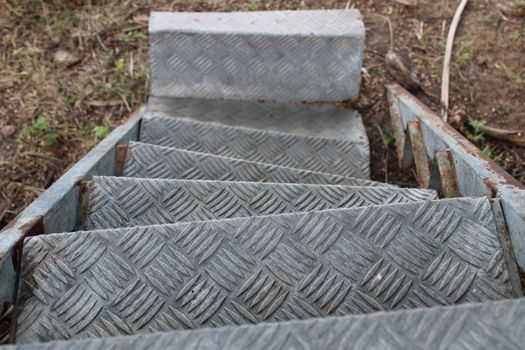
Plate's classic traps are: (1) ordering A36 where S355J2 was specified and finding yield at 250 MPa where 345 MPa was assumed; (2) ignoring Z-class for thick nodes and seeing lamellar tearing in T-joints; (3) missing the impact subgrade letter (J2 = 27 J @ –20 °C, K2 = 40 J @ –20 °C, NL = 27 J @ –50 °C), which then fails Charpy at the design temperature; (4) trusting a "stainless plate" label that turned out to be 201 rather than 304/316L — confirmed only on the MTC, not the invoice [S5].
Steel fiber's classic traps are: (1) over-dosing beyond 80 kg/m³ in pumpable mixes and getting fiber-ball clog at the hose; (2) substituting Group II cut-sheet for Group I cold-drawn wire in a tunnel segment and watching residual flexural strength drop by 30–40 %; (3) using plain straight fiber where hooked-end or anchored was specified and losing pull-out bond; (4) ignoring corrosion — bare carbon fiber in a wet, chloride-exposed slab will rust and bleed; specify galvanized, stainless (310/330) or polymer-coated fiber, or accept the patina and design for it. For an aggregate-side reference that often sits next to fiber in the same mix-design table, see the concrete fiber encyclopedia entry.
Standards and Sourcing Checklist
Plate spec trail: grade to EN 10025-2/3/4, ASTM A36/A572/A516/A387, API 2H/2W/2Y, JIS G3101/G3106, plus impact subgrade and Z-class; demand EN 10204 3.1 MTC with actual chemistry, CEV, tensile, Charpy, and through-thickness; for offshore and pressure service add NACE MR0175 / ISO 15156 sour-service declaration. Fiber spec trail: EN 14889-1 Group and length/diameter, ASTM A820 type, dosage kg/m³, geometry (hooked / straight / crimped / anchored), aspect ratio 40–80, tensile ≥ 1000 MPa for cold-drawn wire, elongation ≥ 4 %; require lot-traceable MTC and a sample retention clause. [S1]
Trackable signals to watch: (1) the next EN 10025 revision round on impact-temperature mapping for renewables towers, which is the single biggest plate-volume swing factor; (2) Chinese Q&T 690/890 capacity additions expected to land in late 2026, which would compress 8–14 week Q&T plate lead times; (3) refractory-grade stainless fiber capacity at 310/330/430 chemistry, where shortages have been the binding constraint on steel-mill ladle lining upgrades. None of these are predictions — each is a spec-side item an engineer can verify against the next mill test certificate that lands on the desk.
For component-level specifications, see steel plate.