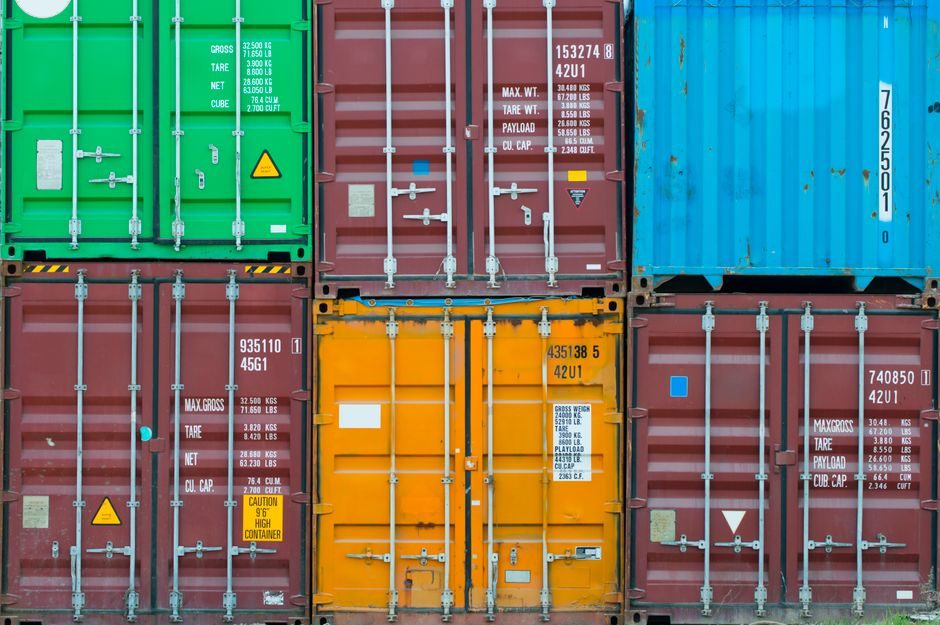
Steel supply chain management in June 2026 sits at the intersection of three measurable forces: nickel- and lithium-driven stainless surcharge volatility, a new class of agentic-AI risk platforms, and active reshoring decisions that re-route coil, rebar and value-added stock through Dallas, Monterrey and Vietnam hubs [S1][S2][S7].
Value-added service centers — the layer that turns hot-rolled coil into laser-blanked, slit or roll-formed parts — have become the single most-watched node in the chain because they absorb freight swings and pass them through with a documented multiplier, as illustrated by Dallas-based Commercial Steel Products, which built its 2018-vintage business on a 7- to 14-day custom-cut lead time and a single-quote sourcing model [S7].
What a 2026 steel supply chain analyst actually tracks
The role of a supply chain analyst in 2026 has shifted from spreadsheet reconciliation to scenario modelling against live risk feeds; Coursera's 2026 guide frames the function as data-analytics-heavy, with median compensation bands tied to data-storytelling, data-governance and what-if analysis skills rather than to negotiation alone [S3][S4].
Day-to-day, the analyst monitors four dashboards: mill lead times (PO to MTR), service-center on-hand coil, container/drayage spot rates, and alloy surcharge indexes. SourceForge's June 2026 risk-software roundups — covering New Zealand, South America and free-trial tiers — show platforms such as Z2Data now exposing supplier-site what-if analysis and risk scores, meaning the same dashboard can be drilled from country level down to a single press-brake sub-tier [S2][S5][S6].
Selection criteria for supply chain risk-management software in 2026
Three criteria separate the credible 2026 platforms from the marketing noise: multi-tier supplier mapping (not just tier-1 addresses), disaster-recovery what-if modelling with documented recovery-time assumptions, and free-trial or country-scoped access so a steel buyer can validate the data before a 12-month commit [S2][S5][S6].
Side-by-side, the published comparison set splits cleanly on geography: South America-vendorised tools bias toward iron-ore and slab traceability for Brazilian and Argentine mills, while New Zealand listings emphasise Pacific-rim container risk and quake-zone disruption modelling [S2][S6]. For a U.S. steel service center, the free-trial tier is the practical entry point because it exposes the supplier-risk scorecard without locking the buyer into a contract during the surcharge-curve rebase [S5].
Stainless surcharge and nickel: the 2026 cost lever

For sourcing decisions, the practical cut is: pin the alloy reference, pin the energy/clause adjustment, and pin the freight basis — in that order — then let the service center quote on top. Buyers who skip the alloy pin effectively accept a 4–8 % quarterly variance that no software platform can hedge on its own, which is exactly the type of exposure that the 2026 risk platforms now score at the supplier-site level [S2][S5]. For deeper alloy-surcharge math, see the nickel supply shortage 2026 surcharge frame.
Reshoring, nearshoring and the new service-center footprint
Reshoring and nearshoring — topics on the 2026 Supply Chain and Logistics Summit agenda — translate for steel buyers into concrete footprint questions: is the coil coming from a U.S. Midwest mill, a Monterrey EAF, or a Vietnam cold-roller, and does the service center carry a slitter, a cut-to-length line, and a laser large enough to absorb the buyer's blank sizes [S1][S7].
Commercial Steel Products describes a 2018-vintage Dallas inventory model built around "expansive inventory" plus project-tailored advice, which is the working definition of a value-added node: the service center is no longer a warehouse, it is a buffer that converts 40-ton coils into kitted parts with 7- to 14-day turnarounds [S7]. Buyers evaluating a reshoring move should score each candidate service center on three numbers — on-hand tonnage by grade, certified MTR turnaround in days, and truck-lane distance to the consuming plant.
Agentic AI, the next supply-chain control loop
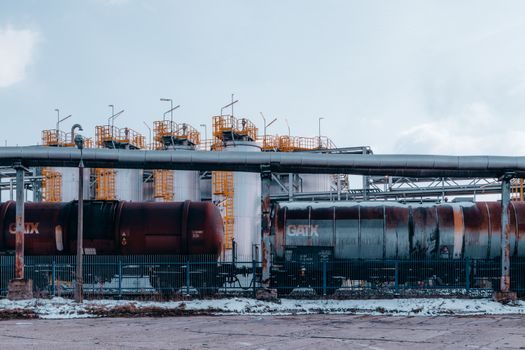
Agentic AI — listed as the lead topic at the 9th Supply Chain and Logistics Summit — is the 2026 label for autonomous decision agents that re-plan purchase orders, drayage and slitter schedules against live risk feeds without a human approving every keystroke [S1].
In a steel context, the practical deployment is narrow but measurable: an agent that re-runs the surcharge scenario every time the nickel reference moves more than 2 %, then drafts a revised RFQ to the qualified mill list. The Coursera 2026 skill guide puts data analysis, data cleansing and data ethics at the top of the analyst resume, which is the human-side complement: the agent proposes, the analyst with governance training signs off [S3][S4].
Limits, failure modes and what the data does not cover
The published risk-software directories are explicit about a coverage gap: the South America and New Zealand listings enumerate software vendors, not mill output, so a steel buyer cannot infer regional capacity from those pages — the data layer is supplier-risk scoring, not production-volume telemetry [S2][S5][S6].
Equally, the 9th Summit agenda advertises "reshoring and nearshoring" as a discussion topic, not as a measured outcome: any specific percentage of reshored steel tonnage in 2026 would have to be sourced from a mill-shipment dataset, not from the summit page [S1]. Treat the software directories and the summit page as decision-support signals, not as production facts, and pin every cost claim to a published surcharge index, an LME reference, or a freight-rate series.
Interlinking: where steel meets the rest of the industrial BOM
Steel rarely ships alone. A 2026 sourcing map has to align nickel and lithium reads (for stainless and high-strength coating chemistry), power-semiconductor lead times (because EAF and rolling-mill drives are IGBT- and SiC-bound), and the concrete-vibrator or gantry-crane fleet that handles coil at the receiving end — those cross-BOM links are where the next surcharge shock will actually surface, and they are tracked in the lithium suppliers 2026 sourcing map, the power-semiconductor 2026 sourcing gates and the gantry crane 2026 buying guide. [S1]
Trackable next signals to watch into Q3 2026: the 9th Supply Chain and Logistics Summit's official date announcement, the next monthly stainless-surcharge release from the major North American service-center networks, and any agentic-AI vendor demo that publishes a documented recovery-time reduction on a steel-specific what-if scenario [S1][S2][S5].
For component-level specifications, see dc power supply, switching power supply, and chain conveyor.