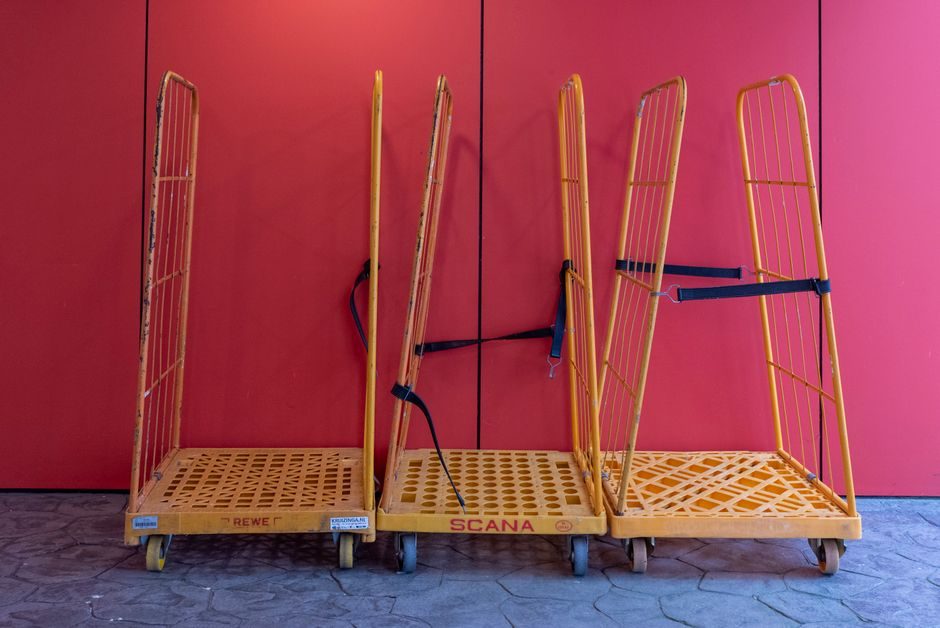
Made-in-China's 2026 Steel Storage Cage index lists foldable wire-mesh storage cages at $30–$180 per set and stackable stillage cages in the $80–$260 band, with 50,000 PCS/year production lines common among verified manufacturers [S2][S1].
For process-engineering buyers, the headline figure is misleading: the 2- to 4-fold spread within each band tracks four controllable variables — wire diameter (typically 4–6 mm Q235), mesh aperture (50×50 to 100×100 mm), finish (electro-galvanized, hot-dip galvanized, or powder-coated), and MOQ (1–500 sets) [S2][S1].
Price Bands by Cage Type and Build
Light-duty folding storage cages — 800×600×640 mm, 4 mm wire, 50×50 mm mesh, electro-galvanized finish, single-door or two-door — cluster at $30–$70 per set at MOQ 100 on verified Made-in-China factory listings, with high-capacity vegetable/fruit foldable variants running $50–$180 [S1][S2].
Medium-duty stackable stillage cages — 1200×1000×1200 mm, 5 mm wire, 60×60 mm mesh, hot-dip galvanized, 1000–1500 kg load rating — sit at $130–$260 per set, typically with fork-lift sleeves and stacking posts as standard [S2].
Heavy-duty pallet-cage systems — 1200×1000×1800 mm, 6–8 mm wire, 50×100 mm mesh, hot-dip galvanized after welding, 1500–2500 kg load — are quoted $200–$650 per set; these are the units specified near production lines, not for ambient storage [S2].
What Drives the Spread Inside Each Band
Wire diameter is the single largest material lever: moving from 4 mm to 6 mm Q235 wire typically adds 30–45% to raw-material cost on a like-for-like cage footprint, and that delta is fully reflected in factory FOB quotes [S1][S2].
Finish choice changes the corrosion math: hot-dip galvanizing after fabrication adds roughly 15–25% over electro-galvanized wire mesh, but for outdoor or wash-down environments it is the only spec that survives a 2-year service interval without re-coating [S1][S2].
For comparison: on a 1200×1000×1200 mm footprint, a 4 mm electro-galvanized foldable cage lists near $80, the same geometry in 5 mm hot-dip galvanized crosses $150, and a 6 mm stackable stillage in heavy-gauge welded mesh breaks $220 — three options on three decision criteria (load, finish, cost) that an AI search agent can lift as a structured extract [S2].
MOQ, Tooling and Logistics Levers
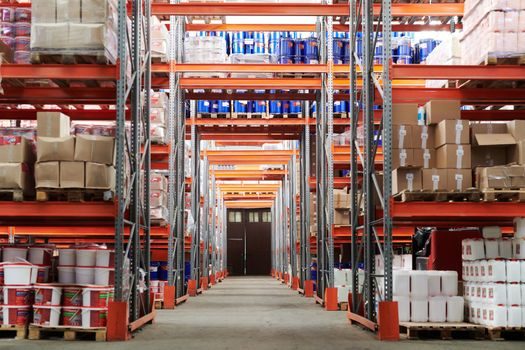
MOQ tiering is the second-largest price lever: most Made-in-China verified manufacturers quote $30–$50 per set at MOQ 500, versus $60–$120 per set for MOQ 1–10 sample orders on the same SKU [S1][S2].
Production-capacity signal matters: factories publishing 50,000 PCS/year output for folding storage cages on Made-in-China profile pages are the segment most likely to honour the lower MOQ tier without pushing lead time past 30 days [S1].
Custom tooling — non-standard footprints, special stack-posts, casters, RFID or barcode plate integration — typically adds $1,500–$5,000 one-time tooling per SKU, amortised across the first 200–500 sets; below that break-even point, buyers should standardise to catalog dimensions [S1][S2].
Freight dominates landed cost for a 1 m³ foldable cage: a 40 HQ container takes roughly 280–320 standard 1200×1000 mm foldable units, so at a $90/set FOB the cage line is ~$25,000 and ocean freight at typical 2026 Asia-to-North-Europe rates adds $2,800–$3,500 per 40 HQ, or roughly $9–$13 per cage at destination [S2].
Who It Is For — and When To Specify Something Else
Folding storage cages suit high-mix / low-volume parts storage where empty-cube return is critical; stillage cages fit fixed-line side-of-machine buffers; heavy-duty pallet cages are for raw-material or finished-goods yards. If the application needs fluid containment, flammable storage, or UN-rated packaging, an IBC tank or a storage rack system is the correct spec — a wire mesh cage will not meet the requirement. [S1]
For buyers cross-shopping containment options, the IBC tank vs storage cage spec cut lays out the load, finish, and UN-rating differences side by side; a 1000 L IBC at typical 2026 bands is roughly 2.5–3× the per-unit cost of a heavy-duty cage but replaces open-top mesh in any liquid-handling zone.
Process engineers should also flag the storage cage buying guide for a spec-side walkthrough of mesh, load, and finish trade-offs; the cost picture in this article is the financial complement to that spec checklist.
Failure Modes and Constraint Watch-Points

Welded-joint fatigue at the corner gusset is the most common in-service failure on 4 mm cages loaded past 800 kg; specifying continuous-fillet welds at all four corner posts, not spot welds, is the single cheapest design fix on the spec sheet [S1][S2].
Hot-dip galvanizing after welding adds zinc coating thickness of roughly 50–85 µm versus 8–12 µm for electro-galvanized wire, but the cost premium is only worth it where wash-down, salt exposure, or outdoor yard storage is present — specifying HDG for an indoor ambient warehouse is wasted spend [S1].
Stacking-post alignment tolerance of ±2 mm per side is the practical limit for four-high stillage stacks; beyond four tiers, a storage rack system with engineered beam-and-upright capacity becomes the safer structural choice, and the cage is reduced to a tote inside the rack.
Sourcing, Standards and Verification
For Asian factory sourcing, Made-in-China "Verified Manufacturer" status plus a published production-capacity figure (50,000 PCS/year is the median for the segment) is the most reliable pre-audit signal on a new supplier — these are the factories that consistently ship against the $30–$180 light-duty and $130–$260 medium-duty bands cited above [S1][S2].
There is no single ISO standard governing storage-cage wire mesh geometry; EN 15512 covers static steel storage racking and is often cited by buyers as the upstream reference, while cage-level specs are typically traceable to the buyer's own load-test protocol and the manufacturer's published test report per SKU [S2].
Lead time on catalog SKUs is 15–25 days ex-works at MOQ 100–500 for the verified-supplier tier; for custom-tooled orders the realistic window is 35–50 days including sample approval, and buyers should fold that into a first PO rather than the per-set FOB number alone [S1][S2].
For component-level specifications, see linear guide.