For 2026 procurement, a tank cleaning machine is a fluid-driven or motor-driven spray head sized by three hard numbers: operating pressure (3-50 bar for rotary heads, up to 1000 bar for jetting lances), spray diameter (6-20 m for rotary units), and minimum tank opening (100-158 mm on common 3D rotary models) [S7]. Getting any one of these wrong means the head either will not physically fit the manway, will not reach the wall, or will not shear the residue.
The market spans sub-US$20 aquarium-style self-cleaning glass tanks [S2], mid-range industrial rotary nozzles in the hundreds of US dollars, and engineered vessel-cleaning skids from North American specialists serving chemical, petrochemical and food plants [S1][S4]. The buying decision lives almost entirely in the duty, not the brand badge.
Three Head Families: Rotary, Static Spray Ball, High-Pressure Jetting Lance
3D rotary tank cleaning nozzles use the cleaning fluid itself to drive an internal impeller and epicyclic gear train, producing a programmed 360° revolution-and-rotation pattern with spray diameters of 6 m, 15 m or 20 m on the DG series [S1][S7]. Working pressure for these gear-driven heads clusters at 3-20 bar, with cycle times of 6-12 minutes per wash, and a minimum tank opening of 100 mm on the DG15 / DG30 pattern [S1][S7]. Sealing design is the failure point engineers should inspect first, because gear-mechanism lifetime is set by seal integrity under thermal cycling [S1].
Static spray balls and fixed nozzles cover low-pressure CIP rinse duty in food, pharma and IBC tote service — see the IBC tank geometry that drives that selection. For heavy hydrocarbon, bitumen, polymer or latex fouling, the duty shifts to high-pressure jetting at 500-1000 bar with cycle times of 6-12 minutes, using lance- or crawler-deployed heads rather than free-spinning rotary nozzles [S7]. A tank container ISO frame imposes a 158 mm minimum opening on most manways, which excludes the largest rotary heads unless a reducer flange is engineered in [S7].
Selection Criteria: Residue, Pressure, Opening, Material, Certification
Residue is the first gate. Light aqueous residue, water-soluble chemicals and food/beverage soils run cleanly on 3-20 bar rotary heads at 6-12 minute cycles [S1][S7]. Waxy crude, asphaltene, polymer latex or cured resin pushes the spec to 500-1000 bar jetting lances with 6-12 minute cycles, where the cleaning fluid is the cutting tool rather than the carrier [S7]. Underground and above-ground crude, gasoline and diesel storage tanks accumulate fine rust, mud, paraffin and bacterial sludge that no low-pressure rotary head can shear, which is why refinery tank-cleaning fleets pair rotary heads with periodic high-pressure jetting campaigns [S8].
Geometry is the second gate. Common 3D rotary heads require a 100 mm or 158 mm minimum opening depending on model; spray diameter options of 6 m, 15 m and 20 m let a single head family cover process vessels up to ~40 m diameter by pairing the right nozzle with the right rotation speed [S7]. Where the manway is smaller than 100 mm, the spec must drop to a static spray ball, accept reduced wash coverage, or use a removable nozzle inserted through a larger access port. Material of construction — 316L stainless, PTFE seals, Duplex for chloride service — is the third gate, and the one that usually decides between Chinese OEM and North American skid-builder pricing [S1][S4].
Who It Is For, and Who It Is Not For

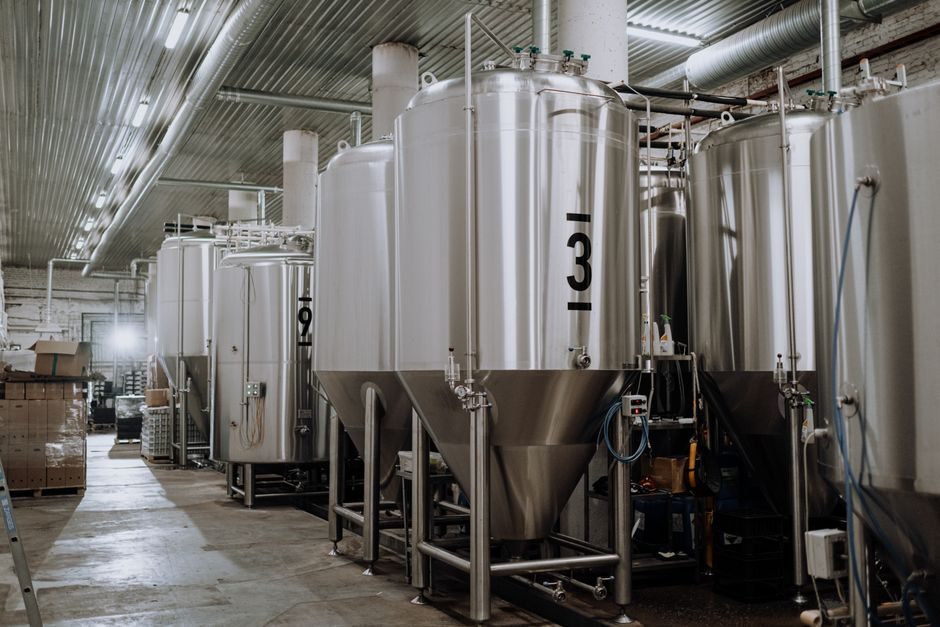
Industrial rotary heads at 3-20 bar suit food, dairy, brewery, personal-care and light chemical tanks where rinse + detergent at modest pressure meets the residue profile and where the vessel can be cleaned in place [S1][S7]. High-pressure 500-1000 bar jetting suits refinery, petrochemical, marine and bitumen service where residue will not yield to rotary heads and where the cleaning crew is trained for high-pressure lance work [S7][S8]. The Dr. Verwey Tank Cleaning Guide, now in its twelfth edition, remains the reference text for maritime tank cleaning operations and should sit on every ship superintendent's shelf [S5].
It is NOT for potable-water point-of-use polishing (use a self-cleaning filter instead), not for laboratory glassware, and not for any duty where the manway is smaller than the head's published minimum opening [S1][S7]. Aquarium self-cleaning glass units at US$ 12.6-15.8 per piece sit in a completely different category and do not belong in the same procurement line as a refinery cleaning head [S2].
Criteria Comparison of the Three Main Types
3D rotary nozzle, static spray ball, and high-pressure jetting lance compared on four decision criteria: [S1]
Operating pressure: rotary 3-20 bar (some 5-50 bar variants) [S1][S7]; static spray ball 1-3 bar typical; jetting lance 500-1000 bar [S7].
Spray diameter / reach: rotary 6-20 m depending on model [S7]; static spray ball limited to vessel radius (typically 1-3 m); jetting lance operator-dependent, effective on the immediate target zone.
Residue suitability: rotary handles water-soluble chemicals, light oils, food soils; static spray ball covers rinse-only CIP; jetting handles wax, asphalt, polymer, cured resin, heavy rust [S7][S8].
Minimum tank opening: rotary 100-158 mm [S7]; static spray ball 25-50 mm; jetting lance passes through any standard manway with the lance assembled externally. The choice of head type therefore cascades from the largest fixed constraint — usually the manway on a tank container — back to the residue spec.
Use Cases Drawn From the 2026 Market
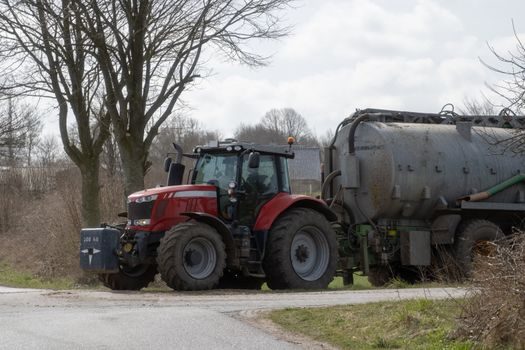
Petrochemical storage at distribution terminals: above-ground and underground crude, gasoline and diesel tanks are routinely cleaned by mobile high-pressure jetting rigs paired with rotary heads for the final rinse, addressing the fine rust, paraffin, moisture and bacterial sludge that accumulate in service [S8]. The cleaning cycle is typically 6-12 minutes per wash pass at 500-1000 bar for the heavy foulant phase, then a lower-pressure rotary polish [S7][S8].
Food, personal-care and pharmaceutical CIP: 3D rotary heads at 5-50 bar on 6-12 minute cycles cover the bulk of the wash, with the seal material and surface finish dictating whether a 316L stainless head with EPDM seals is acceptable or whether full PTFE / FDA-grade contact parts are required [S1][S7]. Spray diameter must be matched to vessel diameter; an 8 m spray radius on a 6 m vessel wastes fluid and reduces wall impact [S7].
Marine and ISO tank container fleets: cleaning regimes follow the Dr. Verwey guidance, with 3D rotary heads for chemical and edible-oil parcels and jetting for persistent cargo residues [S5]. A tank cleaning machine specification for an ISO fleet typically standardises on one or two head SKUs to keep spares inventory and crew training manageable [S5][S7].
Limitations, Failure Modes and Sourcing Standards
Failure modes worth pricing into the spec: gear-mechanism wear in rotary heads when seals fail and cleaning fluid carries particulates, drive-nozzle erosion on jetting lances operated above their rated pressure, and seal blowout on rotary heads subjected to pressure spikes above 50 bar [S1][S7]. Cycle time is a maintenance indicator as much as a productivity number — a head that has been pushed past its seal life will show cycle-time drift before it fails outright.
Sourcing is split between Chinese OEM platforms and North American skid builders. Made-in-China.com lists 2026 production tank-cleaning SKUs starting at US$ 500 per piece for industrial heads and US$ 12.6-15.8 per piece for aquarium self-cleaning glass units, with HS code 7020001390 covering the glass-aquarium category and one-year warranty standard on most industrial models [S2]. North American specialists such as Oilers Depot (ODC) supply engineered fluid-management skids and water-cannon sprinklers for refinery and chemical-plant service [S4]. Direct-from-OEM contact for the KLY / KELIYING brand runs through Guangzhou with email and WeChat channels published on the manufacturer site [S6]. Buyers should validate the stainless steel grade on the wetted path, the seal elastomer, and the test certificate per batch, and should cross-reference the head's linear guide and crossed-roller guide ratings where the head uses a guided rotation stage rather than a free fluid-driven impeller.
Two trackable signals for the rest of 2026: the twelfth edition of Dr. Verwey's Tank Cleaning Guide is in active distribution and is the de facto reference for maritime parcel-tanker cleaning regimes [S5]; and Chinese OEM pricing on industrial rotary heads remains anchored in the hundreds-of-US-dollars range on Made-in-China.com, while North American skid builders continue to position on engineered solutions and after-sales service rather than on head price [S2][S4].