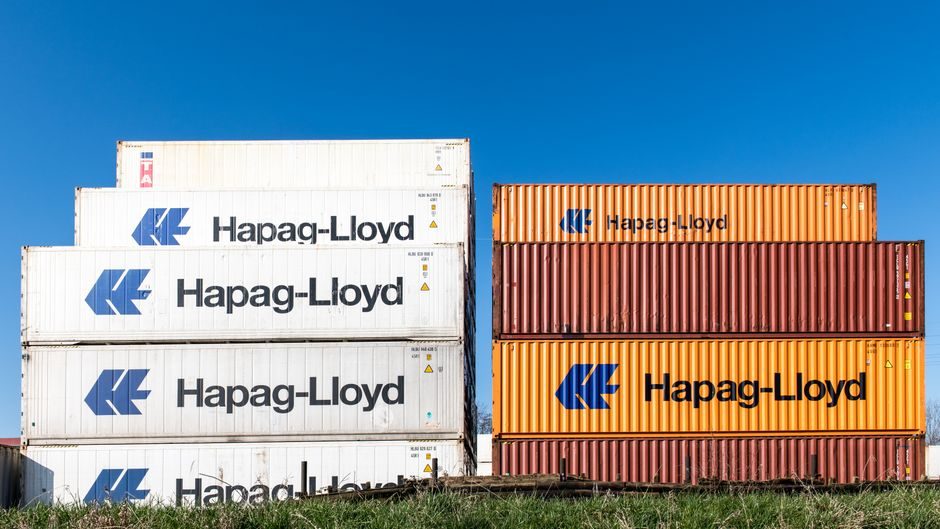
A 20 ft ISO tank container in the spot market moves on three numbers — UN portable tank code (T11, T14, T50), shell material and lining class — and 2026 transaction prints put a baseline T11 stainless unit in a USD 15,000-22,000 band, with food-grade rubber-lined shells at the low end and T50 high-pressure units climbing past USD 30,000 [S1][S2].
Spec engineers treat the tank container as a coded pressure vessel, not a box: the tank container shell must carry an IMO/UN portable tank instruction code, a design pressure range, a test pressure and a lining declaration before freight, insurance and the IBC tank adjacent pool of operators will accept the unit. Reading a 2026 quote without those four code fields is a common way to buy a unit that gets rejected at the first depot inspection.
Spec tiers and what they actually cost in 2026
Standard 20 ft stainless T11 units — designed for nominal 4 bar working pressure, code letter T11 per the UN portable tank table — dominate the second-hand fleet and traded in a USD 15,000-22,000 spot band as of mid-2026, with re-conditioned units at the low end and IMO 1 / Type 1 chemical-coded shells at the top [S1][S2]. T14 (lower design pressure, higher payload fraction for high-density liquids) typically lands USD 13,000-19,000 because the lighter pressure rating trims shell thickness; the trade is less working pressure headroom for more cargo density tolerance [S1].
T50 high-pressure units, rated for liquefied gases and high-vapour-pressure chemicals, sit at the top of the 20 ft bracket and print USD 30,000-45,000 depending on MAWP and PRD set point [S1]. New-build 20 ft ISO tank containers from Asian fabricators in 2026 were reported in a FOB USD 22,000-30,000 range for T11 stainless shells, with stainless grade (304 vs 316L) and lining type moving the quote 8-15% [S2]. The same shell in a swap-body / frame-omit configuration (a 20 ft ISO swap body tank that drops onto a road chassis) carries a roughly 10-15% premium over a frame-mounted unit because of the higher-machined corner casting fit and lifting twist-lock hardware.
Material and lining choices that swing the line item
Shell material is the first lever: 304 stainless is the chemical fleet default and the cheapest grade; 316L adds roughly 4-6% to the shell for chloride resistance and is standard on food-grade and pharma pools [S1][S2]. Rubber-lined shells (typically bromobutyl or EPDM) for food-grade oils, juices and aggressive acids add 6-10% over bare stainless, but recover that premium through higher re-charter rates on the food-grade one-way pool.
For buyers comparing new versus re-conditioned, the rule of thumb from fleet operators is that a re-conditioned T11 unit at USD 16,000-18,000 will deliver roughly 60-70% of a new-build's remaining service life — useful when budgeting total cost of ownership rather than first invoice price.
How to read a 2026 tank container quote
A working 2026 quote line item breaks into shell, frame, valves, lining, certification and freight. Freight from a Chinese fabrication port to a North European depot in 2026 ran USD 1,800-3,200 per unit for a 20 ft ISO on standard sea-freight rates, and that line item alone can flip a 4-vendor comparison if a buyer forgets to normalise it.
Three fields to confirm before signing: (1) the UN portable tank instruction code letter printed on the data plate, (2) the test pressure stamped under the code, and (3) the lining declaration on the owner's plate. A 20 ft ISO tank with a T11 code and 6.0 bar test pressure is a different vessel from a T14 code at 4.0 bar test pressure even if the shells look identical from 10 metres, and the resale / re-charter pool prices them differently. The same discipline applies to related equipment — for example, the tank cleaning machine you specify has to be matched to the lining chemistry and residue class, not just the vessel volume.
What tank container pricing looks like against alternatives
On a per-cubic-metre shipped basis, a 20 ft ISO tank container at ~26 m³ of payload is consistently cheaper than drum-in-container, flexitank and road-tanker alternatives for any lane above 800-1,000 km one-way, and the cost gap widens for returnable stainless pools [S1][S5]. The ITCO 2026 fleet survey, published by the International Tank Container Organisation in the first half of 2026, puts the global tank container fleet in the low six-figures and frames the asset class as the dominant mode for bulk liquid chemicals, food-grade liquids and intermediate gas transport outside pipeline supply [S5].
Versus the crossed roller guide and linear guide classes that share these ISO-coded industrial catalogues, the tank container is a freight asset with a 20-30 year service life, not a 5-10 year motion-control component — different depreciation curve, different periodic-test cadence, different way to think about ROI. For a buyer choosing between a 20 ft ISO tank and a 30,000 L road tanker, the rule is single-trip economics: ISO wins on multi-leg intermodal lanes where the unit moves through 2-3 modes without trans-loading, and road tanker wins on short radial lanes under 300 km.
Failure modes and hidden cost drivers in 2026
The three most common ways 2026 tank container transactions go wrong are (1) lining class mismatch — buyer orders a T11 chemical unit but receives a food-grade rubber-lined shell that cannot accept the planned cargo, triggering a re-lining cost of USD 4,000-7,000; (2) valve package downgrade — supplier substitutes a non-coded lower valve for a coded upper PRD valve to clear stock, which fails depot inspection and costs the buyer a return freight line; (3) test certificate gap — unit ships without current 2.5-year periodic test certificate, and the buyer cannot re-deploy until the next scheduled test, losing 60-120 days of utilisation [S1][S2].
Periodic test cost is a slow-burn cost driver that buyers routinely under-price: a T11 re-test in 2026 was reported in the USD 1,200-2,400 range, T50 in the USD 3,000-6,000 range, with a 5-year major inspection (shell x-ray or hydrostatic re-test) priced 3-4x a periodic test [S1].
Buying channels and what they cost
Three buying channels dominate 2026: direct from Asian OEM fabricators (lowest unit price, longest lead time at 60-120 days for a new build), via a European leasing company's release fleet (mid-band pricing, immediate availability, 6-24 months of remaining test cycle), and at auction from a logistics provider's fleet renewal (lowest price, variable test and lining condition) [S2][S5]. New-build FOB prices from Chinese fabricators in mid-2026 were reported around USD 22,000-30,000 for T11 stainless, USD 30,000-45,000 for T50, with the spread driven by stainless grade, lining class and valve package [S2].
The working spec pattern that follows is: spec the vessel (T11 vs T14 vs T50, 304 vs 316L, lined vs unlined, valve class) before the channel, then compare the same spec across all three channels in USD-per-unit landed to a single delivery depot.
Trackable signals to watch: ITCO's annual fleet survey (next edition due Q1 2027 per the ITCO 2026 publication pattern) and Asian fab order-book disclosures from major Chinese fabricators will move the 2026/2027 spot band more than any freight or steel input cost swing [S5]. For a deeper look at spec coding and lining class selection, the tank container buying guide and the pressure transmitter spec notes for the coded PRD / relief-valve trim are useful companion reads.