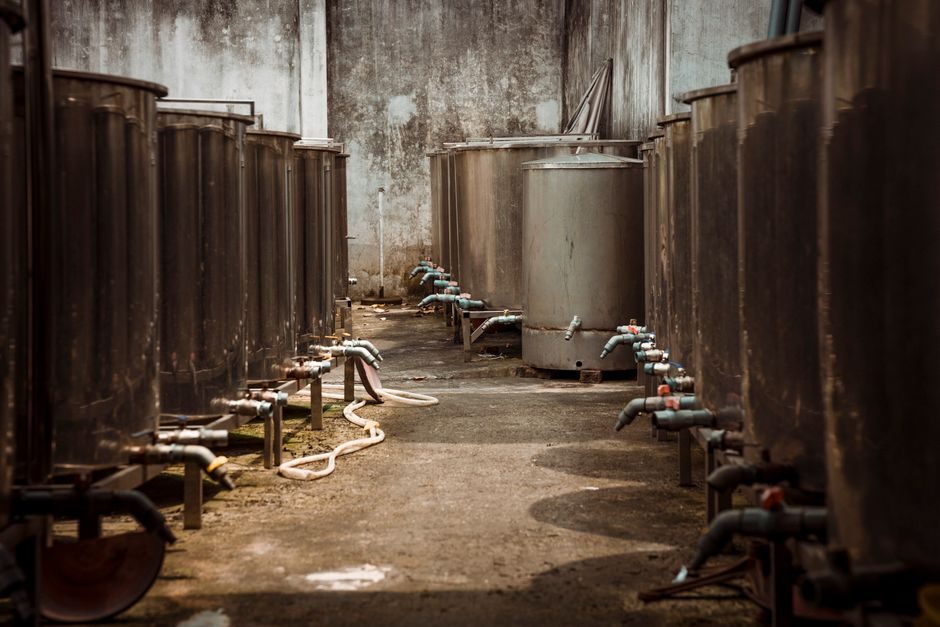
A correctly specified tank container in 2026 is decided by the cargo's UN/IMO dangerous-goods code, the shell material grade, the design code (ASME U-stamp or PED), the frame size, and the working pressure — capacity and price are decided after those gates pass [S2].
For a standard ISO 20ft frame, payload sits in the 26,000–32,000 kg band depending on shell density and specific gravity limit; 30ft units add roughly 25% volume but inherit the same 2.44 m cube envelope and CSC / ADR / RID approvals as the 20ft footprint [S2].
Gates 1-2: Frame and Size, Then Capacity
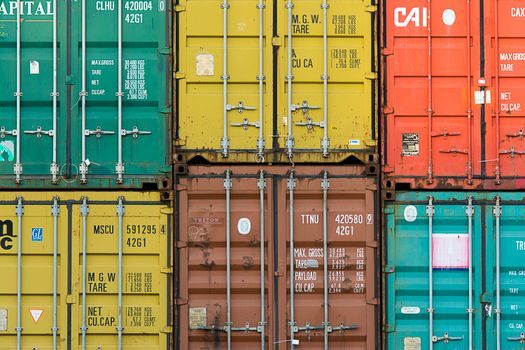
Frame choice is fixed before any supplier negotiation. ISO 20ft tank containers are built to the 6,058 × 2,438 × 2,591 mm ISO 1496-1 corner-casting envelope; 30ft units extend length to ~7,450 mm while keeping the same 2,438 × 2,591 mm cross section. Nominal volume tracks 21,000–26,000 L for 20ft, 30,000+ L for 30ft, and swap-tank / baffle-equipped variants fall at the lower end of those bands [S2].
Buyers chasing higher payload often discover the binding constraint is the road/rail Gross Vehicle Weight (typically 36,000 kg in Europe) or the Tare Weight margin of the frame. Tare for a 20ft stainless unit is normally 3,400–4,200 kg; going under 3,400 kg usually means the spec has been trimmed to the point where heating coil, insulation or baffles are deleted. A spec that quotes 26,000 kg payload at 3,000 kg tare on 20ft deserves a re-check of the design code, not a PO.
Gates 3-4: Shell Material and Cargo Compatibility
SS304 (1.4301) covers roughly 70% of chemical service including caustic, food-grade oils and most organic acids below 60°C. SS316L (1.4404) is specified when chloride content, bromides, or fatty acids above 80°C appear — its 2–3% Mo addition is what delivers the corrosion margin. For food and pharma, the spec line usually reads "SS316L, electro-polished internal Ra ≤ 0.8 µm, FDA / EU 1935/2004 compliant gaskets" — a 304 shell at the same price is the wrong answer for these duty cycles. [S1]
Special cargo groups change the design code entirely. Hydrogen peroxide, phosphoric acid and concentrated nitric acid generally route to lined carbon-steel or rubber-lined shells; strong caustic above 50% typically calls for nickel-alloy (Alloy 20 / C-276) or a duplex stainless depending on temperature. For diesel, AdBlue (DEF/ISO 22241) and lubricants, the spec is SS316L with bottom-outlet stainless ball valves, dedicated compartment seals, and a heating coil sized for cold-climate paraffin handling — the spec cut in our automotive tank container 2026 guide walks through that combination step by step.
Gate 5: Design Code, Pressure, and Test Certificate
Design code is not negotiable. Units in international intermodal service carry an ASME U-stamp (U1 / U2 / U3 design class) or a PED / TPED mark, plus a CSC plate (Container Safety Convention) with the next inspection date stamped on the door-end frame. Pressure rating follows: most chemical tankers are rated at 4 bar MAWP with a 6 bar test pressure; gas-tank IMO Type T50 units run 10–27 bar depending on the gas, and full-pressure tankers (IMO 1) carry 10 bar MAWP. A quotation that does not name the design-code class, the test pressure and the CSC expiry should be treated as a draft, not a binding offer. [S2]
Heating coil and insulation are the second-tier decisions. Steam/thermal-fluid coils add 200–350 kg tare and 8–12 weeks to lead time, but they are mandatory for any cargo above ~80°C viscosity issue (molasses, base oils, cocoa butter, certain resins). Cold-climate food and chemical duty often pairs the coil with 50–100 mm mineral-wool or PIR insulation, plus a vapour-return line; some operators over-specify insulation and then under-specify the coil surface area, ending up with a coil that cannot move 60,000 kg of heavy oil above 40°C in a 24-hour berth window — match the coil kW rating to the cargo mass and start-up temperature, not to insulation thickness.
Options vs Standards: What to Filter First
Options are not equal. A standard SS316L 20ft chemical tank with steam coil and baffles, in 2026 trading-volume terms, is a 6–10 week delivery from Chinese audited factories at roughly US$ 18,000–28,000 CIF for a generic build [S2]. The same frame with a high-Moly alloy shell, a REACH food-grade document pack and a remote-temperature probe pushes to 14–20 weeks and a 40–70% premium. New units in REACH/IMDG full-compliance configuration (ASME U-stamp, ADR/RID 2025+ tank code, pressure-relief set to cargo class) cluster at the high end of that range.
Used / refurbished stock cuts price 25–40% but introduces risk: a 12–15 year old unit carries at least two CSC inspection cycles behind it, and shells with a thin-wall reading below 80% of original gauge should not enter dangerous-goods service even at a discount. Always request the last hydrostatic test certificate, the radiographic or UT thickness map, and the serial-number traceable build sheet before paying for any second-hand unit. The 2026 China-export index shows generic 20ft SS316L chemical tank containers trading between US$ 17,000 and US$ 30,000 per unit depending on coil, insulation and code configuration [S2].
Selection Criteria by Cargo Type
Match cargo to spec with this 5-criterion cut: (1) dangerous-goods class (IMO Type 1, 2, 4, 5, 7, 8, 11, 50), (2) shell material (SS304 / SS316L / lined CS / alloy), (3) MAWP (atmospheric / 4 bar / 10+ bar), (4) heating requirement (none / steam coil / electric trace), (5) fittings (top-fill, bottom-discharge, vapour return, dip-tube). A diesel / AdBlue duty scores: Type 2 or atmospheric, SS316L, 0.4 bar or atmospheric, no coil, bottom-discharge with vapour return. A bulk edible-oil duty scores: Type 2 food-grade, SS316L Ra ≤ 0.8 µm, atmospheric or 0.4 bar, steam coil rated 12–18 kW, top-fill and bottom-discharge with food-grade PTFE seals. A phosphoric-acid duty scores: lined carbon-steel, atmospheric, no coil, bottom-discharge acid-resistant ball valve, dedicated venting. [S3]
For hazardous chemicals, the additional gate is the IMDG / ADR tank-code letter. A "L" code unit carries higher test pressure and additional bursting-disc protection over an "S" or "AT" unit. Cross-border Europe traffic must clear RID 2025 updates for lithium-related cargo and hydrogen peroxide, where pressure-relief calibration windows changed. Shipping into North America adds the AAR M-1002 / M-1004 spec for rail interchange, and into Japan and Korea the local KC / KS marks — confirm those marks on the data plate before line booking, not after.
Failure Modes and Common Pitfalls
None of these show up in a price comparison; they show up in a 12–24 month failure review. [S1]
Heating-coil failure is the fourth mode and the most expensive. Coils that run on thermal fluid above 200°C without a calibrated expansion tank crack at the welded return bend; coils that see steam contamination from contaminated boiler feed water fail at the inlet header. Specify coil material (SS304 or SS316L), test pressure (typically 7 bar hydrostatic for steam service), and a documented cleaning protocol on every build sheet.
Standards, Markings and Inspection Cycle
Mandatory marks: CSC plate (re-test every 30 months for hazardous cargo, every 60 months for non-hazardous, or per the approved continuous-examination programme), ASME U-stamp or PED / TPED data plate, ADR / RID tank code for European road and rail, IMDG declaration for sea, and a UN portable-tank mark (e.g. T11, T22, T50) for multi-modal hazardous cargo. The UN mark tells you everything — design pressure, shell material minimum, MAWP, test pressure, bottom-outlet requirement, pressure-relief set point — and is the single string to verify on the data plate. [S2]
Operational discipline keeps these marks valid. A 30-month hazardous-cargo re-test needs a certified test station, a hydrostatic pressure check, a visual internal inspection and an updated CSC plate. Refurbished units in the 2026 used market are typically sold with a fresh 30-month CSC and a 12-month warranty on the shell; units without a recent hydrostatic certificate are uninsurable for most dangerous-goods lines. Cross-reference the serial number against the manufacturer's build sheet and the IICL (Institute of International Container Lessors) inspection tally before finalising any 2026 lease or purchase decision.
Two signals worth tracking through the rest of 2026: the next IMO sub-committee session on portable-tank type approvals (expected to tighten T22 / T23 codes for low-temperature chemicals), and the ADR 2025 / 2026 update on lithium-battery and hydrogen-peroxide tank codes — both will reshape the 2027 build sheet for SS316L chemical units. The third tracker is the IBC tank capacity ceiling (1,000 L nominal, 1,250 L max under ADR) — when your cargo volume exceeds that, the tank container becomes the only legal intermodal option, and the spec gates above are the ones to walk through in order.
For component-level specifications, see tank cleaning machine.