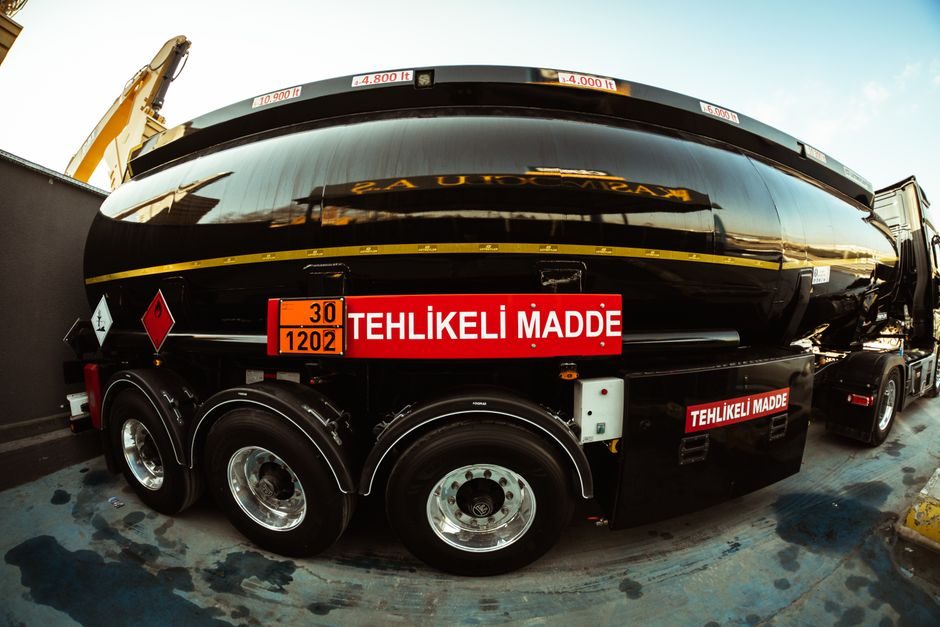
An ISO 20ft stainless tank container with 23,000–31,000 L capacity, 2.65 bar SWP and a T11/T14/T50 transport code is the baseline spec for most automotive liquid logistics loops in 2026, with carbon-steel SWP units (also 20ft, 2.65 bar) reserved for fuel, cement and dry-bulk service [S4][S5].
EXSIF Worldwide, positioned as one of the world's largest ISO tank leasing operators under Marmon / Berkshire Hathaway, services automotive, lubricant and chemical fleets, while NewPort Tank Containers runs dedicated chemical and special-equipment depots suitable for hazmat cleaning between loads [S1][S2]. Hubei Huate Special Equipment, established 2009-02-20, supplies T-code tank containers and chemical tank trucks that map directly onto the same ISO frame [S4].
Why automotive loops converge on the 20ft ISO frame
The 20ft ISO footprint (20' × 8' × 8'6") is the dominant platform because it stacks on standard container ships, fits European road 40 t GCW combinations, and interlines with railway well-wagons without gauge changes. Standard frame dimensions 6,058 mm L × 2,438 mm W × 2,591 mm H are universal across leasing fleets, which is what makes a 31,000 L swap candidate interchangeable between operators [S4][S5].
For hazmat classes, the T-code stamped on the data plate tells you what is permitted: T11 covers liquids at 2.65 bar SWP with bottom-discharge, T14 covers higher-hazard chemicals with stricter valve and relief requirements, and T50 covers liquefied gases (LPG, propylene, automotive refrigerant precursors) at higher MAWP [S4]. Choosing the wrong T-code for a load is a regulatory non-conformance, not just a paperwork issue.
Service-by-service spec map: fuel, AdBlue/DEF, lubricant, adhesive, paint
Diesel and gasoline service typically routes through a 20ft SWP 2.65 bar carbon-steel or lined carbon-steel unit (often 26,000 L nominal) with a T-code appropriate to UN 1202/1203. Cement and dry-bulk service uses the same 20ft frame with pressurised-discharge hardware, as offered on Okorder's 40ft cement-shipping tank platform scaled for fuel and gas [S5]. AdBlue / DEF (ISO 22241) demands a stainless vessel with no copper, brass or unplated carbon-steel wetted parts — DEF crystallises and sludges on contamination, and a T11 stainless unit is the safe default.
Lubricants (engine oils, gear oils, hydraulic fluids) run in 20ft stainless with steam-coil heating option for high-viscosity ISO VG 320 grades; the heat-exchange coil raises discharge rate at cold-yard conditions. Adhesives, paint bases, and windshield-washer concentrate usually fall under T14 chemistry codes and need a dedicated washout at a chemical-cleaning depot — both EXSIF and NewPort offer this cleaning interface as a fleet service [S1][S2]. For a procurement cutoff, compare candidates on the four criteria below:
Selection criteria that separate a working spec from a paper spec
Working pressure: 2.65 bar SWP is the automotive-bulk standard; deviations to 4.0 bar or 6.0 bar only exist for LPG/T50 or T75 cryogenic service, and cost ~30–50% more in tank shell and fittings [S4]. Test pressure is typically 4.0 bar hydrostatic, and every vessel carries a data plate with serial, T-code, MAWP, tare and last inspection date. A 5-year periodic inspection interval and 2.5-year intermediate inspection are the typical IMO CSC / ADR-aligned rhythm — make sure the leasing contract passes these costs back to the operator, not the shipper.
Valving and bayonet size: DN80 (3") top fill and DN80 bottom discharge is the cross-fleet standard; DN50 and DN100 variants exist but complicate interlining. A bayonet-style camlock with vapour-return line and pressure/vacuum relief valve is the minimum configuration for any load with VOC content. Hubei Huate lists comparable hardware on its T-code product family [S4].
Heating: a 6–12 kW steam coil (saturated steam 4–7 bar) is the automotive-lubricant default. Electric heating blankets exist but struggle with cold-soak at -20°C; specify steam if winter dispatch is in scope. Thermally insulated shells (50 mm PU foam + GRP cladding) cut heat loss by ~70% versus bare shell and protect against cold-load gelation of heavy ISO VG lubricants [S1].
Leasing vs ownership: where the 2026 market is
Leasing dominates automotive liquid logistics because capital tied up in a single 20ft stainless unit sits in the same range as a class-8 tractor, and tank utilisation rarely exceeds 60–70% on captive fleets. EXSIF Worldwide, operating as part of Marmon / Berkshire Hathaway, runs one of the largest ISO tank leasing pools in the world, with dedicated automotive and chemical segments [S2]. NewPort Tank Containers complements this with depot-based chemical cleaning, fleet management, and special-equipment service lines that captive operators cannot replicate in-house [S1].
For 2026 spec work, the relevant buy-vs-lease threshold is roughly 30–50 moves per year per tank: above that, an owned unit breaks even inside 5 years; below that, leasing plus depot services is cheaper per litre moved. The Tank Automotive UK retail brand (classic motorcycles / automobiles / collectables) is unrelated to liquid logistics and should be filtered out of any supplier search [S3].
For whom a stainless ISO tank container works — and for whom it does not
It is FOR: tier-1 and tier-2 automotive parts suppliers shipping 1,000–30,000 L lots of lubricants, DEF/AdBlue, paint, adhesive, and coolant; finished-vehicle plants running inbound line-side fluids; and aftermarket chemical distributors handling packaging-grade product. It is NOT for: any move under ~5,000 L (use IBC tanks or drums — a 31,000 L tank is over-spec and increases per-litre freight cost); any commodity with high purity / low contamination tolerance on a multi-product fleet (rail tank cars or dedicated single-compartment trailers are cleaner); and any hazardous gas load above T50 threshold (separate pressure-receiver spec applies, see our adjacent buyer-guide selection criteria for rough terrain forklifts that handle empty tank yard moves). [S1]
Operational limits and failure modes buyers should price in
Vacuum collapse on discharge: a 2.65 bar SWP unit bottom-discharges product under its own head pressure; an under-rated vapour-return line can pull -0.3 bar on the shell, which exceeds the -0.4 bar vacuum spec on most frames and is the most common source of catastrophic shell damage at terminal. Specify a 2" vapour-return path matched to the discharge pump, and verify the flow meter on the return line actually reads (a stuck PRV can be the symptom, not the cause). [S2]
Cleaning residue: a stainless tank that hauled epoxy adhesive last week will not pass a lubricant load's spec without a full chemical wash at a qualified depot. Both NewPort and EXSIF offer this as a contracted service, but turnaround is typically 3–7 days and should be scheduled in the logistics plan, not absorbed as downtime [S1][S2].
Re-validation of valves and PRVs: pressure-relief valves need pop-test every 12 months on most T-coded units; the data plate must be stamped and the certificate retained for the next CSC survey. Skipping this is the second most common cause of regulatory hold at a stuffing/destuffing yard.
Standards and certification that anchor the 2026 spec
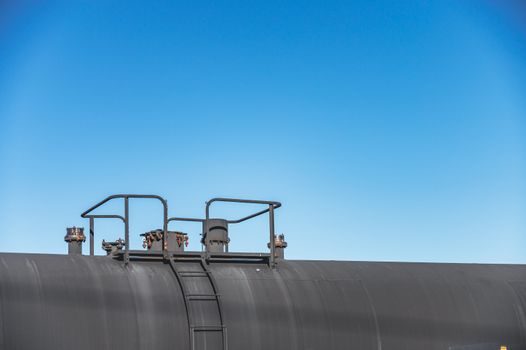
ISO 1496-3 governs the frame dimensions, corner-castings and lifting interface that make a tank container ISO-stackable. The IMDG Code and UN Recommendations on the Transport of Dangerous Goods define the T-codes (T1–T75) and the T11/T14/T50 family used in automotive service. ADR (UN ECE) governs European road moves and the industrial valve marking on bottom-discharge hardware. CSC (International Convention for Safe Containers) drives the 5-year / 2.5-year inspection rhythm. Each vessel must carry a data plate with serial, manufacturer, year, T-code, MAWP, test pressure, tare, and last inspection date; the absence of any of these fields is a hard reject on receipt [S4].
The applied spec sheet on a 2026 procurement RFQ should still anchor on a 20ft ISO stainless 304 frame, T11/T14/T50 code as load demands, 2.65 bar SWP, and a leased rather than owned contract for fleets under 30–50 moves per year.