
Teardrop pallet rack beam capacity ratings are published as a static, uniformly distributed load (UDL) per beam pair, with documented product ratings spanning 2,122 lbs on an 8 ft slim-profile pair up to 6,480 lbs on a 4 ft heavy-profile pair across the major US teardrop lines [S7].
Ratings are calculated to the Rack Manufacturers Institute (RMI) deflection ceiling of L/180, which translates to a 96 in beam being allowed to bow no more than about 0.53 in under full UDL [S3]. Engineering variables that move the number are beam length, face height, steel gauge, and the integrity of the teardrop connection to the upright [S3][S4].
How Teardrop Beam Ratings Are Calculated and What They Actually Mean
A teardrop beam rating is the maximum weight a pair of beams can carry across a single bay without exceeding the L/180 deflection limit or risking connector failure, and the published value already includes the dead weight of the beam itself plus the product load above it [S3]. Teardrop is the dominant boltless style in the US market because the same teardrop keyway geometry is shared across most major brands, which is why a Ridg-U-Rak 3.5 in face beam at 108 in carries a 3,210 lb UDL per pair while still mating to other manufacturers' uprights [S2].
Capacity is not a single number to memorize, it is a function of length, profile, and material. A longer span at the same face height must be built from heavier gauge steel or a taller profile to hold capacity, because deflection under load grows with the span cubed in bending [S3]. That is why a 4 ft Ridg-U-Rak pair at 6,437 lbs and a 6 ft pair at 4,601 lbs from the same product line are not the same beam, they are different gauge / face-height combinations tuned per length [S7].
Documented 2026 Capacity Numbers Across Teardrop Beam SKUs
Documented beam ratings from current US teardrop lines show the spread that a buyer should expect: Steel King SK2000 series 4.75 in face x 96 in beam at 6,080 lb UDL per pair, built from 55,000 psi minimum yield steel with a 1 5/8 in step for wire deck or safety bar [S5]. Ridg-U-Rak 3.5 in face x 108 in beam at 3,210 lb UDL per pair, using the standard teardrop keyway and a built-in auto-locking safety clip [S2]. HOJ teardrop line shows 4 ft at 6,437 lb, 6 ft at 4,601 lb, 8 ft at 5,220 lb, and a lighter 8 ft configuration at 2,122 lb, demonstrating that the same nominal length can be ordered in different profiles for different duty classes [S7].
Mid-range teardrop product from Warehouse1 in Kansas City lists 192 in x 6 1/4 in roll-formed teardrop beams at 3,500 lb static per pair, useful for very long spans where deflection rather than strength is the controlling variable [S6]. Southeast Pallet Rack publishes a 120 in x 5.25 in teardrop beam at 6,200 lb per pair, the high end of what a 10 ft span typically delivers in a 5 in class face height [S8]. The 2026 BL Pallet Rack buyer guide groups 12 ft beams at roughly 3,000 to 4,000 lb per level on a 4 in face and 4,500 to 5,500+ lb per level on a 6 in face, a useful envelope for early sizing before vendor selection [S9]. A working catalog of typical teardrop beam ratings by length and profile class looks like this:
<strong>Beam length x face height, typical UDL per pair (2026 catalog data):</strong> 4 ft x 4 in class, ~6,400 lb [S7]; 6 ft x 4 in class, ~4,600 lb [S7]; 8 ft x 4 in class, ~5,200 lb, lighter 8 ft slim, ~2,100 lb [S7]; 8 ft (96 in) x 4.75 in class, 6,080 lb [S5]; 9 ft (108 in) x 3.5 in class, 3,210 lb [S2]; 10 ft (120 in) x 5.25 in class, 6,200 lb [S8]; 12 ft (144 in) x 6 in class, 4,500 to 5,500+ lb [S9]; 16 ft (192 in) x 6.25 in class, 3,500 lb [S6].
Selection Criteria: Length, Face Height, Steel Grade, and Connector
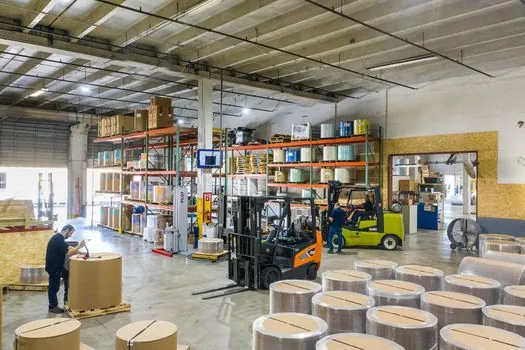
Four variables decide which teardrop beam SKU a buyer should order for a given load, and the order of priority matters. Beam length sets the deflection budget, a 144 in beam is allowed roughly 0.80 in of L/180 deflection at full load, so the face height and gauge have to be selected to stay inside that envelope [S3]. Face height is the second gate: a 3.5 in face at 108 in is in the 3,000 to 3,500 lb range, a 4.75 in face at 96 in is in the 5,500 to 6,500 lb range, and a 6.25 in face at 192 in is back down to 3,500 lb because span is the dominant term once you cross 15 ft [S2][S5][S6].
Steel grade is the third gate, and it is where the premium lines separate themselves. Steel King publishes 55,000 psi minimum yield on the SK2000 series 4.75 in beam, and pairs that with a 3-rivet connector that the maker claims delivers 26% more strength than a standard 2-rivet connection [S5]. Most roll-formed teardrop beams from other major US brands publish capacities under the same RMI / ANSI MH16.1 calculation framework, which is why cross-brand teardrop keys mate cleanly even when the steel itself is sourced to a different minimum yield [S4]. Connection type, the fourth gate, is what fails first in field incidents: tabs, pins, bolts, and hook-style connectors each behave differently under impact, and a beam rated at 6,000 lb UDL with a half-engaged safety clip is not a 6,000 lb beam [S3].
Who Teardrop Is For, and Where It Is the Wrong Choice
Teardrop pallet rack is the right answer for general warehouse pallet storage where seismic design is not the controlling variable, where mixed-brand re-use is desirable, and where the heaviest single pallet is below about 3,000 lb on standard 8 to 10 ft spans. The 96 in x 4.75 in Steel King beam at 6,080 lb per pair comfortably covers two GMA pallets at 2,500 to 3,000 lb each, side by side on a single level, which is the most common US warehouse application [S5].
Teardrop is the wrong choice for high-seismic zones that require a tested, RMI-certified seismic moment frame, for cold storage below about -20 F where structural steel outperforms roll-formed, for drive-in or push-back rack where the beam is not a simple span, and for any application where the published rating depends on a beam connector that cannot be visually confirmed as fully engaged at every pick face [S3]. Buyers should also avoid mixing face heights within a single bay level, since load transfer between mixed profiles is not characterized in the published UDL and is a common source of deflection complaints.
Real Failure Modes and Inspection Signals
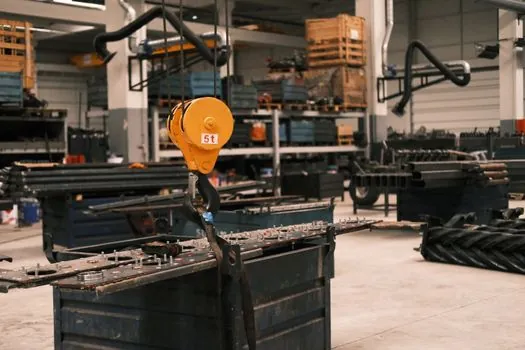
Three failure modes show up repeatedly in damaged teardrop installations: beam deflection past the L/180 ceiling, usually visible as a permanent sag at the mid-span after a heavy load has been removed; connector tear-out at the teardrop keyway, often from a forklift impact that was not reported; and twisted or buckled beam faces near the end connector, from side load during a put-away that the operator did not square up before driving in [S3].
Deflection of 0.53 in on a 96 in beam is the trigger to unload and re-rate the bay, not the trigger to keep stacking [S3]. Capacity is also not a free safety margin: a beam rated at 3,210 lb UDL at 108 in does not mean 3,210 lb is acceptable as a point load at mid-span, since UDL ratings are calculated for evenly distributed weight and a concentrated load at mid-span will produce roughly twice the deflection and a different stress distribution [S3]. Two-beam minimum per bay is also a published stability rule from the major teardrop vendors, a single-beam level is not a rated configuration regardless of how the frame is anchored [S2].
Sourcing, Standards, and Cross-Reference to Related Equipment
Teardrop beam capacity charts in the US are calculated under the RMI / ANSI MH16.1 specification, and major vendors including Ridg-U-Rak, Steel King, UNARCO, and HOJ publish per-length UDL tables that follow the same L/180 deflection rule, which is why the same beam length from two different vendors can be compared on a like-for-like basis [S3][S4]. UNARCO publishes its beam tables as per-pair uniform loads that already account for beam self-weight, and lists compatibility across its roll-formed and structural product lines [S4]. Steel King publishes per-pair UDL on the SK2000 series and lists the 1 5/8 in step, the 3-rivet connector, and the 55,000 psi minimum yield as the three rated variables on the product data sheet [S5].
For a buyer who needs a complete system view, the pallet rack entry on the encyclopedia side covers frame and upright capacity, while pallet stacker and electric pallet truck cover the handling equipment that puts load on the beams and that needs to be matched to the bay opening and floor flatness. Buyers who also need a beam-and-deck package should cross-reference storage rack for the broader system context, and manual pallet jack for the floor-loading side that drives how beam levels are spaced vertically. Buyers designing a seismic or multi-tenant DC will also want the pallet rack capacity charts and the per-vendor per-length UDL tables cited above in the same comparison.
Trackable signals for the next 90 days: the 2026 BL Pallet Rack buyer guide is the freshest US cross-vendor table published on 2026-06-10 and is the most useful envelope check before vendor selection [S9]; the Steel King SK2000 4.75 in x 96 in beam at 6,080 lb per pair and the Ridg-U-Rak 3.5 in x 108 in beam at 3,210 lb per pair bracket the two ends of the mid-duty 8 to 10 ft US market and are the SKUs to compare any quote against [S2][S5]; the HOJ 8 ft table showing 5,220 lb and 2,122 lb in the same length is the clearest demonstration that face height and gauge, not length alone, are what move the number [S7].
Background reading: Power Transformer Demand Outpaces Capacity Through 2026.