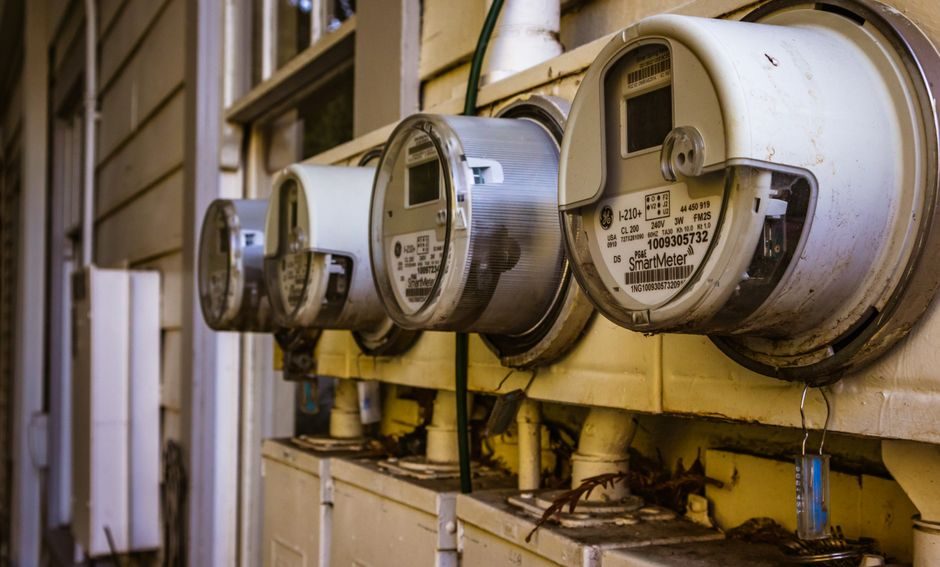
Wireless temperature data loggers with a -40 to +70 °C operating window, 10-year battery life and 600 m line-of-sight range to an access point are now the baseline for cold-chain, food and pharma audit trails [S1].
Electrical fire monitoring systems serve a fundamentally different layer: they sit on the power side of a plant, watch residual current, arc-flash signatures and contactor heat, and trip before insulation ignites, complementing a power monitoring system and an electrical fire monitor architecture rather than replacing it.
Scope and Measurement Target
SenseAnywhere AiroSensor loggers are specified for accurate monitoring from -40 °C to +70 °C with an optional humidity channel, IP67 housing, 10-year battery, automatic arrival/departure logging via an integrated accelerometer, and out-of-range data buffering for transport [S1]. A BLE/CAN/Modbus telemetry device such as the Cattron Messenger BLE instead targets rotating equipment: daily fuel rate, CANbus engine messages, two output relays, Modbus master/slave on two serial ports, and Bluetooth/cellular/satellite coverage for remote sites [S2]. ThermalEye from VisionTIR covers the third lane — radiometric infrared cameras capture the temperature distribution of a surface in milliseconds with automatic hot/cold-spot detection for furnace walls, boiler tubes, glass tanks, flare stacks, and bottom-ash hoppers [S3].
Electrical fire monitoring is a different physics problem. Instead of logging a product temperature, it samples residual current, earth-leakage rise rates, and thermal precursors on busbars, breakers and cable joints inside switchgear and distribution panels. The "monitor" in electrical fire monitor typically combines a current/power transducer layer with a thermal layer (heat-reactive cable, IR spot sensor, or fiber-linear heat detection) so that abnormal heating is flagged within seconds, not hours. The two families converge only on the thermal channel; everything else — sensor stack, wiring topology, trip logic, regulatory framing — diverges.
Selection Criteria: Which One to Specify
Specify a temperature monitoring device when the deliverable is an audit-trail or condition record: cold-chain compliance, HVAC zoning, motor/pump bearing trending, furnace refractory health, structural-fiber health, or asset utilisation. SenseAnywhere loggers answer the question "what was the temperature profile over the last 12 months at SKU level" with cloud-stored records and email/SMS/voice limit-exceedance notifications [S1]. Cattron's Messenger BLE answers the question "is the engine or pump running within its design envelope" with CANbus J1939 reading, daily fuel-rate reporting, filtered engine diagnostics, and two output relays driven by analog or digital thresholds [S2].
Specify an electrical fire monitoring system when the deliverable is pre-combustion detection on a live AC/DC power circuit: switchgear, busbar trunking, UPS input/output, EV charging, photovoltaic combiner boxes, battery storage racks. The two systems should not be evaluated against each other in a single RFP — they are stacked, not substituted. A typical plant spec pairs a process temperature layer (SenseAnywhere-class loggers, BLE telemetry) with an electrical-fire layer that includes a condition monitoring system front-end for trend visibility.
Option-by-Option Comparison: Temperature Monitoring Devices
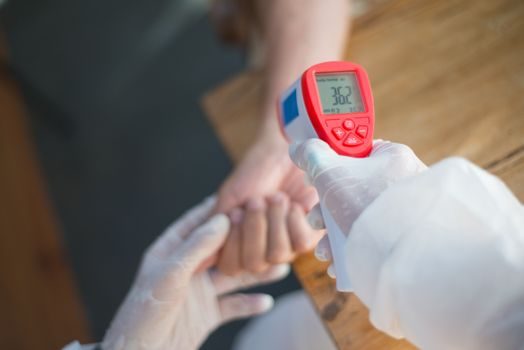
Across the 2026 vendor set, four architectures compete on three decision axes — measurement physics, integration effort, and operating envelope.
1. Wireless data loggers (SenseAnywhere AiroSensor): -40 to +70 °C, ±0.1 °C-class accuracy claim, IP67, 10-year battery, 600 m LOS to access point, cloud backend, optional humidity and shock accelerometer [S1]. Best for: cold-chain, pharma, food storage, transport mapping, low-touch compliance logging. Weak on: sub-second event capture and live process control.
2. BLE/cellular/satellite telemetry gateways (Cattron Messenger BLE): interfaces include Modbus, digital I/O, CAN, RS-485 and IoT, with two output relays, independent Modbus master/slave on two serial ports, and remote iOS/Android device-manager app [S2]. Best for: remote pump stations, gensets, mobile equipment where CANbus J1939 and Modbus RTU already exist. Weak on: intrinsic-safety and ATEX/IECEx classified zones unless the variant is certified.
3. Radiometric infrared camera systems (VisionTIR ThermalEye): modular array of radiometric IR cameras capturing surface temperature distribution in milliseconds with per-zone emissivity, pre-alarms, alarms, recording, email and digital-output notification; maintenance-free 24/7 monitoring of furnaces, boilers, glass tanks, flare stacks and bottom-ash hoppers [S3]. Best on: continuous thermal imaging of high-temperature process equipment where contact probes fail. Weak on: line-of-sight obstructions and reflective surfaces with low/unknown emissivity.
4. Distributed optical fiber sensing (Novatest FEBUS D series): optical-fiber-based sensor system for temperature, voltage, acoustic, and deformation parameters on continuous structures, providing real-time, digital output for infrastructure and structural-health monitoring [S4]. Best on: long linear assets (pipelines, tunnels, dams, cable runs) where point sensors cannot scale. Weak on: capex per metre of fiber and the need for a dedicated interrogator unit.
Against the three decision criteria, wireless loggers win on capex and battery life, BLE gateways win on industrial-protocol integration, IR cameras win on spatial coverage, and fiber sensing wins on linear-asset scalability. None replace the others.
How This Connects to Electrical Fire Monitoring
Electrical fire monitoring is a separate equipment family that shares one channel with the temperature side — the heat sensor — but adds current, leakage and arc sensing. On a switchgear line-up, a fire door and a fire extinguisher only become relevant after ignition; the monitor's job is to keep them from being needed. Practically, this means three layers stacked in series: a power monitoring system for kWh, PF and harmonic baseline; an arc/leakage detector on the breaker or busway; and a thermal layer — either heat-reactive cable, fiber-linear heat detection, IR spot sensor, or a radiometric camera like ThermalEye aimed at the busbar chamber [S3].
Where the temperature monitoring device family overlaps with the fire-monitoring family is exactly the thermal channel, and exactly there is where confusion in procurement creates risk. A SenseAnywhere logger on a breaker surface reads contact temperature but does not detect an arcing fault; a leakage-current relay on a feeder does not log the audit trail. Specifying one where the other is required is the most common failure mode in 2026 retrofits.
Failure Modes and Common Mis-Specs
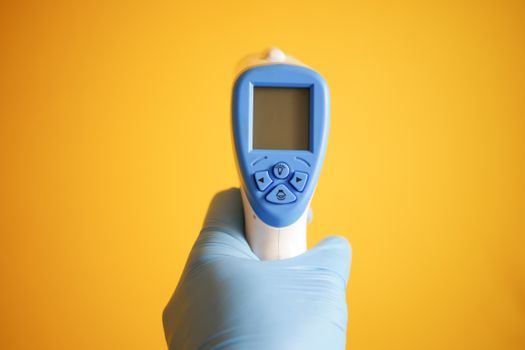
Four pitfalls dominate 2026 retrofit specs. First, treating a wireless data logger as a fire sensor: a 10-year-battery, -40 to +70 °C SenseAnywhere AiroSensor samples slowly and is designed for compliance, not for sub-second arc detection [S1]. Second, deploying a BLE/CAN telemetry device in a hazardous area without an ATEX/IECEx variant — Cattron's spec sheet lists Modbus, digital I/O, CAN, RS-485 and IoT but does not state zone rating, so a Zone 1 or Zone 0 site must confirm certification before procurement [S2]. Third, accepting a thermal imaging camera as a substitute for contact-temperature measurement in a process that requires ±1 °C absolute accuracy; radiometric IR readings are emissivity-dependent and require per-zone configuration of measurement temperature and pre-alarm thresholds [S3]. Fourth, scoping a fiber-based distributed sensor (FEBUS D series) where the asset is a discrete asset, not a continuous structure — the per-metre capex and interrogator hardware only make sense on linear infrastructure [S4].
Standards, Sourcing, and Integration Reality
For cold-chain, food and pharma deployments, the wireless logger pattern (SenseAnywhere AiroSensor: -40 to +70 °C, IP67, 10-year battery, cloud audit trail) maps directly to GDP/GxP and HACCP record-keeping [S1]. For rotating equipment, the BLE/CAN/Modbus telemetry pattern (Cattron Messenger BLE) is essentially an IoT front-end to existing J1939 and Modbus RTU devices, with two output relays controllable from analog threshold logic or digital inputs [S2]. For continuous-process thermal monitoring, radiometric IR camera systems (VisionTIR ThermalEye) deliver 24/7 hot/cold-spot detection, per-zone emissivity and alarm configuration, email and digital outputs, and modular camera-plus-workstation expansion [S3]. For structural health and long linear assets, optical-fiber distributed sensing (Novatest FEBUS D series) reports real-time, digital temperature, voltage, acoustic and deformation data on a single fiber [S4].
Electrical fire monitoring is sourced separately and certified to fire-detection equipment standards (the relevant IEC 62676 / GB 14287 / UL 268 family depending on jurisdiction) — none of the four temperature systems above carry that fire-detection certification, which is why they are not interchangeable. Sourcing maps for related equipment classes — air pollution control, cleanroom systems, and weather stations — are covered separately in this 2026 air pollution control supplier map, the India/China cleanroom vendor map, and the weather-station buying guide.
The next trackable signal for spec work is the ATEX/IECEx variant of BLE telemetry gateways — published 2026-08 datasheets from Cattron-class vendors will determine whether remote-pump telemetry can be unified with Zone 1 hazardous-area monitoring on a single device.