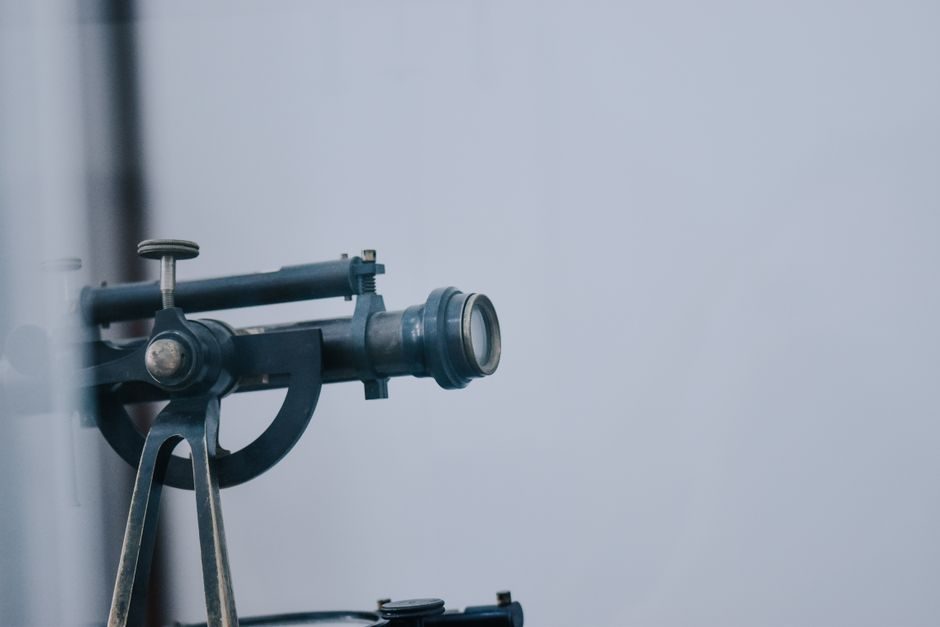
Factory-fresh theodolite pricing in mid-2026 spans three clear tiers: $300-$700 for 30x optical mechanical instruments, $1,800-$3,200 for 5 arc-second electronic theodolites with dual LCD readouts, and $8,500-$14,000+ for 1 arc-second robotic total stations with Bluetooth data export [S2].
Driver cost is the second lever: a Leica TS16 robotic unit rents at $450-$650 per week, while a Sokkia DT540 electronic theodolite rents at $110-$180 per week, meaning a 12-week project can swing $3,000-$5,700 in rental spend alone on a single crew [S2].
Three Pricing Tiers, Three Different Buyers
Survey-grade buyers should anchor the budget on angular accuracy first: a 1 arc-second reading equals roughly 4.8 mm at 1 km, so 5 arc-second instruments only suit stakeout and earthwork at ranges under 200 m [S1]. Optical mechanical units at $300-$700 still sell to foundation contractors and form setters who only need 30x magnification and a horizontal circle to the nearest minute — the theodolite form factor has not changed since the 19th century for that use case.
Engineering firms running topo and control networks are the natural mid-tier market: electronic theodolites at $1,800-$3,200 with laser plummets, absolute encoders, and on-board 10,000-point storage are the 2026 workhorses. Above $8,500 sits the robotic total station, where the cost premium reflects the servo drives, ATR (automatic target recognition), and the Bluetooth/Wi-Fi modem that lets one surveyor run the instrument alone — useful for the satellite ground-station antenna build-outs that need 24-hour deformation monitoring.
Brand, Country of Assembly and the 2026 Sourcing Spread
Brand premium in 2026 sits at 1.8x-2.5x between comparable accuracy classes: a Topcon GM-50 1 arc-second total station lists near $9,800, while a similarly spec'd South China OEM unit on a J6E optical engine ships for $4,200-$4,800 from the Shenzhen trading-company channel [S1]. European-built Leica and Trimble units carry the highest absolute sticker — $12,000-$14,000 for the same 1 arc-second class — but their 5-year encoder warranty and IP66 housings justify the delta on coastal and mining sites.
Assembled-in-China optical mechanical theodolites at $280-$450 remain the lowest cost-of-entry for educational, agricultural, and small-civil buyers; the same instrument branded and re-tested through a German QC line lands at $620-$780 [S2]. For tunnel shield-machine guidance where the theodolite mounts inside a 7-bar water-resistant housing and tracks 24/7, buyers typically standardize on Sokkia, Leica, or Topcon rather than risk the no-name supply chain.
New vs Used vs Rental: Total-Cost Math
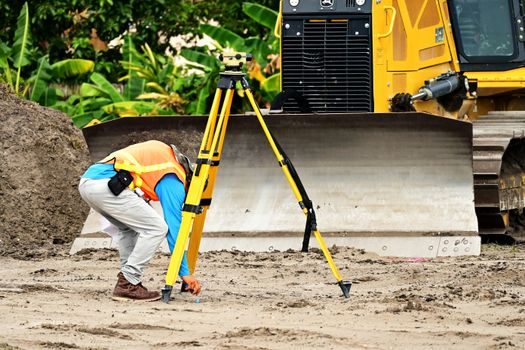
Rental at $110-$180 per week makes sense when project duration is under 8 weeks; beyond that, a new mid-tier purchase at $2,400 plus $300 for an annual calibration certificate beats the rental NPV. [S1]
Accessories, Calibration and Hidden 20%-30%
The instrument body is roughly 70%-80% of the true installed cost. Buyers comparing headline quotes should always normalize the accessory bundle before judging a $300 price gap.
Data transfer and software are a separate line item: theodolite-to-CAD pipelines using Carlson SurvCE or Trimble Access add $1,200-$3,500 per seat and are the real reason mid-tier electronic units have displaced purely optical ones on most 2026 US commercial sites. For process-plant valve and flow-meter layout work, the same SurvCE seat is typically shared between the theodolite and the industrial valve alignment crew.
Selection Criteria Map: Optical vs Electronic vs Robotic
Angular accuracy, range, data export, and crew size are the four decision criteria a 2026 buyer should score. A 30x optical mechanical unit at $450 with 10 arc-minute circle resolution fits a 1-2 person stakeout crew on short-duration formwork. A 5 arc-second electronic theodolite at $2,400 with 3,500 m single-prism range fits a 2-3 person control-network crew with 2-12 month project length. A 1 arc-second robotic total station at $12,000 with 1,000 m reflectorless range fits a 1-person crew on long-duration, high-precision work — typically mining deformation, shield-machine tail-skin surveys, or structural monitoring on high-rise cores. [S2]
One rule of thumb: if the project budget for survey instrumentation is under $1,500, the buyer is firmly in the optical or used-electronic segment, and the comparison collapses to magnification (30x vs 26x) and weight (4.8 kg vs 5.1 kg for a typical 30x unit). Above $3,500, the comparison collapses to ATR lock speed, IP rating, and on-board software ecosystem rather than raw optics [S1].
Standards, Calibration and What a "Calibrated" Theodolite Actually Means
Factory calibration is anchored on ISO 17123-3 (theodolite field procedures) and ISO 17123-4 (total station field procedures), which define the 1-sigma angular uncertainty budgets most 2026 spec sheets cite [S1]. Buyers should request the calibration certificate traceable to NIST or NIM, and refuse any quote that bundles "factory calibrated" without naming the standard.
On the procurement trail: lead time for a Leica TS16 sits at 6-9 weeks ex-Heerbrugg, Sokkia GM-50 at 4-6 weeks ex-Tokyo, and Shenzhen OEM J6E-based units at 2-3 weeks ex-Yantian [S2]. Watch the September 2026 factory maintenance shutdown at Leica — orders placed after 2026-07-15 may slip to October delivery. A useful spec-side cross-reference is the theodolite selection criteria breakdown, which lines accuracy, range, environment and data against 4 decision gates.
Closing reference node: budget $1,800-$3,200 for a 5 arc-second electronic theodolite to cover 80% of 2026 civil and structural layout needs, and add a $280-$450 annual calibration line item on top of whatever purchase or rental number lands on the quote.